Thank you for visiting nature.com. You are using a browser version with limited support for CSS. To obtain
the best experience, we recommend you use a more up to date browser (or turn off compatibility mode in
Internet Explorer). In the meantime, to ensure continued support, we are displaying the site without styles
and JavaScript.
This study reports that the commensal gut bacterium Bacteroides thetaiotaomicron establishes distinct subpopulations in response to two secreted, self-targeting effector proteins.
A study by Medina Ferrer and Nayak identifies an archaeal transcription factor in methanogenic archaea that functions as a one-component system, with a eukaryotic-like DNA-binding motif.
A study by Cazares et al. investigated recent plasmid evolution by sequencing plasmids from the Murray Collection (1917–1954) and comparing with modern genome sequences from public archives.
This Genome Watch discusses recent advances in genomic epidemiology that enable the reconstruction of transmission events, with greater resolution and across more complex settings at scale.
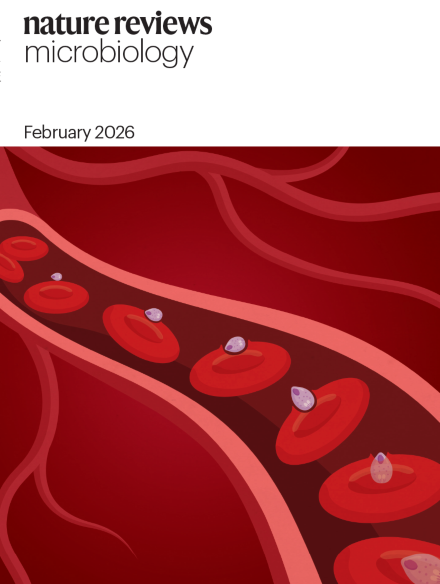
If erythrocyte invasion is blocked during the blood stage of infection by Plasmodium parasites, malaria can be prevented. In this Review, structural insights on erythrocyte invasion by the merozoite form of Plasmodium are discussed in the context of rational design of a blood-stage malaria vaccine.
Lactobacilli are important members of human, animal and insect microbiomes and are prominent in food fermentations. In this Review, Mejía-Caballero and Marco explore the diversity of lactobacilli, focusing on their fundamental traits and their applications in foods and medicine.
Staphylococcus aureus is an important cause of bacterial infection and death worldwide. This Review outlines basic research on S.aureus immune evasion mechanisms and antibiotic resistance, and clinical studies on treatment and prevention of infection.
In this Review, James, Thursky and colleagues explore strategies that promote the responsible use of antimicrobials from a One Health perspective, emphasizing the roles of data and surveillance, implementation barriers, sociocultural and behavioural drivers, digital innovation and the need for greater inclusion of the agricultural and environmental sectors. They also highlight disparities between high-income and low-income settings and identify context-specific challenges to implementation.