Thank you for visiting nature.com. You are using a browser version with limited support for CSS. To obtain
the best experience, we recommend you use a more up to date browser (or turn off compatibility mode in
Internet Explorer). In the meantime, to ensure continued support, we are displaying the site without styles
and JavaScript.
Per- and polyfluoroalkyl substances (PFAS), commonly referred to as “forever chemicals,” are a class of emerging contaminants characterized by their persistent nature and widespread occurrence in the environment. Their resistance to degradation and their accumulation in soil, water, and biota underscores the urgency of understanding their environmental behavior and potential health implications. Addressing the challenges posed by these compounds is therefore crucial for developing effective mitigation strategies and regulatory frameworks.
With this cross-journal Collection, the editors at Nature Water, Nature Communications, Communications Earth & Environment, Communications Sustainability, npj Emerging Contaminants, and Scientific Reports invite manuscripts that highlight recent advances in understanding the fate, transport, and effects of persistent pollutants on human health and ecosystems. The collection covers, but is not limited to, advanced methods for trace-level detection in environmental matrices, fate and transport mechanisms, health and toxicological impacts, and emerging remediation technologies.
Nature Water, Nature Communications, Communications Earth & Environment, Communications Sustainability, and npj Emerging Contaminants will consider original Research Articles, Reviews, and Perspectives. Scientific Reports will consider original Research Articles.
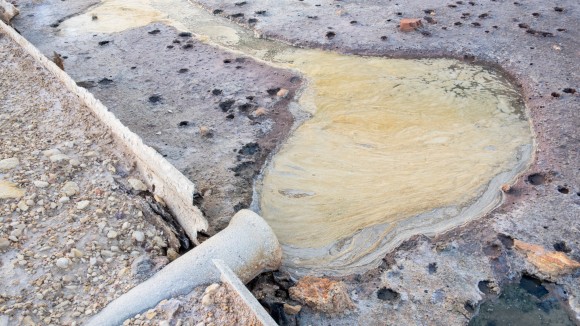
Despite existing regulations, many emerging environmental contaminants remain ungoverned, posing serious risks to ecosystems and human health. Here, we outline governance challenges and propose a global roadmap for their regulation. Proactive identification, risk assessment, and international collaboration are urgently needed to close regulatory gaps and ensure a safer, healthier environment for all.
Climate change is altering bioaccumulation and biological effects of persistent organic pollutants in marine organisms, impacting toxicity, thermal regulation, and energy usage of exposed organisms with broad implications for ecological health.
Phytoremediation of PFAS contaminated soils is limited by the lack of hyperaccumulators. Here, the authors identify an acclimated PFAS hyperaccumulator, Oenothera rosea, and propose a sustainable remediation strategy by elucidating hyperaccumulation mechanism and presenting a life cycle assessment.
Regulations on the amount of per- and polyfluoroalkyl substances allowed in drinking water are getting more and more stringent, and detecting small amounts is challenging. A sensing platform based on a remote gate field-effect transistor allows a sensitivity higher than that required by the US Environmental Protection Agency to be reached.
Atmospheric wet deposition of aerosolized sea-spray is the source of perfluoroalkyl acid in Antarctica and marine and atmospheric circulation encapsulate these forever chemicals in the region, according to an analysis of seawater samples in the west Antarctic Peninsula.
Agricultural landscapes in the Upper Rhine Valley, Germany showed substantial pesticide contamination up to hundreds of metres away from fields, according to analyses of 186 samples of vegetation, topsoil and water taken during the 2022 pesticide application season.
It is crucial, yet challenging, to develop effective polymeric membranes for removing organic micropollutants from water. Here the authors present a data-mechanism-fused machine learning approach to assist the development of such membranes.
This study highlights a protocol that converts various perfluoroalkyl and polyfluoroalkyl substances (PFASs), including fluoroplastics, into valuable fluorochemicals through a solvent-free mechanochemical process, thereby enabling fluorine recovery and contributing to a sustainable circular fluorine economy.
Per- and polyfluoroalkyl substances (PFAS) have substantial environmental and health hazards, but their persistence and stability challenge remediation efforts. Now, a lithium-metal-mediated electroreduction strategy has been developed to effectively degrade PFAS with a high defluorination efficiency across different functional end groups while allowing for upcycling of the released fluoride.