- NEWS AND VIEWS
Systematic maps reveal how human chromosomes are organized
Access options
Access Nature and 54 other Nature Portfolio journals
Get Nature+, our best-value online-access subscription
$32.99 / 30 days
cancel any time
Subscribe to this journal
Receive 51 print issues and online access
$199.00 per year
only $3.90 per issue
Rent or buy this article
Prices vary by article type
from$1.95
to$39.95
Prices may be subject to local taxes which are calculated during checkout
Nature 649, 558-560 (2026)
doi: https://doi.org/10.1038/d41586-025-03808-9
References
Dekker, J. et al. Nature 649, 759–776 (2025).
Simonis, M. et al. Nature Genet. 38, 1348–1354 (2006).
da Costa-Nunes, J. A. & Noordermeer, D. Curr. Opin. Struct. Biol. 81, 102622 (2023).
Davidson, I. F. & Peters, J.-M. Nature Rev. Mol. Cell Biol. 22, 445–464 (2021).
Lupiáñez, D. G. et al. Cell 161, 1012–1025 (2015).
Kim, K. L. et al. Mol. Cell 84, 1365–1376 (2024).
Dekker, J., Rippe, K., Dekker, M. & Kleckner, N. Science 295, 1306–1311 (2002).
Gschwind, A. R. et al. Preprint at bioRxiv https://doi.org/10.1101/2023.11.09.563812 (2023).
Fudenberg, G., Kelley, D. R. & Pollard, K. S. Nature Methods 17, 1111–1117 (2020).
Gabriele, M. et al. Science 376, 496–501 (2022).
Nagano, T. et al. Nature 502, 59–64 (2013).
Competing Interests
The author declares no competing interests.
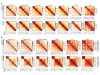 Read the paper: An integrated view of the structure and function of the human 4D nucleome
 A base-pair view of interactions between genes and their enhancers
 Cells use loop extrusion to weave and tie the genome