
Abstract
Despite the rapid development of entrepreneurship education among college students, limited research has examined the hindering role of Chinese parents in this process under the socio-cultural context of China. To address this gap, a quantitative study was conducted to investigate how entrepreneurship education enhances college students’ entrepreneurial self-efficacy (ESE) and the impact of Chinese parental psychological control (PPC). Data were collected from 1,411 college students using structured questionnaires and analyzed using hierarchical regression. Findings revealed that entrepreneurship education significantly boosts college students’ ESE, mediated by harmonious passion. Besides, PPC exerted a negative moderating effect, weakening the positive impact of entrepreneurship education on students’ ESE. This study enriches the understanding of the mechanisms underlying effective entrepreneurship education. It also offers practical implications for entrepreneurship education and training, business educators, and parenting practices in China.
Introduction
Entrepreneurship is regarded as a panacea for economic downturns and employment challenges worldwide1. In 2022, the Chinese State Council issued a national guideline aimed at fostering college student entrepreneurship, explicitly emphasizing the importance of developing entrepreneurship education programs2. In the policy setting, higher education institutions across China have undertaken comprehensive efforts, implementing a diverse array of entrepreneurship education and training programs tailored for college students. Meanwhile, a growing body of research on entrepreneurship education has emerged, delving into its development progress and underlying mechanisms in different contexts3,4.
Research on entrepreneurship education is at an emerging stage, primarily investigating its impact on college students’ entrepreneurial intentions. Some studies indicate that entrepreneurship education can stimulate students’ entrepreneurial intentions4,5,6. However, this inquiry has not reached a consensus, and some research argues that entrepreneurial intention cannot always explain the influence of entrepreneurship education on college students7,8. A pre-and post-test experiment found that entrepreneurial education only increased students’ ESE without enhancing their entrepreneurial intentions9. It is explained that entrepreneurship education aims to teach students the nature, content, and strategies of entrepreneurship, rather than asking them to pursue it. This phenomenon calls for the adoption of more diverse variables, such as ESE, to reveal the influencing mechanisms of entrepreneurship education.
ESE is a critical variable for assessing the impact of entrepreneurship education on college students, yet been overlooked in current research. ESE refers to an individual’s self-assessment and confidence in their ability to successfully manage entrepreneurial tasks10,11. Under the framework of planned behavior theory12, Krueger and Brazeal13stated that self-efficacy is a crucial predictor of individual entrepreneurial activities. Studies have shown that ESE, compared to entrepreneurial intention, also reflects students’ confidence and belief in overcoming difficulties and challenges in the entrepreneurial process, after receiving entrepreneurship education14,15. However, current research has neglected this aspect, focusing mainly on the moderating or mediating role of ESE in entrepreneurship education16,17. To enhance the understanding of entrepreneurship education’s mechanism, we examine the direct impact of entrepreneurship education on college students’ ESE.
In addition, passion is a crucial factor for effective entrepreneurship education, yet current research neglects the varied impacts of different passion types. Research has highlighted the role of passion in entrepreneurship education, as it serves as a powerful driving force for individuals to overcome challenges and achieve entrepreneurial goals18,19. A study in Asia revealed that passion can mediate the positive impact of entrepreneurship education on college students’ entrepreneurial intentions20. Similarly, a field experiment found that entrepreneurship education enhances college students’ business creativity, mediated by entrepreneurial passion19. Despite the emphasis, a one-dimensional view of passion fails to capture the dynamic and nuanced distinctions in entrepreneurs’ psychological processes. Vallerand’s dualistic model of passion includes harmonious and obsessive passion21, with harmonious passion being more suitable for constructing the mechanism of entrepreneurship education. Harmonious passion emphasizes individuals’ positive emotions and autonomy in entrepreneurial experiences21,22, aligning with the goal of entrepreneurship education to provide positive and effective learning experiences for college students23,24. However, current research has not delved into this further. This study thereby examines the mediating role of harmonious passion in the relationship between entrepreneurship education and ESE among Chinese college students.
Additionally, Chinese parents’ negative attitude towards college students’ entrepreneurship may hinder the development of entrepreneurship education, an aspect overlooked by current research. In Western contexts, studies show that financial and emotional support from parents enhances students’ entrepreneurial intentions and reduces their psychological stress25. However, in China, parents’ disapproval of children’s entrepreneurship is more prevalent26,27. This phenomenon is largely related to some socio-cultural factors in China. First, Chinese parents are encultured by the conservatism in Confucian culture, emphasizing safety and stability28. In contrast, entrepreneurship is associated with risk and potential failure, threatening the well-being of their children29. This leads Chinese parents to favor stable careers for their children, such as civil servants or teachers, rather than entrepreneurship26,30. Additionally, the hierarchy of family and filial piety culture in China stresses children’s respect and obedience to their parents29,31. These grant Chinese parents significant control to discourage their children from pursuing entrepreneurship.
Under this context, Chinese parents adopt PPC to prevent college students from pursuing entrepreneurship. PPC refers to parents’ manipulative behaviors that intrude on children’s thoughts and feelings to control their choices32. It manifests in different intrusive forms in our research context, such as continuously instilling negative views of entrepreneurship, overprotecting children from risks and failures in entrepreneurship, and undermining their autonomy in pursuing entrepreneurial endeavors26,33. Research has confirmed that PPC can have negative impacts on children’s educational experiences and career development34,35. This implies that PPC can adversely affect college students’ experiences in entrepreneurship education in China. However, this phenomenon is overlooked by current research and practice.
This study adopted a quantitative method to investigate how entrepreneurship education influences college students’ ESE, together with the mediation role of harmonious passion and the moderation role of PPC. This study provides significant theoretical and practical contributions. First, unlike previous research that focuses on the impact of entrepreneurship education on students’ entrepreneurial intentions, our study contributes to the literature by examining its direct effect on ESE. It deepens our understanding of how entrepreneurship education influences college students. Second, building upon the literature of passion in entrepreneurship education, our study delves deeper by differentiating types of passion, and exploring the specific role of harmonious passion. This nuanced approach enriches the understanding of the influencing mechanisms underlying entrepreneurship education. Third, our study expands the discussion on entrepreneurship education by incorporating parental roles. We examined how PPC, prevalent in Chinese social and cultural contexts, negatively impacts students’ experiences in entrepreneurship education, thereby hindering the effectiveness of programs. This research also offers practical implications for the current implementation and reform of entrepreneurship education. Policymakers and educators can enrich the design and content of entrepreneurship courses. The curriculum can be tailored to foster harmonious passion in aspiring college entrepreneurs. Additionally, the research suggests the need for effective counseling services to help students cope with PPC, especially in China.
Literature review and hypotheses development
Entrepreneurship education and ESE (entrepreneurial self-efficacy)
Entrepreneurship education is a structured program that imparts the skills, knowledge, and mindset necessary for individuals to identify, manage, and create business opportunities effectively24. Research indicates that entrepreneurship education can greatly improve college students’ performance in entrepreneurship in various aspects36. For example, Afolabi et al.37found that entrepreneurship courses can stimulate students’ new ideas, creativity, and innovative abilities, enabling them to effectively manage entrepreneurial projects. Meanwhile, Fayolle and Linan23emphasized that entrepreneurship education is an effective means of internalizing entrepreneurial experiences, knowledge, values, and norms, thereby enabling students to deeply understand and integrate these elements into their entrepreneurial endeavors. In addition, research indicated that some pedagogical start-up programs can help students perceive entrepreneurship as a viable career option and encourage them to bear the risks associated with entrepreneurial activities38. Therefore, entrepreneurship education serves as an effective approach to enhance individuals’ entrepreneurial attitudes and capabilities across multiple aspects39.
ESE is an individual’s belief in their abilities to successfully execute tasks and achieve goals in the context of entrepreneurship10,11,14. Research has confirmed that ESE is a significant factor influencing individuals’ entrepreneurial intentions and behaviors16,17. Specifically, ESE enables individuals to engage their cognitive resources, evaluate their motivations for entrepreneurship, and go through a series of decision-making processes to regulate their behaviors15. During this process, individuals develop attitudes toward the expected outcomes of entrepreneurship and select entrepreneurial goals and challenges that align with their cognition and abilities14. Therefore, many studies consider ESE an effective indicator of one’s confidence and belief in pursuing entrepreneurship40, as well as a key construct in explaining their decisions to select entrepreneurship as a career14,15.
Our research suggests that the entrepreneurship education can positively affect college students’ ESE. Entrepreneurship education equips college students with the fundamental knowledge and skills needed for entrepreneurial success while extracurricular business activities enhance their practical experience41. As students’ entrepreneurial preparedness improves through this educational process, they gain higher confidence and more positive attitudes towards entrepreneurship16. Research indicates that this increased confidence and self-assurance enable individuals to believe in their abilities to successfully start and manage their businesses, thereby significantly boosting their ESE10,15,38,42. Thus, we propose the first hypothesis as follows.
Hypothesis 1
Entrepreneurship education has a significant positive influence on ESE.
Harmonious passion among youth entrepreneurs
Entrepreneurial passion is a strong and enduring emotional attachment to entrepreneurial activities, characterized by intense enthusiasm, motivation, and dedication towards entrepreneurship18,21. Despite the emphasis, prior research often employed a one-dimensional view of entrepreneurial passion, neglecting the diverse impacts that different types of passion can have on entrepreneurial endeavors. The established dualistic model of passion comprises harmonious passion and obsessive passion21,22. Harmonious passion occurs when individuals voluntarily participate in entrepreneurial activities, resulting in positive emotions and balanced entrepreneurial experiences. In contrast, obsessive passion arises when individuals feel compelled to pursue entrepreneurial activities under pressure, leading to negative emotions and an imbalance between work and personal life21,22.
In this study, harmonious passion is considered a more suitable variable to explore the mechanism of entrepreneurship education than obsessive passion. First, our research targets Chinese college students who exhibit spontaneous interest in entrepreneurship. It indicated that entrepreneurship is pursued autonomously with harmonious passion among our participants, not driven in an obsessive and pressured way. It aligns with the knowledge that harmonious passion is more adaptable and balanced than obsessive passion, allowing individuals to engage in entrepreneurial activities flexibly and stably with higher autonomy22,43. Additionally, entrepreneurship education promotes a healthy entrepreneurial mindset among students, enabling them to pursue entrepreneurial aspirations in a balanced and sustainable approach. Harmonious passion is suitable as it maintains a work-life balance and leads to more positive experiences, thereby increasing the efficiency and performance of business ventures21,44. Similar findings in sports show that athletes with harmonious passion stay focused, master their skills, and perform better45.
Given the characteristics of harmonious passion, we propose three hypotheses in the following section. First, our research suggests that entrepreneurship education can increase college students’ harmonious passion for entrepreneurship. The initial purpose of promoting entrepreneurship education was to enhance individuals’ entrepreneurial competencies, business acumen, entrepreneurial motivations, etc46. However, research also highlights that entrepreneurship education plays another vital role in stimulating and encouraging individuals’ entrepreneurial emotions and attitudes47. A harmonious passion for entrepreneurship represents a positive, enthusiastic, and dedicated attitude and emotion toward entrepreneurial activities21,22. Based on these, entrepreneurship education is likely to significantly impact individuals’ harmonious passion for entrepreneurship. Furthermore, studies indicate that the various training and practice sessions in entrepreneurship education can enhance individuals’ mastery and performance in entrepreneurship48. This improvement and achievement can provide satisfaction and deepen their positive feelings, thereby fostering greater harmonious passion in their entrepreneurial endeavors19,45. We thereby make the following hypothesis:
Hypothesis 2
Entrepreneurship education has a significant positive influence on harmonious passion.
Second, our research also proposes that college students’ harmonious passion in entrepreneurship can enhance their ESE. ESE refers to an individual’s confidence and belief in their abilities to fulfill entrepreneurial roles and complete entrepreneurial tasks11,14. Scholars have stated that individuals perform physiological and psychological self-assessments and generate corresponding emotions and feelings, which are key indicators of their perceived self-efficacy49. In an entrepreneurial context, negative emotions convey entrepreneurs’ uncertainty and vulnerability towards entrepreneurship, while positive emotions and feelings of pleasure represent their confidence and autonomy, indicating a higher level of ESE50,51. These positive experiences align with the characteristics of harmonious passion. Baum and Locke52 support our hypothesis that entrepreneurs’ love for work significantly enhances their ESE in the development of ventures. Based on this, we propose the following hypothesis.
Hypothesis 3
Harmonious passion has a significant positive influence on ESE.
Third, building on the prior hypotheses 1 and 2, we predict that harmonious passion mediates the effect of entrepreneurship education on ESE. Specifically, when entrepreneurship education enhances college students’ essential skills, knowledge, and overall capabilities, the satisfaction owing to mastery and better performance in entrepreneurship makes college students develop strong and positive emotions toward entrepreneurial pursuits19,45,48. These intensive positive emotions translate into high levels of harmonious passion. It makes them feel more competent and satisfied with their entrepreneurial abilities, thereby boosting their confidence and belief in their ability to succeed, which is known as ESE50,51. It is noteworthy that the mediating role of harmonious passion has been confirmed in various studies across different contexts53,54. Thus, driven by the motivational and emotional aspects of entrepreneurship education, harmonious passion transforms educational experiences into passionate commitment, thereby enhancing students’ confidence and belief in their entrepreneurial careers. Therefore, we make the following hypothesis:
Hypothesis 4
Harmonious passion mediates the relationship between entrepreneurship education and ESE.
PPC (parental psychological control) and Chinese context
Regarding college student entrepreneurship, Chinese parents generally hold negative attitudes of disagreement and opposition26, but the phenomenon has been overlooked by current literature. Research primarily explores the impact of parental support and parents’ business backgrounds on college student entrepreneurship, with a focus mainly on Western contexts. For example, Suhartanto55 mentioned that parental support can enhance the ESE of the next generation, while Lindquist et al.56indicated that having entrepreneurial parents can increase their children’s likelihood of starting a business by around 60%. However, in the sociocultural context of China, studies have found that Chinese parents discourage or even oppose their college-ongoing children from choosing entrepreneurship as a career. An investigation shows that college students’ entrepreneurial pursuits are always negatively discussed by their parents and relatives, causing significant family pressure on them26. Chinese parents in a qualitative study insisted that entrepreneurship was “not a realistic career option” for their college-ongoing children27. Instead, Chinese parents prefer stable, low-risk careers like civil servants and teachers for their children26,30.
In the context of parent-child tension regarding entrepreneurship, Chinese parents’ excessive intervention, protection, and indoctrination of their college-going children can lead to PPC, yet there is a lack of in-depth exploration in research. This phenomenon is possibly related to Chinese sociocultural factors57. First, most Chinese parents, influenced by Confucian culture, advocate conservatism and family hierarchy28. Research indicates that conservatism emphasizes risk aversion and a preference for stability and security, which clash with the uncertainty and risk inherent in entrepreneurship29. Therefore, Chinese parents worry that entrepreneurial risks could harm their children, leading them to overly intervene and even prevent their college-ongoing children from pursuing entrepreneurship26,33. These intense interventions and indoctrinations by Chinese parents dampen college students’ autonomy over entrepreneurship, translating into PPC32. Second, the family hierarchy in Chinese traditional culture emphasizes parental care for children, and children’s respect for parents31. This dynamic enables Chinese parents to take the initiative during disagreements, granting them greater PPC over their children’s entrepreneurial pursuits. Third, filial piety in Chinese traditional ethos highlights children’s respect and obedience to their parents29. Research shows that filial piety can significantly increase the level of PPC58. As a result, college students encultured by filial piety are more likely to accept their parents’ negative views on entrepreneurship and be more receptive to PPC. Overall, Chinese parents generally disagree with their college-ongoing children pursuing entrepreneurship, and it often causes PPC over their children catalyzed by various sociocultural factors. However, there is a lack of literature explaining the specific impact of PPC on Chinese youth entrepreneurs.
In this research, we suggest that Chinese college students’ perceived PPC weakens the impact of entrepreneurship education on students’ ESE. PPC refers to an intrusive and manipulative parenting style, where parents employ verbal or behavioral means to exert pressure and infringe upon the emotional and psychological autonomy of young individuals, such as guilt-inducing, loving withdrawal, and authority assertion59,60. Research has confirmed that PPC is a disrespectful and harmful parenting style that negatively impacts children at various stages of development, including (early)childhood, adolescence, and early adulthood35,59. One of the most significant side effects of PPC is its detrimental impact on students’ learning experience. Numerous studies have shown that PPC is negatively associated with students’ academic performance and outcomes and perceptions of academic competence60,61,62. The reason is that psychological control exerted by parents undermines students’ autonomy and self-esteem61,63, and exacerbates negative emotions in their learning process, such as anxiety and depression64.
In our research, Chinese parents exert PPC to negatively influence their children’s attitudes and emotions towards entrepreneurship, ensuring children’s compliance with their disapproval of entrepreneurial pursuits. Despite entrepreneurship education’s efforts to enhance the entrepreneurial skills, knowledge, and self-efficacy of Chinese youth, the presence of PPC significantly undermines its educational effectiveness. PPC diminishes students’ confidence in their entrepreneurial abilities, increases their fear of risks and failure, and reduces their motivation to engage in entrepreneurial activities. Therefore, we propose the following hypothesis.
Hypothesis 5
PPC negatively moderates the relationship between entrepreneurship education and ESE.
According to the literature review and hypotheses development, the hypothetical model is demonstrated in Fig. 1.
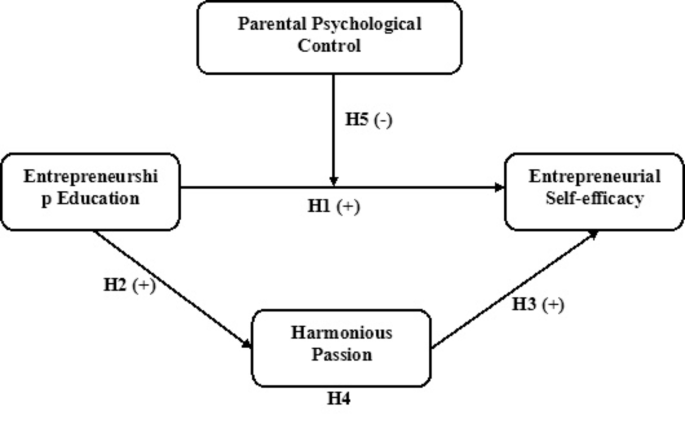
The Hypothetical Model in this Study.
Methods
Participants
In our research, 1,957 young students were invited to participate in the online survey, and 1,411 of them successfully completed it, achieving a 72% response rate. The selection criteria for our participants included: (1) full-time undergraduates (Year 1-Year 4), (2) aged between 18 and 24 years old, (3) having entrepreneurial intentions, (4) having taken or are currently taking courses and training related to entrepreneurship education.
After obtaining the ethical approval from Xi’an Jiaotong-Liverpool University, our researchers distributed research information packages to student support officers at various universities. It is guaranteed that all participants have read the research information sheet and signed the consent form before voluntarily participating in this online survey. In this process, participants could withdraw at any time according to the ethical principles. All the methods were implemented in accordance with relevant guidelines and regulations.
Regarding the demographics, 700 participants are male (41.9%), and 972 participants are female (58.1%). The median age of the participants is 20, while the average age is 19.7. Participants come from diverse disciplinary fields, including business (13. 8%), STEM (46%), humanities and social sciences (28.3%), and medical science (11.9%).
Measurement
Our researchers developed the survey based on the well-established scales by Liñán et al.65, Zhao et al.66, Vallerand21, and Wang et al.32The survey consists of five components: (1) participants’ demographic information, (2) entrepreneurship education, (3) ESE, (4) harmonious passion, and (5) perceived PPC. Considering the Chinese context of our study, we used standard translation and back-translation methods to ensure that the survey’s meaning and nuances were appropriate for various linguistic and cultural backgrounds67. In the following sections, we provide detailed information about the research tools and report their Cronbach’s alpha coefficients to ensure the internal consistency and reliability of our survey.
Entrepreneurship education
Our study utilized the scale developed by Liñán et al.65. to assess the extent to which entrepreneurship education helps college students enhance various entrepreneurial aspects. This scale consists of five items corresponding to five dimensions, encompassing (1) the knowledge about the entrepreneurial environment, (2) greater recognition of the entrepreneur’s figure, (3) the preference to be an entrepreneur, (4) the necessary abilities to be an entrepreneur, and (5) the intention to be an entrepreneur65. Each item is scored on a 5-point scale, where 1 indicates not possible at all, and 5 indicates very likely. The Cronbach’s α of the scale in our study was 0.927.
ESE (entrepreneurial self-efficacy)
The scale for measuring ESE is adopted from Zhao et al.66 It comprises four items and our participants are requested to rate their confidence in conducting specific entrepreneurial tasks, such as identifying new business ideas, thinking in a creative way, and creating new products. Responses are given on a 5-point Likert scale ranging from 1 (strongly disagree) to 5 (strongly agree). The Cronbach’s α for this measurement was 0.946.
Harmonious passion
Our study employed the scale developed by Vallerand21 to assess the participants’ harmonious passion for business ventures. The original scale consists of seven items intended to measure general harmonious passion. We slightly rephrased these items to better fit our entrepreneurial context, drawing on former studies by Sirén et al.22 and Stroe et al.44 Examples of the items include, “I believe that entrepreneurship is born out of my passion and interest, and I can control it well”, and “I believe that entrepreneurship allows me to live memorable experiences.” The tool uses a 5-point Likert scale ranging from 1 (strongly disagree) to 5 (strongly agree), and its Cronbach’s α is 0.914.
PPC (parental psychological control)
We measured the PPC using a scale adapted from Wang et al.32The scale is based on Barber68 and was later developed to fit the Chinese context. Participants are asked to rate their perceived PPC with 18 items in three dimensions: 1) guilty induction (10 items, e.g., my parents would tell me of all the sacrifices they have made for me), love withdrawal (5 items, e.g., my parents would avoid looking at me when I have disappointed them), and authority assertion (3 items, e.g., my parents would say, when I grow up, I would appreciate all the decisions they made for me). Responses are given on a 5-point Likert scale from 1 (never) to 5 (always). The Cronbach’s α of this scale is 0.963.
Controlled variables
We included gender, age, major, family income, and location as control variables to alleviate confounding effects during our analysis. It resulted from the prior research findings suggesting that these factors can influence college students’ self-efficacy and passion for entrepreneurship and their perceptions and performance in entrepreneurial education69,70. Specifically, participants are required to report their gender and age accurately. The item for inquiring family income provides a bar of options ranging from below 5,000 RMB to above 100,000 RMB. Meanwhile, the item for asking majors provides four general disciplinary fields, including business, STEM, humanities and social sciences, and medical science. We also provide an “other” option, allowing participants to fill in a different answer if the provided ones do not apply.
Analysis
This study uses SPSSAU software and takes three steps to conduct data analysis. First, we conducted reliability and validity analyses on our survey. The Cronbach’s alpha values and Composite Reliability (CR) values were used to assess construct validity, and Average Variance Extracted (AVE) was used to evaluate structural validity. We also used the Fornell-Larcker criterion to determine discriminant validity71. Next, descriptive statistical analysis was employed to display different variables’ mean and standard deviation, offering a holistic understanding of the data’s central tendency and dispersion. Meanwhile, a correlation analysis was conducted to indicate the relationships between variables71. These analyses were reported in Table 1. Third, we used hierarchical regression techniques to test our theoretical model and hypotheses in Table 272. To avoid the issue of multicollinearity, we centralized the variables and performed a collinearity diagnosis, noting that all Variance Inflation Factor (VIF) values are below 5, which is acceptable73.
Preliminary statistic analysis
First, the primary constructs used in this study meet the standards of reliability and validity. The Cronbach’s α values ranged from 0.914 to 0.963, greater than the threshold of 0.7. The CR values ranged from 0.893 to 0.962, also exceeding the threshold of 0.7. In addition, all AVE values surpassed 0.5. These metrics collectively indicate robust construct reliability and convergent validity. Furthermore, the square roots of the AVE values for each scale construct in the model, highlighted in bold and underlined, exceeded the inter-construct correlations. This satisfies the Fornell-Larcker criterion and establishes discriminant validity74.
We also performed descriptive statistics and correlation analysis, as shown in Table 1. The mean value of entrepreneurship education is 2.442 (SD = 0.940), ESE is 3.162 (SD = 0.946), harmonious passion is 3.965 (SD = 0.583), and PPC is 2.481 (SD = 0.925). Besides, entrepreneurship education in our Chinese youth participants is significantly and positively correlated with their ESE (r = 0.257, p < 0.001), and harmonious passion (r = 0.194, p < 0.001). ESE is also significantly and positively correlated with harmonious passion (r = 0.394, p < 0.001), but negatively correlated with PPC (r = -0.062, p < 0.05). The outcomes align with the theoretical expectations, allowing for further hypothetical testing.
Hypothetical test
The researchers adopted hierarchical regression techniques to examine the four hypotheses through SPSSAU software. We initially examined the main effect of entrepreneurship education on the ESE among college students in Model 2, with demographic variables controlled. The results indicate that entrepreneurship education significantly enhances the ESE of these students (Model 2: β = 0.238, p < 0.001). This positive correlation persists consistently even after including different variables and interaction terms in subsequent models. Therefore, Hypothesis 1 is supported.
Hypothesis 2
suggests that entrepreneurship education enhances the harmonious passion for entrepreneurship among college students. We examined this hypothesis in Model 1, and found that the coefficient of entrepreneurship education in this model is significant and positive (Model 1: β = 0.189, p < 0.001). This implies that entrepreneurship education can significantly boost college students’ harmonious passion for entrepreneurship. Accordingly, Hypothesis 2 is supported. Afterwards, hypothesis 3 is examined in Model 3, and the coefficient of harmonious passion is significant and positive (Model 3: β = 0.377, p < 0.001). The findings confirmed that harmonious passion significantly and positively affects the mediator ESE. Hypothesis 3 is supported.
Hypothesis 4
indicates that harmonious passion mediates the main effect of entrepreneurship education on ESE. We thereby adopted the instructions by Baron and Kenny72 to test the mediation effect. We introduced both entrepreneurship education (independent variable) and harmonious passion (mediating variable) in Model 4 to compare its findings with Model 2. Results show that entrepreneurship education (Model 4: β = 0.173, p < 0.001) and harmonious passion (Model 4: β = 0.344, p < 0.001) both positively influence college students’ ESE. Importantly, the main effect of entrepreneurship education on ESE decreased from Model 2 (β = 0.238, p < 0.001) to Model 4 (β = 0.173, p < 0.001). Therefore, Hypothesis 4 is supported that college students’ harmonious passion partially mediated the main effect.
Hypothesis 5
suggests that PPC negatively moderated the main effect of entrepreneurship education on ESE. To test this hypothesis, we first introduced PPC in model 5 to assess its direct effect on ESE. The coefficient of PPC in this model is insignificant (Model 5: β = -0.045, p > 0.05). Subsequently, we created an interaction term by multiplying the mean-centred variables of PPC and entrepreneurship education to examine its moderating effect. The interaction coefficient of PPC and entrepreneurship education yielded statistical significance, but displayed a negative association (Model 6: β = -0.068, p < 0.01). This indicates that the interaction term (PPC × entrepreneurship education) has a significant negative impact on college students’ ESE.
To further outline the moderating effect observed in Model 6, we depicted the simple slope plot in Fig. 2. It is constructed with the x-axis representing entrepreneurship education, and the y-axis representing ESE, together with the high level (+ 1 SD, one standard deviation above the mean) and low level (-1 SD, one standard deviation below the mean) of the moderator PPC73. Figure 2 shows that when college students have a low level of PPC, the entrepreneurship education they enrolled in has a significant and positive impact on their ESE. By contrast, when the level of PPC is high, the main effect of entrepreneurship education on ESE is weakened. Therefore, Hypothesis 4 is accepted.

The moderating effect of PPC on the relationship between entrepreneurship education and ESE.
Discussion
This study investigates how entrepreneurship education enhances college students’ ESE through the mediating role of harmonious passion. It also examines the moderating role of PPC within the unique Chinese context. By constructing hypotheses and employing quantitative data collection and analysis, we found that current entrepreneurship education significantly improves students’ ESE, partly mediated by their harmonious passion. Additionally, we observed that PPC weakens the positive effects of entrepreneurship education on college students’ ESE. This unique phenomenon reflects the general attitudes toward entrepreneurship among Chinese parents, which can be related to specific sociocultural factors, social legitimacy, and norms regarding entrepreneurship in China. These findings have significant theoretical and practical implications for the practice and reform of entrepreneurship education.
Direct impact of entrepreneurship education on ESE
The findings show that entrepreneurship education has a significant positive effect on college students’ ESE. When college students increasingly engage in and benefit from entrepreneurship education, their confidence, beliefs, and ESE in entrepreneurship enhance accordingly. This finding is consistent with current literature on entrepreneurship education, which highlights its positive impact on individuals’ entrepreneurial performance (e.g., entrepreneurial inclination, intention, behavior, creativity, etc.) and promotes the overall advancement of entrepreneurial activities within society36,46,47. However, while most research focuses on the impact of entrepreneurship education on individual entrepreneurial intentions and attitudes75,76, our study addresses this gap by investigating its direct impact on college students’ ESE within the Chinese context.
Specifically, entrepreneurship education enhances students’ knowledge and skills, stimulates their innovative ideas and creativity, and helps them recognize both the risks and rewards of entrepreneurship. This fosters a more positive and confident attitude towards entrepreneurship. These outcomes significantly improve students’ expectations and beliefs about entrepreneurial success, thereby enhancing their ESE. Various studies have supported similar conclusions15,38,42,77.
Mediating role of harmonious passion
The findings also illustrate that college students’ harmonious passion for entrepreneurship can mediate the direct impact of entrepreneurship education on their ESE. We first demonstrate that entrepreneurship education can enhance college students’ harmonious passion for entrepreneurship (Hypothesis 2). This finding aligns with existing literature20,78,79, which shows that entrepreneurship education can stimulate and increase individual enthusiasm and positive attitudes toward entrepreneurship, encompassing entrepreneurial passion. Subsequently, we verified that college students’ harmonious passion for entrepreneurship can increase their ESE (Hypothesis 3), a finding supported by existing research14,43,80. Harmonious passion instills college students with positive emotions and a sense of pleasure, promoting more favorable perceptions of entrepreneurship and associated risks. This, in turn, bolsters their belief and confidence in entrepreneurial success, thereby augmenting their ESE.
Based on this, our study further confirms that the harmonious passion perceived by college students can partially mediate the positive impact of entrepreneurship education on ESE (Hypothesis 4). When college students’ entrepreneurial skills, knowledge, and overall competencies are enhanced through entrepreneurship education, they experience increased positive emotions and satisfaction from improved understanding and performance in entrepreneurship. This leads to a heightened harmonious passion for entrepreneurial pursuits, strengthening their belief in their ability to succeed in entrepreneurship, understood as an increased ESE19,45,50.
These findings present two notable advancements beyond existing literature. First, while previous research separately examines links among entrepreneurship education, entrepreneurial passion, and SES77,80, our study expands on the evidence by proposing and validating a mediation model to interpret how entrepreneurship education boosts college students’ ESE through harmonious passion. Second, our research focuses on harmonious passion rather than general entrepreneurial passion, as previous studies do. Unlike obsessive passion, harmonious passion involves voluntary participation in entrepreneurial activities, leading to positive emotions and a balanced entrepreneurial experience21,22. This aligns more closely with the positive learning experiences provided by entrepreneurship education. Additionally, harmonious passion emphasizes the emotions arising from the internalization of entrepreneurial activities into one’s self-identity79. This self-identification with a positive mindset is consistent with the mechanism of self-efficacy49. Therefore, harmonious passion, as a moderating variable in our research, more accurately and convincingly explains the mechanism through which entrepreneurship education positively impacts college students’ ESE.
Moderating role of PPC
The results show that PPC negatively moderates the impact of entrepreneurship education on ESE (Hypothesis 5). When Chinese college students perceive a higher level of PPC, the positive impact of entrepreneurship education on ESE is less significant. This finding aligns with the current knowledge on PPC, but introduces the innovative insight that such control exerted by parents can negatively influence college students’ experience of entrepreneurial education, particularly in the unique Chinese context.
In our research context, Chinese parents influenced by conservative culture tend to discourage their children from pursuing high-risk entrepreneurship, preferring stable jobs with social status, such as doctors and civil servants26,30. To express their disapproval and deter their children from entrepreneurial endeavors, some Chinese parents continuously indoctrinate negative views about entrepreneurship and become overly involved in their children’s career choices. This involvement often results in varying degrees of PPC, aiming to manipulate and deprive their children’s autonomy in entrepreneurship60. Although entrepreneurship education keeps enhancing college students’ competencies and ESE in entrepreneurship, PPC imposes psychological pressure on these aspiring college students and undermines their autonomy and self-esteem in business ventures. This mechanism aligns with the current understanding of PPC in literature59,61,81. Consequently, the PPC exerted by parents has diminished the effectiveness of entrepreneurship education in the Chinese context.
This finding can be explained by parental protective instincts and unique sociocultural factors in China. When college students embark on business ventures, they face high risks and potential consequences of failure, such as bankruptcy and wasted time. Parents perceive these entrepreneurial risks and failures as significant threats to their children. According to Rogers’ motivation theory82, parental protective instincts are triggered to prevent their children from pursuing entrepreneurship, accompanied by negative attitudes and disapproving behaviors83. When parents pressure their children to abandon entrepreneurship, their attitudes and behaviors may manifest as PPC, which diminishes the children’s enthusiasm for entrepreneurship education.
In addition, some unique sociocultural factors in China may be related to this finding. Firstly, the inherent risks of entrepreneurship contradict the conservative values upheld by most Chinese parents26,29, creating conflicts between parents and their college-ongoing on entrepreneurial aspirations. Secondly, the hierarchical structure of Chinese families places parents in a dominant position regarding their children’s career choices28,31, leading them to intervene and exert PPC over their children’s entrepreneurial pursuits. Thirdly, the cultural value of filial piety in China encourages college students to adhere to their parents’ perspectives, making them more receptive to the negative influence of PPC58.
Implications
This research yielded significant theoretical and practical implications. First, our study presents a theoretical model to explain how entrepreneurship education supports college students’ entrepreneurial pursuits in the Chinese context. Previous research often focused on students’ entrepreneurial intentions as an outcome variable when assessing the effectiveness of entrepreneurship education75,76, overlooking other indicators such as ESE. This study addresses this gap by examining college students’ ESE to enhance the theoretical understanding of the mechanisms underlying entrepreneurship education among college students.
Second, our research fills the gap by examining the mediating role of harmonious passion in the relationship between entrepreneurship education and ESE among Chinese college students. Previous studies normally utilized one-dimensional passion in entrepreneurship education research, overlooking the dynamism and distinctions brought by different kinds of passion. Our study takes a more nuanced approach by differentiating between harmonious passion and obsessive passion, and specifically examining the role of harmonious one in our hypothetical model. This allows us to gain a deeper theoretical understanding of the mechanisms influencing the effectiveness of entrepreneurship education in China.
Third, our study innovatively considers the parental roles within the Chinese context of entrepreneurship education. College students are in their emerging adulthood stage, and their education experience and career development are significantly shaped by their parents84. However, existing research overlooks the potential impact of parents on college students’ engagement in entrepreneurship education. Our study addresses this theoretical gap, revealing that Chinese parents use PPC to discourage their children from pursuing high-risk entrepreneurial careers in the Chinese social-cultural contexts. This finding broadens the theoretical scope of current discussions on entrepreneurship education and provides valuable insights for future research.
Our study offers several practical implications, particularly for entrepreneurship education and parenting. Firstly, the goals and content of entrepreneurship education should be updated to consider the influence of parents and college students’ mental health. For instance, programs could invite Chinese parents to engage in related activities and workshops to help them understand the risks and rewards of entrepreneurship and the importance of supporting their children’s entrepreneurial explorations. Additionally, it’s crucial to include psychological counselling and support in the curriculum to boost students’ ESE and mitigate negative mindsets, such as PPC. Moreover, research shows that successful entrepreneurial role models positively impact individual entrepreneurial activities85. Therefore, entrepreneurship education can showcase examples of successful entrepreneurs to both parents and students, highlighting the positive role of parental support in the entrepreneurial process.
Furthermore, Chinese parents can gain valuable insights from our study to improve their parenting styles. Some Chinese parents should recognize that excessive psychological control can lead to numerous negative effects61,68, particularly in harming their children’s entrepreneurial potential. Parents should adopt an open and supportive parenting style, understand their children’s interests and goals, and support their endeavors in business ventures. This approach respects children’s independence and autonomy in entrepreneurial activities, fostering better family support and understanding.
Limitations and future directions
This study has certain limitations but offers directions for future research. First, our quantitative research constructed a hypothetical model to investigate relationships between different variables but lacked qualitative data to elucidate the underlying mechanisms of the model. Future research could adopt qualitative methods, such as in-depth interviews or focus groups, to explore college students’ motivations, experiences, and perceptions in entrepreneurship education and parental roles, thereby providing richer theoretical support and empirical evidence for the existing models.
Second, this study measured students’ perceived PPC and their self-assessments during entrepreneurship education. However, it did not include direct data and perspectives from parents and entrepreneurship educators. Educators, curriculum designers, and parents might have unique but subtle attitudes and perspectives on student entrepreneurship. Future research could conduct follow-up studies on different stakeholders to enhance the theoretical framework of entrepreneurship education and improve its effectiveness for boosting promising college student entrepreneurs.
Third, this study considered various socio-cultural factors (e.g., conservatism, family hierarchy, filial piety) in China to explain how PPC weakens the impact of entrepreneurship education on students’ ESE. However, the current literature lacks direct evidence for these explanations, necessitating further empirical research. Future studies could employ longitudinal and cross-cultural research to deeply explore how socio-cultural factors influence Chinese parents’ attitudes and behaviors toward their college-ongoing children’s entrepreneurial pursuits. This would provide a theoretical foundation for developing more effective entrepreneurship education.
Data availability
The data for this study is sourced from the first author’s doctoral research project. The data are not publicly available but can be accessed upon reasonable request to the corresponding author.
References
Shane, S. & Venkataraman, S. The promise of entrepreneurship as a field of research. Acad. Manage. Rev. 25, 217–226 (2000).
The General Office of the State Council. Guidance on Further Supporting College Students’ Innovation and Entrepreneurship. Preprint at (2022). https://www.gov.cn/zhengce/content/2021-10/12/content_5642037.htm
Bergmann, H., Hundt, C. & Sternberg, R. What Makes Student entrepreneurs? On the Relevance (and Irrelevance) of the University and the Regional Context for Student Start-ups. Small Bu. Econ. 47, 53–76 (2016).
Xu, J., Fu, Y. & Zhang, X. Does entrepreneurship education in China develop entrepreneurial intention? The role of self-efficacy and experience. PloS one. 18, e0286090 (2023).
Lyons, E. & Zhang, L. Who does (not) benefit from entrepreneurship programs? Strategic Manage. J. 39, 85–112 (2023).
Hou, F., Su, Y., Qi, M., Chen, J. & Tang, J. A multilevel model of entrepreneurship education and entrepreneurial intention: Opportunity recognition as a mediator and entrepreneurial learning as a moderator. Front. Psychol. 13, 837388 (2023).
Volery, T., Müller, S., Oser, F., Naepflin, C. & Rey, N. The impact of entrepreneurship education on human capital at upper-secondary level. J. Small Bus. Manage. 51, 429–446 (2013).
Lima, E., Lopes, R. M., Nassif, V. & Silva, D. Opportunities to improve entrepreneurship education: Contributions considering brazilian challenges. J. Small Bus. Manage. 53, 1033–1051 (2014).
Chen, S. C. et al. Can the entrepreneurship course improve the entrepreneurial intentions of students? Int. Entrep Manage. J. 11, 557–569 (2013).
Bandura, A. On the functional properties of perceived self-efficacy revisited. J. Manage. 38, 9–44 (2012).
McGee, J. E., Peterson, M., Mueller, S. L. & Sequeira, J. M. Entrepreneurial self-efficacy: Refining the measure. Entrep Theor. Pract. 33, 965–988 (2009).
Ajzen, I. The theory of planned behavior. Organ. Behav. Hum. Deci Process. 50, 179–211 (2009).
Krueger, N. F. & Brazeal, D. V. Entrepreneurial Potential and Potential Entrepreneurs. Entrep Theor. Pract. 18, 91–104 (1994).
Neneh, B. N. Entrepreneurial passion and entrepreneurial intention: The role of social support and entrepreneurial self-efficacy. Stud. High. Edu. 47, 587–603 (2022).
Tsai, K. H., Chang, H. C. & Peng, C. Y. Extending the link between entrepreneurial self-efficacy and intention: A moderated mediation model. Int. Entrep Manage. J. 12, 445–463 (2016).
Hsu, D. K. et al. I know I can, but I don’t fit: Perceived fit, self-efficacy, and entrepreneurial intention. J. Bus. Ventur. 34, 311–326 (2019).
Duong, C. D. & Vu, N. X. Entrepreneurial Education and Intention: Fear of failure, Self-efficacy and Gender. J Small Bus. Enterp. Dev. ahead-of-print (2023).
Cardon, M. S., Gregoire, D. A., Stevens, C. E. & Patel, P. C. Measuring entrepreneurial passion: Conceptual foundations and scale validation. J. Bus. Ventur. 28, 373–396 (2013).
Gielnik, M. M. et al. Action and action-regulation in entrepreneurship: Evaluating a student training for promoting entrepreneurship. Acade Manage. Learn. Educ. 14, 69–94 (2015).
Uddin, M. et al. Developing entrepreneurial intentions among business graduates of higher educational institutions through entrepreneurship education and entrepreneurial passion: A moderated mediation model. Int. J. Manage. Educ. 20, 100647 (2015).
Vallerand, R. J. The psychology of passion: A dualistic model (Oxford University Press, 2015).
Sirén, C., Patel, P. C. & Wincent, J. How do harmonious passion and obsessive passion moderate the influence of a CEO’s change-oriented leadership on company performance? Leadersh. Q. 27, 653–670 (2016).
Fayolle, A. & Liñán, F. The future of research on entrepreneurial intentions. J. Bus. Res. 67, 663–666 (2014).
Neck, H. M. & Greene, P. G. Entrepreneurship education: Known worlds and new frontiers. J. Small Bus. Manage. 49, 55–70 (2011).
Turulja, L., Veselinovic, L., Agic, E. & Pasic-Mesihovic, A. Entrepreneurial intention of students in Bosnia and Herzegovina: What type of support matters? Econ. Res-Ekon Istraž. 33, 2713–2732 (2020).
Wang, X., Chen, F. & Ni, H. The dark side of university student entrepreneurship: Exploration of Chinese universities. Front. Psychol. 13, 942293 (2022).
Hao, T. & Pilz, M. Attractiveness of VET in China: A study on secondary vocational students and their parents. J. Educ. Work. 34, 472–487 (2021).
Zhang, Y. B., Lin, M. C., Nonaka, A. & Beom, K. Harmony, hierarchy and conservatism: A cross-cultural comparison of Confucian values in China, Korea, Japan, and Taiwan. Commu Res. Rep. 22, 107–115 (2005).
Zhao, C. & Li, X. Living under the shadow: Adverse childhood experiences and entrepreneurial behaviors in Chinese adults. J. Bus. Res. 138, 239–255 (2022).
Zhang, Q. & Tian, X. A study of college students’ civil servants fever based on Chinese and Western values. Sociol. Mind. 4, 221–225 (2014).
Su, C. & Hynie, M. Effects of life stress, social support, and cultural norms on parenting styles among mainland Chinese, European Canadian, and Chinese Canadian immigrant mothers. J. Cross-Cult Psychol. 42, 944–962 (2010).
Wang, Q., Pomerantz, E. M. & Chen, H. The role of parents? Control in early adolescents? Psychological functioning: A longitudinal investigation in the United States and China. Child. Dev. 78, 1592–1610 (2007).
Kang, Y. & Xiong, W. Is entrepreneurship a remedy for Chinese university graduates’ unemployment under the massification of higher education? A case study of young entrepreneurs in Shenzhen. Int. J. Educ. Dev. 84, 102406 (2021).
Desjardins, T. & Leadbeater, B. J. Changes in parental emotional support and psychological control in early adulthood. Emerg. Adulthood. 5, 177–190 (2016).
Costa, S., Hausenblas, H. A., Oliva, P., Cuzzocrea, F. & Larcan, R. Perceived parental psychological control and exercise dependence symptoms in competitive athletes. Int. J. Ment Health Ad. 13, 59–72 (2015).
Kuratko, D. F. The emergence of entrepreneurship education: Development, trends, and challenges. Entrep Theor. Pract. 29, 577–598 (2005).
Afolabi, M. O., Kareem, F. A., Okubanjo, I. O., Ogunbanjo, O. A. & Aninkan, O. O. Effect of Entrepreneurship Education on Self-Employment Initiatives among Nigerian Science & Technology Students. J. Educ. Pract. 8, 44–51 (2017).
Cui, J. & Bell, R. Behavioural entrepreneurial mindset: How entrepreneurial education activity impacts entrepreneurial intention and behaviour. Int. J. Manage. Educ. 20, 100639 (2022).
Fiet, J. O. The theoretical side of teaching entrepreneurship. J. Bus. Ventur. 16, 1–24 (2001).
Boyd, N. G. & Vozikis, G. S. The influence of self-efficacy on the development of entrepreneurial intentions and actions. Entrep Theor. Pract. 18, 63–77 (1994).
Edelman, L. F., Manolova, T. S. & Brush, C. G. Entrepreneurship education: Correspondence between practices of nascent entrepreneurs and textbook prescriptions for success. Acad. Manage. Learn. Educ. 7, 56–70 (2020).
Maheshwari, G. & Kha, K. L. Investigating the relationship between educational support and entrepreneurial intention in Vietnam: The mediating role of entrepreneurial self-efficacy in the theory of planned behavior. Int. J. Manage. Educ. 20, 100553 (2022).
Feng, B. & Chen, M. The impact of entrepreneurial passion on psychology and behavior of entrepreneurs. Front. Psychol. 11, 1733 (2020).
Stroe, S., Sirén, C., Shepherd, D. & Wincent, J. The dualistic regulatory effect of passion on the relationship between fear of failure and negative affect: Insights from facial expression analysis. J. Bus. Ventur. 35, 105948 (2020).
Mageau, G. A. et al. On the development of harmonious and obsessive passion: The role of autonomy support, activity specialization, and identification with the activity. J. Pers. 77, 601–646 (2009).
Martin, B. C., McNally, J. J. & Kay, M. J. Examining the formation of human capital in entrepreneurship: A meta-analysis of entrepreneurship education outcomes. J. Bus. Ventur. 28, 211–224 (2013).
Wang, S. M., Yueh, H. P. & Wen, P. C. How the new type of entrepreneurship education complements the traditional one in developing entrepreneurial competencies and intention. Front. Psychol. 10, 2048 (2019).
Baron, R. A. & Henry, R. A. How entrepreneurs acquire the capacity to excel: Insights from research on expert performance. Strateg Entrep J. 4, 49–65 (2010).
Wood, R. & Bandura, A. Social cognitive theory of organizational management. Acade Manage. Rev. 14, 361–384 (1989).
Li, C. et al. Entrepreneurial passion to entrepreneurial behavior: Role of entrepreneurial alertness, entrepreneurial self-efficacy and proactive personality. Front. Psychol. 11, 1611 (2020).
Murnieks, C. Y., Mosakowski, E. & Cardon, M. S. Pathways of passion: Identity centrality, passion, and behavior among entrepreneurs. J. Manage. 40, 1583–1606 (2014).
Baum, J. R. & Locke, E. A. The relationship of entrepreneurial traits, skill, and motivation to subsequent venture growth. J. Appl. Psychol. 89, 587–598 (2004).
Liu, D., Chen, X. P. & Yao, X. From autonomy to creativity: A multilevel investigation of the mediating role of harmonious passion. J. Appl. Psychol. 96, 294–309 (2014).
Dubreuil, P., Forest, J. & Courcy, F. From strengths use to work performance: The role of harmonious passion, subjective vitality, and concentration. J. Posit. Psychol. 9, 335–349 (2014).
Suhartanto, E. The mediating effect of family business self-efficacy on parental support and succession intention relationship. J. Fam Bus. Manage. 13, 905–922 (2023).
Lindquist, M. J., Sol, J. & Van Praag, M. Why Do Entrepreneurial Parents Have Entrepreneurial Children? J. Labor Econ. 33, 269–296 (2015).
Lu, J. Confucius Stands on the London eye- an auto-ethnographic Study. Ethnogr Educ. 14, 51–64 (2020).
Guo, M., Wang, L., Day, J. & Chen, Y. The relations of parental autonomy support, parental control, and filial piety to Chinese adolescents’ academic autonomous motivation: A mediation model. Front. Psychol. 12, 724675 (2005).
Barber, B. K., Stolz, H. E., Olsen, J. A., Collins, W. A. & Burchinal, M. Parental support, psychological control, and behavioral control: Assessing relevance across time, culture, and method. Monogr. Soc. Res. Child. Dev. 70, 1–147 (2005).
Soenens, B. & Vansteenkiste, M. A. Theoretical Upgrade of the Concept of Parental Psychological control: Proposing New Insights on the Basis of self-determination Theory. Dev. Rev. 30, 74–99 (2010).
Filippello, P., Buzzai, C., Messina, G., Mafodda, A. V. & Sorrenti, L. School refusal in students with low academic performances and specific learning disorder. the role of self-esteem and perceived parental psychological control. Int. J. Disabil. Dev. Edu. 67, 592–607 (2020).
Soucy, N. & Larose, S. Attachment and Control in Family and Mentoring Contexts as Determinants of Adolescent Adjustment at college. J. Fam Psychol. 14, 125–143 (2000).
Li, N. & Hein, S. Parenting, autonomy in learning, and development during adolescence in China. New. Dir. Child. Adoles Dev. 163, 67–80 (2019).
Wijsbroek, S. A. M., Hale, W. W. III, Raaijmakers, Q. A. W. & Meeus, W. H. J. The direction of effects between perceived parental behavioral control and psychological control and adolescents’ self-reported GAD and SAD symptoms. Eur. Child. Adoles Psychiat. 20, 361–371 (2011).
Liñán, F., Rodríguez-Cohard, J. C. & Rueda-Cantuche, J. M. Factors Affecting Entrepreneurial Intention levels: a Role for Education. Int. Entrep Manage. J. 7, 195–218 (2010).
Zhao, H., Seibert, S. E. & Hills, G. E. The Mediating Role of self-efficacy in the Development of Entrepreneurial intentions. J. Appl. Psychol. 90, 1265–1272 (2005).
Brislin, R. W. Back-Translation for cross-cultural research. J. Cross-Cult Psychol. 1, 185–216 (1970).
Barber, B. K. Parental psychological control: Revisiting a neglected construct. Child. Dev. 67, 3296 (1996).
Wilson, F., Kickul, J., Marlino, D. & Gender Entrepreneurial Self-Efficacy, and Entrepreneurial Career Intentions: Implications for Entrepreneurship Education. Entrep Theor. Pract. 31, 387–406 (2016).
Welsh, D. H. B., Tullar, W. L. & Nemati, H. Entrepreneurship education: Process, method, or both? J. Innov. Knowl. 1, 125–132 (2016).
Pallant, J. SPSS Survival Manual: a Step by Step Guide to Data Analysis Using IBM SPSS 7th edn (Open Univ, 2020).
Baron, R. M. & Kenny, D. A. The Moderator–mediator Variable Distinction in Social Psychological research: Conceptual, strategic, and Statistical considerations. J. Pers. Soci Psychol. 51, 1173–1182 (1991).
Aiken, L. S. & West, S. G. Multiple regression: Testing and interpreting interactions (Sage, 1991).
Fornell, C. & Larcker, D. F. Evaluating structural equation models with unobservable variables and measurement error. J. Market Res. 18, 39–50 (1981).
Fayolle, A. & Gailly, B. The impact of entrepreneurship education on entrepreneurial attitudes and intention: Hysteresis and persistence. J. Small Bus. Manage. 53, 75–93 (2015).
Bae, T. J., Qian, S., Miao, C. & Fiet, J. O. The relationship between entrepreneurship education and entrepreneurial intentions: A meta-analytic review. Entrep Theor. Pract. 38, 217–254 (2016).
Wardana, L. W. et al. The impact of entrepreneurship education and students’ entrepreneurial mindset: The mediating role of attitude and self-efficacy. Heliyon 6, e04922 (2020).
Hou, F. et al. How does university-based entrepreneurship education facilitate the development of entrepreneurial intention? integrating passion- and competency-based perspectives. Int. J. Manage. Educ. 21, 100798 (2023).
Zainuddin, M. N. & Mukhtar, D. Postgraduate entrepreneurship education: Can entrepreneurial passion be developed? J. Entrep Emerg. Econ. 15, 1313–1332 (2020).
Karimi, S. The role of entrepreneurial passion in the formation of students’ entrepreneurial intentions. Appl. Econ. 52, 331–344 (2020).
Rogers, K. N., Buchanan, C. M. & Winchell, M. E. Psychological control during early adolescence: Links to adjustment in differing parent/adolescent dyads. J. Early Adoles. 23, 349–383 (1975).
Rogers, R. W. A protection motivation theory of fear appeals and attitude change. J. Psychol. 91, 93–114 (1975).
Campis, L. K., Prentice-Dunn, S. & Lyman, R. D. Coping appraisal and parents’ intentions to inform their children about sexual abuse: A protection motivation theory analysis. J. Soc. Clin. Psychol. 8, 304–316 (1989).
Arnett, J. J. Emerging adulthood: A theory of development from the late teens through the twenties. Am. Psychol. 55, 469–480 (2000).
Bosma, N., Hessels, J., Schutjens, V., Praag, M. V. & Verheul, I. Entrepreneurship and role models. J. Econ. Psychol. 33, 410–424 (2004).
Author information
Authors and Affiliations
Contributions
G.Y. and L.J. concepulized the article. G.Y. wrote the main manuscript text. G.Y. and L.J. finished the data analysis. G.Y. and L.J. completed editing. G.Y. and L.J. reviewed the manuscript. L.J. supervised the research.
Corresponding author
Ethics declarations
Competing interests
The authors declare no competing interests.
Additional information
Publisher’s note
Springer Nature remains neutral with regard to jurisdictional claims in published maps and institutional affiliations.
Rights and permissions
Open Access This article is licensed under a Creative Commons Attribution-NonCommercial-NoDerivatives 4.0 International License, which permits any non-commercial use, sharing, distribution and reproduction in any medium or format, as long as you give appropriate credit to the original author(s) and the source, provide a link to the Creative Commons licence, and indicate if you modified the licensed material. You do not have permission under this licence to share adapted material derived from this article or parts of it. The images or other third party material in this article are included in the article’s Creative Commons licence, unless indicated otherwise in a credit line to the material. If material is not included in the article’s Creative Commons licence and your intended use is not permitted by statutory regulation or exceeds the permitted use, you will need to obtain permission directly from the copyright holder. To view a copy of this licence, visit http://creativecommons.org/licenses/by-nc-nd/4.0/.
About this article

Cite this article
Gao, Y., Lu, J. Entrepreneurship education and self-efficacy among Chinese college students mediated by harmonious passion and moderated by parental psychological control. Sci Rep 14, 31892 (2024). https://doi.org/10.1038/s41598-024-83426-z
Received:
Accepted:
Published:
Version of record:
DOI: https://doi.org/10.1038/s41598-024-83426-z
Keywords
This article is cited by
-
Entrepreneurship education and entrepreneurial intention: a serial mediation model of entrepreneurial motivation and self-efficacy
Discover Sustainability (2026)
-
Generative artificial intelligence in entrepreneurship education enhances entrepreneurial intention through self-efficacy and university support
Scientific Reports (2025)

