
Abstract
Postdocs encounter numerous challenges as they transition from students to independent scholars, with the sustainability of their academic careers often marked by uncertainty and obstacles. While the career challenges faced by postdocs have attracted considerable attention, research on their career development from a sustainable perspective remains limited. Given China’s increasing emphasis on building scientific and technological talent to drive the development of New Quality Productive Forces, this study aims to explore the relationship between mentor support and sustainable careers, focusing on the roles of work engagement and academic career identity among Chinese postdocs based on Conservation of Resources theory. Based on analyses of 343 questionnaires from Chinese postdocs, the results indicate that mentor support is significantly and positively associated with postdocs’ employability, subjective career success, and mental health—three key indicators of sustainable careers. The mediation effect analyses demonstrate that work engagement and academic career identity simultaneously and sequentially mediate the relationship between mentor support and sustainable careers. This study not only offers new insights into how mentor support, as an essential job resource, contributes to postdoctoral career sustainability, complementing the existing literature on mentor support and sustainable careers, but also provides valuable practical guidance for postdoctoral stations on how to enhance postdoctoral career sustainability by strengthening the role of mentors.
Introduction
In the context of the transformation and upgrading of the knowledge economy model, coupled with the growing prominence of higher education in post-industrial society, postdocs have become a critical driving force for technological advancement. As the nation’s future high-level human capital, postdocs represent a new and inexhaustible source of momentum for technological progress (Ma 2023), serving as a key reserve force for the development of New Quality Productive Forces in ChinaFootnote 1Since the establishment of China’s postdoctoral system in 1985, the number of postdocs has grown exponentially, reaching a total of 370,000 by 2024 (Zhu 2024). However, this rapid expansion has also intensified competition in the academic job market, with the number of PhD graduates and postdoctoral researchers continuing to surpass the availability of tenure-track and faculty positions (Li and Liang 2021). In recent years, universities and research institutions have raised hiring standards, placing greater emphasis on research productivity, funding acquisition, and international academic impact (Ye and Ma 2024; Li et al. 2021). As a result, many postdocs now face significant pressure to secure stable academic positions (Chen 2023). This increasingly competitive environment has made career sustainability a critical concern, highlighting the need for further exploration of the factors that contribute to postdocs’ long-term professional development.
One of the primary challenges to sustaining academic careers among postdocs is the high job demands they face. Early-career scholars, including postdocs, often experience significant stress due to the multifaceted nature of their academic responsibilities (Cai et al. 2022), such as publishing high-quality papers, securing patents, and obtaining grants (Wang and Ren 2016). Additionally, concerns about future career prospects and the gap between their career expectations and the realities they encounter further contribute to this stress (Chen and Lalovic 2019; Woolston 2020). The difficulty in balancing family responsibilities with work, along with a lack of academic self-efficacy, exacerbates these pressures (Martinez et al. 2007). Multiple factors contribute to postdocs’ difficulty in achieving sustained productivity while maintaining a happy and healthy work state. Despite the critical role postdocs play in advancing both academic and national scientific progress, relatively few studies have addressed the sustainability of their academic careers. Understanding the factors that contribute to the sustainability of postdoctoral career development is essential, not only for supporting the career growth of postdocs but also for meeting the nation’s ongoing need for high-level academic and scientific research talent.
A key factor in the sustainability of postdoctoral careers is the quality of the support environment, with mentor support playing a particularly crucial role for early-career researchers (Chen and Zhang 2022). Mentor guidance is vital for postdocs to navigate rigorous evaluation processes, manage complex research tasks, and cultivate a strong academic commitment (Li et al. 2024; Gao and Yang 2022). This support fosters intrinsic motivation, which is a fundamental driver of long-term career development (Shin and Kelly 2013). Despite the widespread recognition of the importance of mentorship (Wang and Deng, 2012; Liénard et al. 2018; Ding 2019; Jiang and Guo 2022; Liu and Xie 2022; Chen and Zhang 2022), limited research has explored how mentor support specifically contributes to postdoctoral sustainable careers.
To address this research gap, this study builds on prior research that identifies employability, subjective career success, and mental health as key indicators of sustainable careers (De Vos et al. 2020). Specifically, we aim to answer two central questions: (1) What is the relationship between mentor support and postdoctoral sustainable careers? and (2) How do work engagement and academic career identity function as mediators in this relationship? Based on the theoretical framework of conservation of resources (COR) theory, this study explores how mentor support relates to postdoctoral sustainable careers, emphasizing the transformation of external resources into internal resources to promote positive career outcomes. The proposed model positions work engagement and academic career identity as chained mediators, representing “individual proactivity” and “a sense of meaningfulness”, two fundamental elements of sustainable careers. By examining these mediating processes, this study contributes to a deeper theoretical understanding of how mentor support shapes postdocs’ behavioral and cognitive engagement. Furthermore, it offers practical insights into fostering sustainable academic career development through targeted mentorship strategies.
Literature review and hypotheses development
COR theory
COR theory describes how individuals manage stress, emphasizing their efforts to acquire, conserve, protect, and develop valued resources during interactions with their environment (Hobfoll 1989). In stressful situations, individuals use existing resources to acquire new ones, thereby reducing overall resource loss. Simultaneously, they proactively build and maintain their current reserves to prepare for potential future resource depletion (Hobfoll et al. 2018). COR theory identifies two key pathways: when individuals experience stress and fail to effectively prevent resource depletion or secure timely resource compensation, they may experience “loss spirals”, where resource loss accelerates over time (Hobfoll 1989; Demerouti et al. 2004). Conversely, resource-rich individuals can leverage their existing resources to create a “compound interest effect”, triggering “gain spirals”—an upward trajectory of resource accumulation (Hobfoll 2001; Halbesleben and Wheeler 2015).
Grounded in the concept of resources, COR theory highlights that resources function as interconnected and mutually reinforcing elements, much like a “caravan” (Hobfoll et al. 2018). These resources can be broadly categorized into contextual resources (e.g., material resources, social support) and personal resources (e.g., self-efficacy, identity-related psychological resources) (Ten Brummelhuis and Bakker 2012; Liu et al. 2023). Existing research shows that “gain spirals” involve a chain process in which job resources enhance work engagement, which in turn fosters personal initiative, ultimately contributing to the acquisition of additional job resources (Hakanen et al. 2011; Bakker and Demerouti 2024). However, research remains limited in exploring how cross-level resources (e.g., external to personal) are sequentially acquired and transformed to produce career-related outcomes (Halbesleben et al. 2014). Addressing this research gap could provide critical insights into the mechanisms through which contextual resources are internalized and conserved, particularly during resource-scarce conditions.
To advance this understanding, this study proposes a chain mediation model based on the COR framework (mentor support → work engagement → academic career identity → sustainable careers). This model explores how external resources (mentor support) are transformed into enduring psychological resources (academic career identity), ultimately promoting the sustainability of postdoctoral careers.
In China’s current resource-constrained and highly competitive academic environment (Xu and Shen 2024), mentor support has become a vital external resource for postdocs (Chen and Zhang 2022). Mentor support plays a dual role: intrinsically, it motivates postdocs and facilitates their academic development (Wang and Deng 2012; Van Benthem et al. 2020); extrinsically, it helps postdocs achieve career objectives, such as gaining recognition or career mobility (Åkerlind 2009). This positive orientation aligns with the three key dimensions of sustainable careers: productivity, happiness, and health (De Vos et al. 2020).
From a COR perspective, mentor support functions as a crucial external resource that mitigates resource depletion by providing both social and professional assistance (Li et al. 2024). This support enhances postdocs’ work engagement, which manifests as increased vigor, dedication, and absorption in their academic pursuits (Ali Abadi et al. 2023). Through work engagement, postdocs can focus on meaningful academic activities and transform external resources—such as mentor guidance, employment opportunities, and professional networks—into personal assets that strengthen their academic career identity (Zhang and Guo 2023). This academic career identity, as an essential psychological resource, reinforces postdocs’ connection to their career goals (Gao and Yang 2022), aligning their efforts with long-term objectives. This alignment enables postdocs to navigate the complexities of competitive academic environments more effectively. By transforming external support into sustainable personal and career advantages (Lee et al. 2016), postdocs can enhance their ability to achieve sustainable careers characterized by productivity, happiness, and health.
Mentor support and postdoctoral employability
The widely recognized concept of employability is defined as an employee’s ability to maintain their current job (internal employability) or secure a desired job (external employability) (Rothwell and Arnold 2007). In the context of postdocs, employability refers to their ability to effectively fulfill current postdoctoral duties (internal employability) and pursue targeted research positions or career advancement after leaving the station (external). In China, the establishment of postdoctoral positions was initially intended to recruit exceptional young PhDs with a strong academic orientation and an interest in research, facilitating their engagement in innovative projects and fostering the development of high-level professional talent (Wang and Ren 2016). The evaluation of postdocs’ employability is primarily based on academic and transferable abilities (Wang et al. 2020; Peng 2020). Academic abilities include skills in identifying research problems and effectively communicating and collaborating with fellow scholars, while transferable abilities encompass competencies such as securing funding and establishing academic social networks (Liang and Li 2022).
Although definitions of postdoctoral work vary across different countries and regions, common characteristics can be summarized as follows: “Individuals with a doctoral degree or equivalent qualifications, guided by senior professors or authoritative scholars, engage in temporary or fixed-term research or academic training to develop the professional skills and independent research capabilities required for future careers” (Liu and Yuan 2016). Compared to other academic professions, postdoctoral work is distinctive due to its temporary and transitional nature. While postdocs develop increasing research independence, they remain embedded within institutional structures and continue to rely on mentors for career guidance, networking, and research opportunities.
Mentor support broadly refers to the range of supportive behaviors that mentors provide to their mentees during their learning and personal development (Crisp and Cruz 2009). The role of mentors during the postdoctoral phase differs significantly from that during graduate student training (e.g., master’s or doctoral programs). Unlike graduate students, who primarily receive structured guidance and supervision from advisors, postdoctoral researchers are expected to demonstrate greater independence in conducting scientific research. Consequently, their relationship with mentors evolves into a more collaborative dynamic (Zhang 2013), where mentorship extends beyond direct instruction to include research collaboration, career guidance, and professional networking (Wu and Zhao 2021). Studies have shown that mentor support significantly contributes to postdocs’ academic productivity (Wang and Deng 2012), academic success (Liénard et al. 2018), scientific innovation, and original scientific discoveries (Ding, 2019), as well as their overall job satisfaction (Jiang and Guo 2022), career aspirations (Liu and Xie 2022), and career prospects (Chen and Zhang 2022). Mentors provide essential guidance and assistance to postdocs in professional knowledge and competencies, facilitating the growth of postdocs’ research capacity and outputs, building a foundation of academic competence, and helping them meet their career expectations (Jaeger and Dinin 2018). Furthermore, mentors can provide access to broader academic networks and career opportunities, further expanding their developmental perspectives (Nowell et al. 2020). In summary, the following hypothesis is proposed:
Hypothesis 1a: Mentor support is positively associated with postdoctoral employability.
Mentor support and postdoctoral subjective career success
In the concept of sustainable careers, happiness reflects an individual’s subjective perception of career success and satisfaction. This perception can be assessed through subjective career success (De Vos et al. 2020), which involves the dynamic alignment of professional and personal values, career goals, work-life balance, and personal growth needs (Sheldon et al. 2002).
The postdoctoral period is a crucial transitional stage (Lin and Chiu 2016), marking the shift from student status to independent researcher status (Gao and Yang 2022). For young scholars, this stage represents both an accumulation process of human capital and an investment process of signal capital (Zhang and Liu 2019). It provides an effective way to secure desired lifelong academic career opportunities (Sauermann and Roach 2016). Whether postdocs make significant progress in their professional development and gain recognition from themselves and their peers profoundly impacts their future career trajectories (Hudson et al. 2018). Therefore, personal growth and development are crucial needs during the postdoctoral period, and the extent to which these needs are satisfied constitutes an important component of subjective career success.
Furthermore, postdocs are usually at an age where marriage and childbearing are common, with nearly half of the postdocs in our survey sample being married. Work-life conflict is strongly associated with low job satisfaction and burnout in academic research settings (Fox et al. 2011), while work-life balance is often viewed as a positive buffer against research-related stress (Bozeman and Gaughan 2011). In summary, this paper measures postdoctoral subjective career success from two perspectives: work-life balance and personal growth satisfaction. Work-life balance assesses the degree to which work and personal life are mutually exclusive and how effectively individuals manage the two. Personal growth satisfaction focuses on the development and expansion of professional skills and knowledge, the recognition of research outcomes, and the perceived value of these outcomes.
According to the job demands-resources (JD-R) model, job resources buffer the stress and attrition caused by job demands (Bakker et al. 2005; Xanthopoulou et al. 2007), while simultaneously motivating individuals, ultimately promoting job performance and job satisfaction. Mentor support, as a critical job resource, can help and support postdocs in various vital aspects, such as sharing subject-specific expertise, expanding academic networks, and recommending career development opportunities (Guidetti et al. 2022). These supports help alleviate career stress, meet work requirements, and reduce feelings of isolation, enhancing postdocs’ sense of control over their work and life (Vekkaila et al. 2018). They also improve subjective well-being and work enthusiasm, enabling postdocs to engage with their academic work with a more optimistic attitude (Gloria and Steinhardt 2017), which in turn enhances their subjective career success. From the perspective of COR theory, if the multiple pressures faced by postdocs are not addressed in a timely and appropriate manner, their research progress may stagnate, hindering academic development and leading to increased psychological stress (Hobfoll 2001). The acquisition of mentor support as a resource can trigger a spiral increase in other positive resources, thereby enhancing overall well-being. In summary, the following hypothesis is proposed:
Hypothesis 1b: Mentor support is positively associated with postdoctoral subjective career success.
Mentor support and postdoctoral mental health
Postdocs face numerous challenges in their academic careers, including the instability of the academic job market, demanding job application requirements, and difficulties in maintaining work-life balance. These challenges often lead to heightened levels of anxiety, stress, and depression, negatively impacting their psychological health (Taris et al. 2010; Hayter and Parker 2019). This mental condition hinders their ability to fully utilize research expertise, increases workload, amplifies perceived work stress, and directly undermines work efficiency, ultimately jeopardizing their long-term career development (Zhou et al. 2022). Mental health is increasingly recognized as a crucial factor for achieving academic career success (Chen and Lalovic 2019). Psychological capital, as a positively oriented, renewable, and non-scarce essential individual resource, represents an evolving state of positive psychological well-being (Luthans and Youssef 2004). Individuals with high psychological capital tend to show a more optimistic, positive, and healthy mental state in both their work and personal lives.
Mentor support serves as a crucial psychological and structural resource that alleviates postdoctoral work stress (Bakker et al. 2014), enabling postdocs to conduct research more efficiently, reduce negative emotions, and develop positive psychological capital (Caesens et al. 2020). First, mentor support provides emotional buffering, reduces career-related anxiety, and fosters psychological well-being. Given the competitive and uncertain nature of postdoctoral careers, mentors help postdocs navigate professional insecurities and maintain emotional stability (Skakni et al. 2019). Strong mentor-postdoc relationships enhance mental well-being by providing constructive feedback and psychological safety (van der Weijden and Teelken 2023). Regular interactions with mentors strengthen resilience, enabling postdocs to cope with academic pressures and sustain engagement (Xiao 2024; Van Benthem et al. 2020). Second, mentor support reinforces intrinsic motivation and strengthens professional identity. Personalized guidance helps postdocs develop research strategies, gain a sense of control over their work, and enhance self-efficacy and motivation (Dorenkamp and Weiß 2018). Encouragement and positive feedback from mentors boost confidence and career commitment, reducing psychological distress and enhancing job satisfaction (van der Weijden and Teelken 2023; Gloria and Steinhardt 2017). Third, mentor support facilitates professional integration within academic networks. A nurturing academic ecosystem, characterized by mentorship and institutional support, ensures smoother adaptation to independent research (Chen et al. 2015). Mentors play a pivotal role in connecting postdocs with academic networks, facilitating collaborations, and providing career guidance, which alleviates stress related to professional isolation. Furthermore, mentors act as psychological stabilizers, supporting postdocs in managing long-term academic pressures and sustaining research engagement (Chen 2023).
In line with COR theory, individuals with abundant resources are more inclined to acquire additional resources (Hobfoll 2002). When postdocs receive adequate mentor support, they tend to accumulate and sustain internal psychological capital, which promotes continuous personal and professional development. In summary, the following hypothesis is proposed:
Hypothesis 1c: Mentor support is positively associated with postdoctoral mental health.
The mediating role of work engagement
In complete contrast to the concept of burnout, work engagement is defined as a positive, fulfilling work-related mind state characterized by vigor (high energy and resilience), dedication (a sense of meaning, enthusiasm, and pride in one’s work), and absorption (being so absorbed in work that time seems to pass unnoticed) (Schaufeli and Bakker 2010; Bakker et al. 2012). Schaufeli and Bakker (2004) incorporated work engagement into the JD-R model, proposing that job resources have inherent motivational properties that can motivate employees to increase work engagement (Mauno et al. 2007; Xanthopoulou et al. 2009), which in turn produces positive outcomes. Research has shown that adequate resources are a vital prerequisite for employees to actively engage in their work; for example, workplace support can significantly enhance work engagement (Lin et al. 2020). In the context of postdoctoral work, mentor support has also been shown to promote positive emotions, which in turn motivate postdocs to become more engaged in their research (Gloria and Steinhardt 2017). Firstly, mentor support provides the necessary resources to sustain postdocs’ work engagement. High levels of mentor support offer practical assistance and emotional backing, such as guidance on project or grant applications, help with expanding academic networks, and encouragement for maintaining work-life balance. These forms of support alleviate the work stress of postdocs, prevent resource depletion, and enable them to focus on their work without distraction. Secondly, mentor support serves as a key motivational driver for active work engagement. During the postdoctoral phase, mentor support helps postdocs accumulate essential resources for career development, such as social networks, knowledge, and experience. Following the principle of reciprocity, postdocs may feel motivated to reciprocate this support by engaging more deeply in their research activities (Cropanzano and Mitchell 2005).
Academic engagement is a significant predictor of academic achievement and performance (Galla et al. 2014; Saklofske et al. 2012; Salanova et al. 2010). For instance, Zhao and Wu (2022) demonstrated that postdocs’ engagement in academic research ensures a positive trajectory for their academic career development. Numerous studies have shown that work engagement significantly and positively predicts task and situational performance (Christian et al. 2011). Individuals with high levels of work engagement experience more extraordinary positive emotions, which enhance cognitive functioning and further expand their available resources (Fredrickson 2001). This process creates an upward spiral of resources, often facilitated by mentor support. Mental health has also been found to be positively correlated with work engagement. Dedicated individuals face higher job demands than those experiencing burnout, yet exhibit better mental health (Schaufeli et al. 2008). Through continuous engagement, postdocs “reap what they sow”, achieving noticeable improvements in their research capabilities and outputs. These inprovements, in turn, supports the ongoing development of essential psychological, physiological, and professional resources, ultimately fostering the development of their sustainable careers (Zhou et al. 2022). In summary, we argue that work engagement can play a bridging transmission role in the positive impact of mentor support on postdoctoral sustainable careers, and the following hypotheses are proposed:
Hypothesis 2a: Work engagement mediates the relationship between mentor support and postdoctoral employability.
Hypothesis 2b: Work engagement mediates the relationship between mentor support and postdoctoral subjective career success.
Hypothesis 2c: Work engagement mediates the relationship between mentor support and postdoctoral mental health.
The mediating role of academic career identity
Academic career identity refers to a positive attitude and strong commitment toward an academic career. It is widely acknowledged that choosing an academic career signifies a robust academic career identity (Wu and Zhao 2021). During the postdoctoral period, postdocs’ personal and professional trajectories are profoundly influenced by their experienced mentors, whose support significantly influences career decisions and the development of academic identity (Lambert et al. 2025).
Numerous studies highlight the importance of mentors in postdocs’ professional growth. For example, a survey on scientific and technological talent found that nearly all interviewees identified “having a good mentor” as the most influential factor in their professional development” (Su and Zhou 2022). Furthermore, research has shown that postdocs who benefit from effective mentorship are more likely to experience positive career outcomes and maintain a firm intention to pursue academic careers (Chou et al. 2022). Strong mentorship has been confirmed as a significant factor influencing postdocs’ decision to remain in or leave the academic research pathway (Afonja et al. 2021; Lambert et al. 2020; McConnell et al. 2018). The collaborative communication between mentors and postdocs fosters knowledge generation and reflection, helping postdocs clarify their career paths, build confidence in academia, and ultimately commit to long-term academic careers (Qureshi et al. 2024). Postdocs who receive substantive career guidance from their mentors, rather than being viewed as inexpensive labor, are more likely to develop a stronger sense of academic career identity and higher job satisfaction (Liang and Li 2022).
One of the most significant ways mentors support postdocs is by fostering the development of academic self-efficacy (Yang et al. 2024). Academic self-efficacy is a key intrinsic motivator for forming career identity and clarifying career goals (Ireland and Lent 2018). The demanding and often isolating “lone warrior” work model can easily lead to anxiety and burnout (Zhu 2024; Ysseldyk et al. 2019). In this context, mentor support enhances postdocs’ academic capabilities and productivity, thereby strengthening their confidence in managing academic pressures and challenges (Zheng et al. 2024; McConnell et al. 2018). Another crucial role of mentors is their assistance in helping postdocs build academic networks and gain access to critical career development opportunities (Zhou and Yang 2017). This support enhances their academic competence and competitiveness, opening up broader career possibilities through accumulated academic networking resources (Wu et al. 2024). Finally, mentors often serve as professional role models or “benchmarks” for postdocs (Vinales 2015). The academic achievements and professional reputation of mentors serve as powerful sources of inspiration, motivating postdocs to pursue similar academic careers (Rida et al. 2023; Ware and Stein 2013). The professionalism, academic rigor, and passion for knowledge demonstrated by mentors reinforce postdocs’ appreciation for academic research, deepen their academic career sentiment, and encourage them to commit to the academic path (Qureshi et al. 2024).
Postdocs with a strong academic career identity demonstrate positive attitudes toward academic work, such as recognizing, acknowledging, and accepting its value (Holland et al. 1993). They exhibit a stronger sense of work flourishing and career well-being (Liu et al. 2024). They view academia as their primary career direction and ultimate goal. This positive orientation not only fosters job satisfaction but also enhances perceived employability and promotes professional development (Zhang et al. 2023; Gao et al. 2017). In summary, we argue that academic career identity can play a bridging transmission role in the positive impact of mentor support on postdoctoral sustainable careers, and the following hypotheses are proposed:
Hypothesis 3a: Academic career identity mediates the relationship between mentor support and postdoctoral employability.
Hypothesis 3b: Academic career identity mediates the relationship between mentor support and postdoctoral subjective career success.
Hypothesis 3c: Academic career identity mediates the relationship between mentor support and postdoctoral mental health.
The chain mediating role of work engagement and academic career identity
Work engagement can be viewed as a process of resource accumulation, mediating the longitudinal impact of initial resources on subsequent resources (Weigl et al. 2010). This mechanism aligns with the concept of “gain spirals” in COR theory, where resources generate additional resources through a “compound interest effect” (Hobfoll 2002). For postdocs, a high level of work engagement facilitates the acquisition of multiple resources, including intellectual capital, social capital, and academic influence (Perkmann et al. 2021). Firstly, postdocs gradually accumulate profound professional knowledge and experimental skills, accumulating valuable intellectual capital. High-quality publications and in-depth research enable them to progressively shape their academic influence, contributing to long-term career development within academia (Song and Yang 2023). Secondly, postdocs gain substantial research experience and strategic insights through participating in diverse research projects. This involvement fosters innovative thinking and enhances research capabilities. At the same time, the academic exchanges and collaborations they establish with experts and scholars across various fields further expand their academic networks and broaden their intellectual horizons, thus accumulating valuable social capital (Chen et al. 2015).
These accumulated resources enhance postdocs’ sense of academic meaningfulness, which is crucial for shaping their career identity (Hirschi 2012). Furthermore, according to the principles of COR theory, when postdocs possess multiple resources, they are more likely to take proactive measures to protect these resources and avoid their depletion. The considerable sunk costs associated with academic careers may strengthen postdocs’ resolve to remain in academia (Browning et al. 2017). A sustainable career highlights individual initiative, the pursuit of self-worth, and meaningfulness, referring to a career experience that balances health, happiness, and productivity. It is an experience that can withstand external uncertainties and, over time, achieve resource accumulation and career development (Van der Heijden and De Vos 2015; De Vos et al. 2020). In this context, work engagement and academic career identity correspond to the concept of “individual proactivity” and “individual sense of meaningfulness”. Work engagement acts as the mechanism through which external resources (mentor support) are internalized into personal resources (enhanced academic career identity). This internalization strengthens postdocs’ connection to their career goals, contributing to long-term career sustainability. The theoretical framework linking work engagement and career identity has been validated. For instance, work engagement and career identity have been shown to act as chain mediators in the influence of perceived social support on vocational calling among Chinese special education teachers (Zhang and Guo 2023). In summary, the following hypotheses are proposed:
Hypothesis 4a: Work engagement and academic career identity serve as chain mediators in the relationship between mentor support and postdoctoral employability.
Hypothesis 4b: Work engagement and academic career identity serve as chain mediators in the relationship between mentor support and postdoctoral subjective career success.
Hypothesis 4c: Work engagement and academic career identity serve as chain mediators in the relationship between mentor support and postdoctoral mental health.
In summary, this study constructed a theoretical model of the influence of mentor support on postdoctoral sustainable careers, as illustrated in Fig. 1.
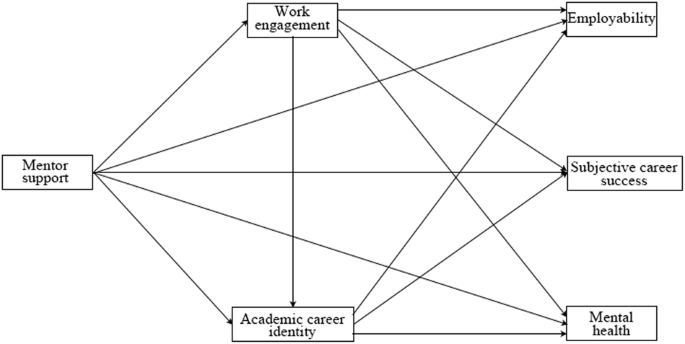
Mechanisms of mentor support on postdoctoral sustainable careers.
Methodology
Sample and data collection
In this study, we established a database from the China Postdoctoral Tracking Survey, which contains basic demographic and educational information for 3473 postdocs across China. This dataset includes variables such as sex, type of station, and doctoral degree-granting institution, providing a demographic and contextual national-level overview of postdocs. However, this dataset lacks detailed information on individual career development processes and key psychological factors. For the 2023 survey, we specifically focused on the career development of postdocs. A total of 769 postdocs who were still working at their stations at the time of the survey were invited via email to voluntarily participate in a questionnaire survey. Ultimately, 343 complete and valid responses were collected. To ensure transparency and data integrity, participants were provided with detailed information about the study’s purpose, procedures, and measures for protecting data confidentiality. A secure online survey link was sent to all participants. Participation was entirely voluntary, and electronic informed consent was obtained from each participant prior to the start of the survey.
The demographic breakdown of the respondents is as follows: of the 343 postdocs, 247 (72.01%) were male, and 96 (27.99%) were female. Regarding marital status, 170 (49.56%) were married, and 173 (50.44%) were unmarried. In terms of academic background, 317 (92.42%) graduated from Chinese universities, while 26 (7.58%) graduated from overseas universities. In terms of disciplinary background, 303 (88.34%) were from the fields of science, technology, agriculture, and medicine, and 40 (11.66%) majored in humanities and social sciences.
Variable measurement
In this study, the measurement items for mentor support, work engagement, and subjective career success followed a standardized translation-back translation procedure. An English language professor was invited to translate the scales, followed by a back translation conducted by a professor specializing in human resource management. Finally, the phrasing of the items was reviewed by five postdocs to ensure clarity and accuracy. All variables were measured using a 5-point Likert scale, where the 1–5 range represented “strongly disagree” to “strongly agree” or from “deficient ability” to “high ability”.
Mentor support (MS)
The measurement of mentor support was based on the study by Overall et al. (2011) and adapted to the specific work characteristics of postdocs in China. Six dimensions of support were selected for assessment: expanding social networks, facilitating career referrals and development opportunities, aiding in academic exchanges, assisting with funding applications, setting successful examples, and managing work-life balance.
Work engagement (WE)
The items were derived from the short version of the Work Engagement Scale developed by Schaufeli et al. (2006). Three items were selected to measure postdocs’ work engagement in vigor, absorption, and dedication, respectively. The items were “I am fully committed to my research”, “I am fully focused when working”, and “I am passionate about my research”.
Academic career identity (ACI)
This was measured using a self-administered single-item question, which reads, “At this time, would you consider pursuing a research or academic career? Please rate your circumstances”. Previous empirical studies have used similar single-question items to measure academic career identity, such as “If you could turn back the clock, would you still want to pursue academics as your career?” (Gao and Yang 2022) and “The possibility of pursuing an academic career after graduation” (Huang and Wang 2020). This study also employed a single-question item measure, which helps reduce sample bias and improves data quality (Wei and Zhang 2019). This method directly captures the real feelings and tendencies of postdocs while avoiding the response burden and potential confounds generated by multiple questions.
Employability (EP)
It was measured in terms of the research competencies necessary for postdocs to carry out academic work. This was categorized into two dimensions: academic ability and transferable ability, with a total of seven competence points of self-assessment (Wang et al. 2020; Peng 2020). Academic abilities consist of four items: “ability to identify research problems”, “ability to acquire knowledge of literature”, “ability to communicate and cooperate with scholars” and “ability to produce research outputs”. Transferable abilities consist of three items: “ability to transfer research results”, “ability to apply for research projects”, and “research networking”.
Subjective career success (SCS)
The measurement perspective was divided into two aspects: personal growth satisfaction and work-life balance during the postdoctoral period at the station, with nine question items. Personal growth satisfaction consists of 6 items selected from a 15-item scale developed by Weng and McElroy (2012), with examples such as “My current job has brought me closer to my career goals”, “I am proud of my research”, “I think my research direction is meaningful”. Work-life balance consists of three question items with high factor loadings selected from the work-family balance scale developed by Grzywacz and Marks (2000), namely, “The impact of work on personal (or family) life,” “The impact of personal (or family) life on work,” and “Your certainty that you ‘can do a good job, as well as live a good life’”.
Mental health (MH)
Mental health was measured using the positive psychological capital questionnaire (PPQ) developed by Zhang et al. (2010), which includes four dimensions: optimism, resilience, self-efficacy, and hope. Referring to the operationalization of Zhou et al. (2018), we selected four items with higher loadings for each dimension, such as “When I encountered a setback, I was able to recover from it and continue to move forward”.
Control variables
To exclude the interference of other factors, this study refers to previous studies that have used demographic variables such as sex information (0 for females and 1 for males), marital status (0 for unmarried and 1 for married), discipline category (0 for humanities and social sciences and 1 for science, technology, agriculture, and medicine), and category of doctoral graduation institution (0 for overseas institutions, 1 for Chinese institutions) as control variables (Chen and Zhang 2022; Ma and Yao 2022; Liang and Li 2022; Xiao 2021) to have a better understanding of the characteristics of the samples and to enhance the accuracy and validity of conclusions.
Data analysis and results
Descriptive statistics and data normality
The descriptive statistics and normal distribution are shown in Table 1. The mean score for mentor support was 3.72 (SD = 1.01), while work engagement had a mean of 4.24 (SD = 0.63). Employability, subjective career success, and mental health demonstrated mean scores of 3.77 (SD = 0.75), 3.19 (SD = 0.78), and 4.02 (SD = 0.59), respectively. We also assessed skewness and kurtosis to examine the distribution characteristics. The results indicated that skewness ranged from −1.02 to −0.49, and kurtosis ranged from 0.06 to 3.23. The absolute values of these measures did not exceed the thresholds of 3 for skewness and 10 for kurtosis, as recommended by Kline (2016). Therefore, the questionnaire data are suitable for subsequent confirmatory factor analysis.
Adequacy of the measures: reliability and validity
To evaluate the internal reliability of the variables, two statistical tools were utilized: composite reliability (CR) and McDonald’s ω. As demonstrated in Table 2, both McDonald’s ω coefficients and CR values for all the variables exceeded 0.8, indicating a high level of internal consistency reliability for the measurement instruments used in this study.
The AVE values of the variables in this study were calculated to assess convergent validity (see Table 2). According to widely accepted guidelines, an AVE value exceeding 0.50 indicates satisfactory convergent validity. Since the AVE values in this study ranged from 0.637 to 0.804, the constructs demonstrate adequate convergent validity, confirming that the latent variables are well represented by their observed indicators.
Common method bias inspection
The research data, derived from self-reported information by postdocs, might be subject to common method bias, a type of systematic error unrelated to traits that could affect the validity of the measurements. To test whether there is a severe common method bias problem, according to Zhou and Long (2004), we conducted a common method bias test using Harman’s single-factor test on the 30 survey items involved in the study. We set the number of common factors to one and performed a confirmatory factor analysis using Mplus 8.0. The fit indices results are presented in Table 3: χ2/df = 7.494, RMSEA = 0.138, SRMR = 0.121, CFI = 0.677, TLI = 0.646. The results show that the fit indicators of the single-factor model are poor, indicating that the common method bias is not serious (Tang and Wen, 2020; Iverson and Maguire, 2000)
Confirmatory factor analysis
Confirmatory factor analysis was conducted using Mplus 8.0 software to evaluate the discriminant validity. Since academic career identity was measured using a single-item scale, it was excluded from the analysis. The baseline model was a five-factor model including mentor support, work engagement, employability, subjective career success, and mental health. The study compared the fit indices of the hypothesized five-factor model with competitive models, including three four-factor models, a three-factor model, a two-factor model, and a one-factor model (see Table 3). The results showed that the five-factor model fit fairly well (χ2/df = 2.773, RMSEA = 0.072, SRMR = 0.053, CFI = 0.914, TLI = 0. 0.903).
To further validate that the five-factor model was statistically significantly better than other models, we conducted a chi-square difference test. The results, presented in Table 3, indicated that the five-factor model was statistically better than other models. These findings affirm the discriminant validity of the constructs, demonstrating that the observed variables adequately differentiate and represent their respective latent constructs in this study.
Testing of hypotheses
To further test the mediating effects, this study used the Bootstrap test by setting Bootstrap random sampling to 5000 times and confidence level to 95%; the results are shown in Table 4. For the overall effect, mentor support positively affected employability (β = 0.1818, 95% CI = [0.1019, 0.2617]), positively affected subjective career success (β = 0.3232, 95% CI = [0.2538, 0.3927]), and positively affected mental health (β = 0.1624, 95% CI = [0.1061, 0.2188]). The results tested hypotheses 1a, 1b, and 1c, respectively.
As shown in Table 4 and Fig. 2, the simple mediating effect of work engagement in the relationship of mentor support on employability was not validated (β = 0.0228, 95% CI = [−0.0057, 0.0742]), and Hypothesis 2a was not valid. Whereas the simple mediating effect of academic career identity (β = 0.0340, 95% CI = [0.0001, 0.0783]) and the chained mediating effect of work engagement and academic career identity (β = 0.0108, 95% CI = [0.0000, 0.0285]) were significant (Hypotheses 3a and Hypothesis 4a were tested). The total mediation effect was 19.77%, and the simple mediating effect of academic career identity and the chained mediating effect were 15.00% and 4.77%, respectively.

N = 343. ***p < 0.001, bold and dashed lines indicate significant paths (p < 0.05) and non-significant paths (p > 0.05), respectively; coefficients of control variables are not shown in the plots to keep the model concise.
In the relationship of mentor support on subjective career success, the simple mediating effect of work engagement (β = 0.0342, 95% CI = [0.0038, 0.0762]) and academic career identity (β = 0.0547, 95% CI = [0.0240, 0.0937]) and the chained mediating effect (β = 0.0173, 95% CI = [0.0070, 0.0332]) were all significant (Hypothesis 2b, Hypothesis 3b, and Hypothesis 4b were tested). The total mediation effect was 24.73%, and the shares of the three pathways were 7.96%, 12.74%, and 4.03%, respectively.
In the relationship of mentor support on mental health, the simple mediating effect of work engagement (β = 0.0564, 95% CI = [0.0288, 0.0901]) and academic career identity (β = 0.0170, 95% CI = [0.0022, 0.0366]) and chained mediated effect (β = 0.0054, 95% CI = [0.0006, 0.0132]) were all significant (Hypothesis 2c, Hypothesis 3c, and Hypothesis 4c were tested). The total mediation effect was 32.67%, and the shares of the three pathways were 23.38%, 7.05%, and 2.34%, respectively.
Discussion
This study investigated the relationship between mentor support and sustainable careers of postdocs based on the COR theory. Specifically, it examined the chain mediating role of work engagement and academic career identity. The empirical results support the following findings: Firstly, mentor support is significantly associated with employability, subjective career success, and mental health in postdoctoral sustainable careers. Secondly, work engagement serves as a partial mediator in the relationship between mentor support and subjective career success, as well as between mentor support and mental health. Thirdly, academic career identity partially mediates the relationship between mentor support and employability, subjective career success, and mental health. Lastly, work engagement and academic career identity jointly function as chain mediators, linking mentor support with employability, subjective career success, and mental health. These findings have both theoretical contributions and practical implications, providing insights into postdoctoral career development and the effective management of postdoctoral stations.
Theoretical implications
Postdocs are at a critical stage in the early phases of their academic careers, focusing on enhancing research capacity and accumulating scholarly output. However, they face significant challenges such as socialization into academic careers, mental stress, and financial burdens (Ålund et al. 2020). Moreover, China’s postdoctoral management practice often emphasizes “utilization over cultivation”, which hinders the cultivation of postdocs’ academic interests and the stimulation of their research effectiveness, making it difficult for them to sustain their careers (De Vos et al. 2020). Previous studies have generally regarded mentor support as an environmental factor that influences the short-term academic growth or productivity of researchers (Zhao et al. 2020). However, postdocs, as a preparatory group in the academic career pipeline, should be viewed as more than just workers for academic research and technological innovation. The focus should also be on cultivating their academic aspirations and supporting their socialization into academic careers, thereby promoting sustainable career development (Wu and Zhao 2021). Given the emphasis on sustainable careers for postdocs, this study examines the mechanisms by which mentor support influences both the behavioral and cognitive aspects of postdoc development. It enriches the understanding of postdoctoral sustainable careers in the Chinese context. Research has shown that mentor support is a crucial factor in helping postdocs navigate the challenges of academic career socialization. It facilitates the acquisition of academic career competencies, the development of enthusiasm for academic careers, and the formation of academic career identity (Wu and Zhao 2021; Huang and Wang 2020). Mentor support motivates postdocs to concentrate more on their research, enabling them to gain valuable resources in various aspects. Throughout this process, postdocs accumulate essential work-related resources, including skills, psychological capital, and social networks. As they internalize the values and norms embedded in academia, they gradually form a stronger academic career identity, thereby fostering their sustainable career development (Jin et al. 1999).
Postdocs are at a critical, career-defining phase of their academic journeys, facing an environment filled with uncertainty and intense competition. The complexity of this environment, coupled with fierce competition for academic positions, gradually diminishes the attractiveness of academic careers (Wang and Wang 2020). The multiple pressures and dilemmas from both within and outside academic organizations constrain postdocs’ pure pursuit of academic ideals (Zhang 2022), thus reducing the sustainability of their academic careers. Therefore, it is crucial to emphasize the importance of individual initiative and a sense of meaning in postdocs’ academic careers (Hall 2004). This study further reveals the potential mechanisms through which mentor support facilitates postdocs’ sustainable careers.
Firstly, the findings indicate that mentor support positively influences postdocs’ work engagement, which subsequently enhances their subjective career success and mental health. The results support the “gain spiral” hypothesis of the COR theory within the postdoctoral context. By providing external resources, mentors enhance postdocs’ work engagement—a proactive behavior that aims to conserve and develop existing resources. This increased engagement subsequently improves postdocs’ subjective career success and mental health. However, work engagement did not mediate the effect of mentor support on employability. While work engagement may enhance short-term job performance by promoting focus and dedication (Yalabik et al. 2013; Christian et al. 2011), it is insufficient on its own to foster long-term employability, which requires more strategic and sustained resource accumulation (De Vos et al. 2020).
Secondly, academic career identity partially mediates the relationship between mentor support and all three components of sustainable careers. Despite the growing diversity of socialization goals among postdocs, academic aspirations remain fundamental (Zhang 2022). Mentor support helps postdocs reconnect with their academic career ideals, reshape their career identities, and cultivate core values for career development (Xiao 2021). This process enhances their sense of meaning, thereby fostering sustainable careers. From the perspective of COR theory, academic career identity functions as an internal resource strengthened by external mentor support. As postdocs internalize these resources, they are effectively motivated to sustain their engagement and pursue long-term career goals. This aligns with the “gain spiral”, where the accumulation of resources leads to continuous positive career outcomes. By integrating academic career identity into this framework, this study highlights how external support, when internalized, can create a virtuous cycle of resource accumulation, reinforcing the sustainability of academic careers.
This study provides a valuable analytical framework for understanding postdoctoral sustainable careers. The empirical results suggest that work engagement and academic career identity play a chain mediating role between mentor support and sustainable careers. The findings support the COR theory, where postdocs gradually accumulate essential work resources—including psychological, competence, and social resources—through their engagement in work (Xanthopoulou et al. 2009). This process of resource accumulation not only clarifies postdocs’ perceptions of academic careers but also positively influences the formation of academic career identity (Lee et al. 2016). As resources continue to accumulate, postdocs become better equipped to manage potential future resource depletion, ensuring that work resources remain stable over the long term.
Additionally, this study extends COR theory by emphasizing the role of career identity in the sustainability of academic careers, which shifts the focus from external resources to internal resources. Through the internalization of external resources via work engagement, postdocs are able to cultivate career identity, which further drives career development. By highlighting this internalization process, the study provides deeper insights into how external resources, when internalized through work engagement, reinforce postdocs’ long-term career sustainability.
Practical implications
This study emphasizes the critical role of mentor support in promoting postdoctoral sustainable careers. Acting as “guides” in their academic journeys, mentors provide essential resources, including social network support, instrumental guidance, and emotional encouragement (Tenenbaum et al. 2001). These resources serve as vital job resources for postdocs, helping to mitigate the challenges posed by demanding work conditions, enhancing resilience against stress and burnout, and fostering a more optimistic outlook on their career prospects (Wu et al. 2024).
Postdoctoral training significantly differs from graduate education, as the relationship between postdocs and mentors is more collaborative than the traditional teacher-student dynamic. As a result, postdoctoral mentors are often referred to as “collaborative mentors” (Zhang 2013; Liu and Xie 2022). Despite the collaborative nature of this relationship, mentors remain vital in shaping the career development of postdocs (Gu 2024). In the context of China’s postdoctoral system, the mentor-postdoc relationship is multifaceted and extends beyond a mere partnership. Firstly, the Chinese postdoctoral system is a government-led initiative designed to nurture high-level talent for technological and scientific innovation (Lu et al. 2019). In this context, collaborative mentors play a key role in cultivating talent and improving the quality of postdoctoral training. Secondly, traditional Chinese cultural values, such as the master-apprentice system and the deep respect for teachers and authority, continue to influence the mentor-postdoc relationship (Liu and Xie 2022). These cultural values imbue the relationship with distinct Chinese characteristics, where mentors take on the role of “master”, guiding postdocs—seen as “apprentices”—through their transition from students to independent scholars. This cultural foundation profoundly shapes postdocs’ career development (Ding et al. 2020). Finally, as early-career researchers, postdocs often rely heavily on mentors for access to academic resources and professional networks. At this stage, collaborative mentors are indispensable, providing critical academic guidance, resources, and career connections. Their support is foundational for building academic capital and advancing postdocs’ career development (Yang et al. 2024).
Therefore, strengthening the support and involvement of collaborative mentors is crucial for improving the quality of postdoctoral training and facilitating their career development. Mentors should prioritize the long-term, sustainable career development of postdocs by providing targeted resource support in various aspects and fostering positive mentor-mentee interactions. The current system, which often emphasizes utilization over training, needs to be rebalanced to prevent postdocs from being seen primarily as research labor (Ding 2019). A balanced framework, which equally emphasizes both training and utilization, should be established (Ding et al. 2020). This requires offering specialized, systematic, and regular academic guidance to enable postdocs to fully engage in their research, thereby continuously enhancing their scientific productivity and innovation potential (Ma and Yao 2022).
The study also explores the mechanisms through which mentor support influences the sustainability of postdoctoral careers. Work engagement does not significantly mediate the positive relationship between mentor support and employability. This suggests that the current postdoctoral management model in China, which emphasizes utilization over development, may not fully utilize mentor support as a vital resource. Postdoctoral academic career identity plays a key role in helping postdocs navigate the challenges and frustrations of a complex career environment (Van der Heijden et al. 2020). Moreover, this career identity provides resilience, alleviating the adverse effects of career uncertainty in a volatile career environment (Lee et al. 2015). Given the uniqueness of the postdoctoral context, it is essential to view mentor support not just in terms of short-term impact but as a means to awaken individual agency and foster a strong sense of career identity (Hall and Chandler 2005).
The mediating effects of postdoctoral work engagement and academic career identity between mentor support and sustainable careers, as explored in this paper, are highly relevant to the Chinese postdoctoral context and carry significant practical implications. To foster sustainable careers, postdoctoral institutions should strategically enhance challenging job demands (Cheyroux et al. 2023), such as encouraging postdocs to undertake research aligned with national priorities, engage in multidisciplinary projects, and contribute to the advancement of basic research. Simultaneously, it is crucial to alleviate certain hindering demands (Cheyroux et al. 2023), such as streamlining cumbersome administrative and financial procedures, providing adequate research resources, and supporting postdocs in achieving a healthy work-life balance. This balanced approach can maximize the positive benefits of work resources. While mentor support plays a crucial role in stimulating high levels of work engagement among postdocs, it is equally important for postdocs to engage in regular self-reflection. Such introspection encourages them to move beyond narrow, utilitarian career goals and appreciate the intrinsic value of their academic work. By cultivating a genuine passion for their scholarly pursuits, postdocs can reinforce their long-term commitment to an academic career, paving the way for a sustainable future in academia.
Research limitations and prospects
Limited by the research design and the availability of sample data, this study has several limitations. Firstly, this study utilizes cross-sectional survey data and a relatively limited sample size, providing only correlational evidence rather than causal inferences. Future research could consider employing multi-wave longitudinal surveys to more rigorously test the causal relationship between mentor support and postdoctoral sustainable careers. Secondly, this study did not consider the stage of postdoctoral status (e.g., first vs final year; first term vs last term), which may influence perceptions of mentorship, employability, and career intentions. Future research should consider incorporating the postdoctoral stage as a control variable to capture temporal differences in the career experiences of postdocs. Thirdly, the study found that the simple mediation effects of work engagement and academic career identity, as well as the chained mediation effect, accounted for 19.77%, 24.73%, and 32.67% of the total mediating effect of mentor support on the three elements of sustainable careers. This suggests the potential influence of other mediating variables, highlighting the need for future research to explore additional factors that may contribute to sustainable careers. Fourthly, while employability, subjective career success, and mental health were selected as indicators of the key elements of sustainable careers due to their widespread use in existing literature (De Vos et al. 2020), these indicators only partially represent the three elements of sustainable careers. Future research could benefit from incorporating other indicators, such as organizational citizenship behavior, job satisfaction, and physiological health (Tordera et al. 2020; Zhou et al. 2022), to provide a more comprehensive validation of the findings presented in this study. Finally, this study specifically focuses on postdocs. However, mentoring systems are not limited to academia and are also prevalent in the industrial sector. The positive effects of mentor-mentee relationships on the sustainable career development of employees in non-academic contexts have yet to be explored. Therefore, future research could expand the scope to include other groups, such as employees in various industries, and further validate the role of mentor support in career development.
Data availability
The datasets of this study are not publicly available due to confidentiality assurances given to the respondents who participated in the survey. These data were collected under the condition that they would remain confidential to protect the privacy of the respondents. Access may be granted upon reasonable request to the corresponding author.
Notes
During an inspection and research tour in Heilongjiang in September 2023, Chinese President Xi Jinping first proposed the concept of “New Quality Productive Forces.” This concept innovation as the leading force, breaking away from traditional economic growth models and productivity development paths. Characterized by high technology, high efficiency, and high quality, it represents an advanced form of productive forces aligned with the new development philosophy.
References
Afonja S, Salmon DG, Quailey SI, Lambert WM (2021) Postdocs’ advice on pursuing a research career in academia: a qualitative analysis of free-text survey responses. PLoS One 16(5):e0250662. https://doi.org/10.1371/journal.pone.0250662
Åkerlind GS (2009) Postdoctoral research positions as preparation for an academic career. Int J Res Dev 1(1):84–96
Ali Abadi H, Coetzer A, Roxas HB, Pishdar M (2023) Informal learning and career identity formation: the mediating role of work engagement. Pers Rev 52(1):363–381. https://doi.org/10.1108/PR-02-2021-0121
Ålund M, Emery N, Jarrett BJ, MacLeod KJ, McCreery HF, Mamoozadeh N, Gering E (2020) Academic ecosystems must evolve to support a sustainable postdoc workforce. Nat Ecol Evol 4(6):777–781. https://doi.org/10.1038/s41559-020-1178-6
Bakker AB, Demerouti E (2024) Job demands-resources theory: frequently asked questions. J Occup Health Psychol 29(3):188–200. https://doi.org/10.1037/ocp0000376
Bakker AB, Demerouti E, Euwema MC (2005) Job resources buffer the impact of job demands on burnout. J Occup Health Psychol 10(2):170–180. https://doi.org/10.1037/1076-8998.10.2.170
Bakker AB, Demerouti E, Sanz-Vergel AI (2014) Burnout and work engagement: the JD–R approach. Annu Rev Organ Psychol Organ Behav 1(1):389–411. https://doi.org/10.1146/annurev-orgpsych-031413-091235
Bakker AB, Demerouti E, ten Brummelhuis LL (2012) Work engagement, performance, and active learning: the role of conscientiousness. J Vocat Behav 80(2):555–564. https://doi.org/10.1016/j.jvb.2011.08.008
Bozeman B, Gaughan M (2011) Job satisfaction among university faculty: Individual, work, and institutional determinants. J High Educ 82(2):154–186. https://doi.org/10.1080/00221546.2011.11779090
Browning L, Thompson K, Dawson D (2017) From early career researcher to research leader: survival of the fittest? J High Educ Policy Manag 39(4):361–377. https://doi.org/10.1080/1360080X.2017.1330814
Caesens G, Bouchat P, Stinglhamber F (2020) Perceived organizational support and psychological empowerment: a multi-sample study. J Occup Environ Med 62(7):526–531. https://doi.org/10.1097/JOM.0000000000001889
Cai J, Yang Y, Zhang C (2022) A study on the relationship between organizational support and academic burnout among global postdoctoral fellows in the context of the epidemic: evidence from 2021 Nature’s Survey. Renmin Univ China Educ J 5:43–60
Chen C (2023) Academic career mobility tendencies and implicit influence pathways of postdoctoral researchers. Res Educ Dev 43(Z1):107–116. https://link.cnki.net/doi/10.14121/j.cnki.1008-3855.2023.z1.017
Chen CP, Lalovic A (2019) Career development for doctoral and postdoctoral trainees in Canada. Aust J Career Dev 28(3):167–173. 10.177/1038416219828087
Chen S, McAlpine L, Amundsen C (2015) Postdoctoral positions as preparation for desired careers: a narrative approach to understanding postdoctoral experience. High Educ Res Dev 34(6):1083–1096. https://doi.org/10.1080/07294360.2015.1024633
Chen Y, Zhang F (2022) Supervisor support, job satisfaction and postdoctoral career prospects: an analysis of mediating effects based on the Nature Global Postdoc Survey 2020. China High Educ Res 8:90–96. https://link.cnki.net/doi/10.16298/j.cnki.1004-3667.2022.08.16
Cheyroux P, Morin AJ, Colombat P, Gillet N (2023) Predictors and outcomes of nursing students’ engagement trajectories at the beginning of their program. J Vocat Behav 145:103917. https://doi.org/10.1016/j.jvb.2023.103917
Chou AF, Hammon D, Akins DR (2022) Impact of the Oklahoma IDeA Network of Biomedical Research Excellence research support and mentoring program for early-stage faculty. Adv Physiol Educ 46(3):443–452. https://doi.org/10.1152/advan.00075.2021
Christian MS, Garza AS, Slaughter JE (2011) Work engagement: a quantitative review and test of its relations with task and contextual performance. Pers Psychol 64(1):89–136. https://doi.org/10.1111/j.1744-6570.2010.01203.x
Crisp G, Cruz I (2009) Mentoring college students: a critical review of the literature between 1990 and 2007. Res High Educ 50:525–545. https://doi.org/10.1007/s11162-009-9130-2
Cropanzano R, Mitchell MS (2005) Social exchange theory: an interdisciplinary review. J Manag 31(6):874–900. https://doi.org/10.1177/0149206305279602
De Vos A, Van der Heijden BI, Akkermans J (2020) Sustainable careers: towards a conceptual model. J Vocat Behav 117:103196. https://doi.org/10.1016/j.jvb.2018.06.011
Demerouti E, Bakker AB, Bulters AJ (2004) The loss spiral of work pressure, work–home interference and exhaustion: reciprocal relations in a three-wave study. J Vocat Behav 64(1):131–149. https://doi.org/10.1016/S0001-8791(03)00030-7
Ding J (2019) Development and optimization of communicative rationality between post-doctors and cooperating supervisors. Univ Educ Sci 2:72-76+92
Ding L, Wu C, Yang Z, Yan Y, Chen Y (2020) On the relationship and problems between post-doctors and cooperative tutors. Educ Teach Forum 25:160–161
Dorenkamp I, Weiß EE (2018) What makes them leave? A path model of postdocs’ intentions to leave academia. High Educ 75:747–767. https://doi.org/10.1007/s10734-017-0164-7
Fox MF, Fonseca C, Bao J (2011) Work and family conflict in academic science: patterns and predictors among women and men in research universities. Soc Stud Sci 41(5):715–735. https://doi.org/10.1177/0306312711417730
Fredrickson BL (2001) The role of positive emotions in positive psychology: the broaden-and-build theory of positive emotions. Am Psychol 56(3):218. https://doi.org/10.1037/0003-066X.56.3.218
Galla BM, Wood JJ, Tsukayama E, Har K, Chiu AW, Langer DA (2014) A longitudinal multilevel model analysis of the within-person and between-person effect of effortful engagement and academic self-efficacy on academic performance. J Sch Psychol 52(3):295–308. https://doi.org/10.1016/j.jsp.2014.04.001
Gao X, Yang Y (2022) A study of the factors influencing postdoctoral academic career Identity: based on the social cognitive career theory. Univ Educ Sci 4:64–73
Gao Y, Qiao Z, Wu X (2017) An empirical study on the enhancement of college students’ employability based on vocational identity and psychological capital. High Educ Explor 3:107–112
Gloria CT, Steinhardt MA (2017) The direct and mediating roles of positive emotions on work engagement among postdoctoral fellows. Stud High Educ 42(12):2216–2228. https://doi.org/10.1080/03075079.2016.1138938
Grzywacz JG, Marks NF (2000) Reconceptualizing the work-family interface: an ecological perspective on the correlates of positive and negative spillover between work and family. J Occup Health Psych 5:111–126. https://doi.org/10.1037/1076-8998.5.1.111
Gu G (2024) Supportive service system construction research based on profession development requirements for post-doctors. Beijing Educ 12:82–85
Guidetti G, Converso D, Di Fiore T, Viotti S (2022) Cynicism and dedication to work in post-docs: relationships between individual job insecurity, job insecurity climate, and supervisor support. Eur J High Educ 12(2):134–152. https://doi.org/10.1080/21568235.2021.1900743
Hakanen JJ, Peeters MC, Perhoniemi R (2011) Enrichment processes and gain spirals at work and at home: a 3‐year cross‐lagged panel study. J Occup Organ Psychol 84(1):8–30. https://doi.org/10.1111/j.2044-8325.2010.02014.x
Halbesleben JR, Neveu JP, Paustian-Underdahl SC, Westman M (2014) Getting to the “COR” understanding the role of resources in conservation of resources theory. J Manag 40(5):1334–1364. https://doi.org/10.1177/0149206314527130
Halbesleben JR, Wheeler AR (2015) To invest or not? The role of coworker support and trust in daily reciprocal gain spirals of helping behavior. J Manag 41(6):1628–1650. https://doi.org/10.1177/0149206312455246
Hall DT (2004) The protean career: a quarter-century journey. J Vocat Behav 65(1):1–13. https://doi.org/10.1016/j.jvb.2003.10.006
Hall DT, Chandler DE (2005) Psychological success: when the career is a calling. J Organiz Behav 26(2):155–176. https://doi.org/10.1002/job.301
Hayter CS, Parker MA (2019) Factors that influence the transition of university postdocs to non-academic scientific careers: an exploratory study. Res Policy 48(3):556–570. https://doi.org/10.1016/j.respol.2018.09.009
Hirschi A (2012) Callings and work engagement: moderated mediation model of work meaningfulness, occupational identity, and occupational self-efficacy. J Couns Psychol 59(3):479–485. https://doi.org/10.1037/a0028949
Hobfoll SE (1989) Conservation of resources: a new attempt at conceptualizing stress. Am Psychol 44(3):513. https://doi.org/10.1037/0003-066X.44.3.513
Hobfoll SE (2001) The influence of culture, community, and the nested‐self in the stress process: advancing conservation of resources theory. Appl Psychol 50(3):337–421. https://doi.org/10.1111/1464-0597.00062
Hobfoll SE (2002) Social and psychological resources and adaptation. Rev Gen Psychol 6(4):307–324. https://doi.org/10.1037/1089-2680.6.4.307
Hobfoll SE, Halbesleben J, Neveu JP, Westman M (2018) Conservation of resources in the organizational context: the reality of resources and their consequences. Annu Rev Organ Psychol Organ Behav 5(1):103–128. https://doi.org/10.1146/annurev-orgpsych-032117-104640
Holland JL, Johnston JA, Asama NF (1993) The vocational identity scale: a diagnostic and treatment tool. J Career Assess 1(1):1–12. https://doi-org.3610.top/10.1177/106907279300100102
Huang Y, Wang S (2020) Research on the socialization of doctoral students to academic profession and its influencing factors: empirical analysis based on Nature Doctoral Student Survey in 2019. China High Educ Res 9:21–26. https://link.cnki.net/doi/10.16298/j.cnki.1004-3667.2020.09.05
Hudson TD, Haley KJ, Jaeger AJ, Mitchall A, Dinin A, Dunstan SB (2018) Becoming a legitimate scientist: science identity of postdocs in STEM fields. Rev High Educ 41(4):607–639. https://doi.org/10.1353/rhe.2018.0027
Ireland GW, Lent RW (2018) Career exploration and decision-making learning experiences: a test of the career self-management model. J Vocat Behav 106:37–47. https://doi.org/10.1016/j.jvb.2017.11.004
Iverson RD, Maguire C (2000) The relationship between job and life satisfaction: Evidence from a remote mining community. Hum Relat 53(6):807–839. https://doi.org/10.1177/0018726700536003
Jaeger AJ, Dinin AJ (2018) The postdoc landscape: the invisible scholars. University Press of Florida, Gainesville
Jiang G, Guo Z (2022) Empirical analysis of postdoctoral job satisfaction and its influencing factors: based on data from Nature’s Global Postdoctoral Survey. Sci Technol Manag Res 42(12):117–124
Jin X, Liu D, Qu Y (1999) A comparative study of the postdoctoral system in China and the United States. Res Educ Tsinghua Univ 1:105–111
Kline RB (2016) Principles and practice of structural equation modeling. 4th. Guilford Press, New York
Lambert WM, Nana N, Afonja S, Saeed A, Amado AC, Golightly LM (2025) Addressing structural mentoring barriers in postdoctoral training: a qualitative study. Stud Grad Postdoc Educ 16(1):1–24. https://doi.org/10.1108/SGPE-04-2023-0033
Lambert WM, Wells MT, Cipriano MF, Sneva JN, Morris JA, Golightly LM (2020) Career choices of underrepresented and female postdocs in the biomedical sciences. Elife 9:e48774. https://doi.org/10.7554/eLife.48774
Lee ES, Park TY, Koo B (2015) Identifying organizational identification as a basis for attitudes and behaviors: a meta-analytic review. Psychol Bull 141(5):1049–1080. https://doi.org/10.1037/bul0000012
Lee Y, Kwon K, Kim W, Cho D (2016) Work engagement and career: proposing research agendas through a review of literature. Hum Resour Dev Rev 15(1):29–54. https://doi.org/10.1177/1534484316628356
Li X, Hu A, Song H, Wang Z (2024) How does workplace support promote postdoctoral career growth? A conservation of resources perspective. Front Psychol 15:1294982. https://doi.org/10.3389/fpsyg.2024.1294982
Li Z, Liang Y (2021) Academic labor market, supply-side turning point and adjustment of doctoral education structure: an analysis based on tripartite game model. Tsinghua J Educ 5:105–113. https://link.cnki.net/doi/10.14138/j.1001-4519.2021.05.010509
Li Z, Wu Y, Jiao L (2021) The transitional logic of the postdoctoral training policy and the prospects thereof: based on the perspective of historical institutionalism. J Grad Educ 4:78–84. https://link.cnki.net/doi/10.19834/j.cnki.yjsjy2011.2021.04.12
Liang H, Li J (2022) Research on the effect of organizational systems on the academic career identity of postdocs: an empirical analysis based on the Nature Postdoc Survey 2020. Jiangsu High Educ 2:82–92. https://link.cnki.net/doi/10.13236/j.cnki.jshe.2022.02.011
Liénard JF, Achakulvisut T, Acuna DE, David SV (2018) Intellectual synthesis in mentorship determines success in academic careers. Nat Commun 9(1):4840. https://doi.org/10.1038/s41467-018-07034-y
Lin ES, Chiu SY (2016) Does holding a postdoctoral position bring benefits for advancing to academia? Res High Educ 57:335–362. https://doi.org/10.1007/s11162-015-9388-5
Lin W, Koopmann J, Wang M (2020) How does workplace helping behavior step up or slack off? Integrating enrichment-based and depletion-based perspectives. J Manag 46(3):385–413. https://doi.org/10.1177/0149206318795275
Liu B, Yuan L (2016) International comparison of postdoctoral systems. Party Building Book Publishing House, Beijing
Liu X, Xie P (2022) Postdoctoral supervisors and postdoctors’ development in the context of the COVlD-19 pandemic. Forum Sci Technol China 4:120-127+167, https://link.cnki.net/doi/10.13580/j.cnki.fstc.2022.04.012
Liu Y, Li L, Ren Y (2023) Influencing mechanism of postdoctoral job satisfaction from the perspective of conservation of resource theory: an empirical analysis based on nature global survey data. J Natl Acad Educ Adm 4:83–95
Liu Y, You M, Liu X (2024) Perceived organizational support and occupational well-being of special education teachers: the mediating role of occupational identity and thriving at work. Chin J Spec Educ 06:90–96
Lu L, Liang X, Zhao S (2019) Research on the role positioning and function of postdoctoral collaborative mentors. Abil Wis 3:99
Luthans F, Youssef CM (2004) Human, social, and now positive psychological capital management: investing in people for competitive advantage. Organ Dyn 33(2):143–160. https://doi.org/10.1016/j.orgdyn.2004.01.003
Ma L (2023) Research progress and future prospect of postdoctoral research talent management system in China. Sci Manag Res 41(04):97–104. https://link.cnki.net/doi/10.19445/j.cnki.15-1103/g3.2023.04.013
Ma L, Yao H (2022) Effect of organizational support system on postdoctoral research creativity in universities. China High Educ Res 5:88–94. https://link.cnki.net/doi/10.16298/j.cnki.1004-3667.2022.05.14
Martinez ED, Botos J, Dohoney KM, Geiman TM, Koll SS, Olivera A, Cohen-Fix O (2007) Falling off the academic bandwagon: women are more likely to quit at the postdoc to principal investigator transition. EMBO Rep. 8(11):977–981. https://doi.org/10.1038/sj.embor.7401110
Mauno S, Kinnunen U, Ruokolainen M (2007) Job demands and resources as antecedents of work engagement: a longitudinal study. J Vocat Behav 70(1):149–171. https://doi.org/10.1016/j.jvb.2006.09.002
McConnell SC, Westerman EL, Pierre JF, Heckler EJ, Schwartz NB (2018) United States National Postdoc Survey results and the interaction of gender, career choice and mentor impact. Elife 7:e40189. https://doi.org/10.7554/eLife.40189
Nowell L, Ovie G, Kenny N, Hayden KA, Jacobsen M (2020) Professional learning and development initiatives for postdoctoral scholars. Stud Grad Postdoc Educ 11(1):35–55. https://doi.org/10.1108/SGPE-03-2019-0032
Overall NC, Deane KL, Peterson ER (2011) Promoting doctoral students’ research self-efficacy: combining academic guidance with autonomy support. High Educ Res Dev 30:791–805. https://doi.org/10.1080/07294360.2010.535508
Peng P (2020) Doctoral student transferable skills cultivation: tensions and resolutions. J Grad Educ 1:52–58. https://link.cnki.net/doi/10.19834/j.cnki.yjsjy2011.2020.01.08
Perkmann M, Salandra R, Tartari V, McKelvey M, Hughes A (2021) Academic engagement: a review of the literature 2011-2019. Res Policy 50(1):104114. https://doi.org/10.1016/j.respol.2020.104114
Qureshi HA, Gröschner A, Ünlü Z (2024) Career development of postdocs: a qualitative study of mentoring communication patterns. Atl J Commun 32(3):348–363. https://doi.org/10.1080/15456870.2022.2157416
Rida P, Karalis Noel T, Miles ML (2023) STEM postdoc mentoring: a social exchange theory-based conceptual framework. Ment Tutor Part Learn 31(2):208–227. https://doi.org/10.1080/13611267.2023.2178708
Rothwell A, Arnold J (2007) Self-perceived employability: development and validation of a scale. Pers Rev 36(1):23–41. https://doi.org/10.1108/00483480710716704
Saklofske DH, Austin EJ, Mastoras SM, Beaton L, Osborne SE (2012) Relationships of personality, affect, emotional intelligence and coping with student stress and academic success: different patterns of association for stress and success. Learn Individ Differ 22(2):251–257. https://doi.org/10.1016/j.lindif.2011.02.010
Salanova M, Schaufeli W, Martínez I, Bresó E (2010) How obstacles and facilitators predict academic performance: the mediating role of study burnout and engagement. Anxiety Stress Coping 23(1):53–70. https://doi.org/10.1080/10615800802609965
Sauermann H, Roach M (2016) Why pursue the postdoc path? Science 352(6286):663–664. https://doi.org/10.1126/science.aaf2061
Schaufeli WB, Bakker AB (2004) Job demands, job resources, and their relationship with burnout and engagement: a multi‐sample study. J Organiz Behav 25(3):293–315. https://doi.org/10.1002/job.248
Schaufeli WB, Bakker AB (2010) Defining and measuring work engagement: bringing clarity to the concept. Work engage. A Handb Ess Theory Res 12:10–24
Schaufeli WB, Bakker AB, Salanova M (2006) The measurement of work engagement with a short questionnaire a cross-national study. Educ Psychol Meas 66(4):701–716. https://doi.org/10.1177/0013164405282471
Schaufeli WB, Taris TW, Van Rhenen W (2008) Workaholism, burnout, and work engagement: Three of a kind or three different kinds of employee well-being? Appl Psychol 57(2):173–203. https://doi.org/10.1111/j.1464-0597.2007.00285.x
Sheldon KM, Kasser T, Smith K, Share T (2002) Personal goals and psychological growth: testing an intervention to enhance goal attainment and personality integration. J Pers 70(1):5–31. https://doi.org/10.1111/1467-6494.00176
Shin YJ, Kelly KR (2013) Cross‐cultural comparison of the effects of optimism, intrinsic motivation, and family relations on vocational identity. Career Dev Q 61(2):141–160. https://doi.org/10.1002/j.2161-0045.2013.00043.x
Skakni I, Calatrava Moreno MDC, Seuba MC, McAlpine L (2019) Hanging tough: post-PhD researchers dealing with career uncertainty. High Educ Res Dev 38(7):1489–1503. https://doi.org/10.1080/07294360.2019.1657806
Song J, Yang Z (2023) Striving transition for university academics: the academic role identity of young postdocs at universities in China. SAGE Open 13(1):21582440231153054. https://doi.org/10.1177/21582440231153054
Su Z, Zhou M (2022) Implementing the talent strategy in the new era and strengthening the talent support for China. Chin Public Admin 12:81–86. https://link.cnki.net/doi/10.19735/j.issn.1006-0863.2022.12.09
Tang D, Wen Z (2020) Statistical approaches for testing common method bias: problems and suggestions. J Psychol Sci 43(01):215–223. https://link.cnki.net/doi/10.16719/j.cnki.1671-6981.20200130
Taris TW, Kompier MA, Geurts SA, Houtman IL, Van Den Heuvel FF (2010) Professional efficacy, exhaustion, and work characteristics among police officers: a longitudinal test of the learning-related predictions of the demand-control model. J Occup Organ Psychol 83(2):455–474. https://doi.org/10.1348/096317909X424583
Ten Brummelhuis LL, Bakker AB (2012) A resource perspective on the work–home interface: the work–home resources model. Am Psychol 67(7):545–556. https://doi.org/10.1037/a0027974
Tenenbaum HR, Crosby FJ, Gliner MD (2001) Mentoring relationships in graduate school. J Vocat Behav 59(3):326–341. https://doi.org/10.1006/jvbe.2001.1804
Tordera N, Peiro JM, Ayala Y, Villajos E, Truxillo D (2020) The lagged influence of organizations’ human resources practices on employees’ career sustainability: the moderating role of age. J Vocat Behav 120:103444. https://doi.org/10.1016/j.jvb.2020.103444
Van Benthem K, Nadim Adi M, Corkery CT, Inoue J, Jadavji NM (2020) The changing postdoc and key predictors of satisfaction with professional training. Stud Grad Postdoc Educ 11(1):123–142. https://doi.org/10.1108/SGPE-06-2019-0055
Van der Heijden BI, De Vos A (2015) Sustainable careers: Introductory chapter. Handb Res Sustain Careers 1:1–19
Van der Heijden BI, De Vos A, Akkermans J, Spurk D, Semeijn J, Van der Velde M, Fugate M (2020) Sustainable careers across the lifespan: moving the field forward. J Vocat Behav 117:103344. https://doi.org/10.1016/j.jvb.2019.103344
van der Weijden I, Teelken C (2023) Precarious careers: postdoctoral researchers and wellbeing at work. Stud High Educ 48(10):1595–1607. https://doi.org/10.1080/03075079.2023.2253833
Vekkaila J, Virtanen V, Taina J, Pyhältö K (2018) The function of social support in engaging and disengaging experiences among post PhD researchers in STEM disciplines. Stud High Educ 43(8):1439–1453. https://doi.org/10.1080/03075079.2016.1259307
Vinales JJ (2015) The mentor as a role model and the importance of belongingness. Br J Nurs 24(10):532–535. https://doi.org/10.12968/bjon.2015.24.10.532
Wang C, Ren C (2016) The empirical study on the influencing factors of postdoctoral job satisfaction. Sci Technol Manag Res 36(21):41–46
Wang C, Wang Y (2020) Self-cognition, environmental influence, and doctoral students’ academic career choice: an empirical study based on Nature’s 2019 Global Doctoral Survey. J Natl Acad Educ Admin 3:86–95
Wang C, Yang J, Gu L (2020) A study on the quality of doctoral education and its influencing factors: an empirical analysis based on Nature Global Investigation of doctoral students. J Macro Qual Res 8(01):69–80. https://link.cnki.net/doi/10.13948/j.cnki.hgzlyj.2020.01.006
Wang J, Deng F (2012) Postdoctoral system re-promotion: explorations of Tsinghua University. Res Educ Tsinghua Univ 33(05):69–73. https://link.cnki.net/doi/10.14138/j.1001-4519.2012.05.012
Ware J, Stein S (2013) From “Mentor” to “Role Model”: scaling the involvement of STEM professionals through role model videos. J Educ Multimed Hypermedia 22(2):209–223
Wei X, Zhang L (2019) Single-item measures: queries, responses and suggestions. Adv Psychol Sci 27(07):1194–1204
Weigl M, Hornung S, Parker SK, Petru R, Glaser J, Angerer P (2010) Work engagement accumulation of task, social, personal resources: a three-wave structural equation model. J Vocat Behav 77(1):140–153. https://doi.org/10.1016/j.jvb.2010.03.002
Weng Q, McElroy JC (2012) Organizational career growth, affective occupational commitment and turnover intentions. J Vocat Behav 80:256–265. https://doi.org/10.1016/j.jvb.2012.01.014
Woolston C (2020) Postdoc survey reveals disenchantment with working life. Nature 587(7834):505–509. https://doi.org/10.1038/d41586-020-03191-7
Wu L, Zhao H (2021) Postdoctoral academic professional identity and its influencing factors from the perspective of socialization: an empirical analysis based on Nature Global Survey Data of postdoctors. China High Educ Res 11:27–34. https://link.cnki.net/doi/10.16298/j.cnki.1004-3667.2021.11.05
Wu Y, Guo S, Wang X (2024) Administration or Interaction: how to improve post-doctors’ academic work expectation for cooperative tutors—an analysis based on nature global post-doctor survey in 2020. Beijing Educ 12:78–81
Xanthopoulou D, Bakker AB, Demerouti E, Schaufeli WB (2009) Reciprocal relationships between job resources, personal resources, and work engagement. J Vocat Behav 74(3):235–244. https://doi.org/10.1016/j.jvb.2008.11.003
Xanthopoulou D, Bakker AB, Dollard MF, Demerouti E, Schaufeli WB, Taris TW, Schreurs PJ (2007) When do job demands particularly predict burnout? The moderating role of job resources. J Manag Psychol 22(8):766–786. https://doi.org/10.1108/02683940710837714
Xiao C (2021) The impact of supervisor support on choosing academic career of postdocs: an empirical analysis based on the 2020 Nature Global Postdoctoral Survey. High Educ Explor 11:51–59
Xiao J (2024) Innovation based on the grounded theory on the influencing factors of interdisciplinary postdoctoral academic. Heilongjiang Res High Educ 42(07):54–61. https://link.cnki.net/doi/10.19903/j.cnki.cn23-1074/g.2024.07.011
Xu H, Shen W (2024) Postdoctoral experience and academic position acquisition—net effect and heterogeneity of academic labour market returns. J Grad Educ 2:19–28. https://link.cnki.net/doi/10.19834/j.cnki.yjsjy2011.2024.02.04
Yalabik ZY, Popaitoon P, Chowne JA, Rayton BA (2013) Work engagement as a mediator between employee attitudes and outcomes. Int J Hum Resour Manag 24(14):2799–2823. https://doi.org/10.1080/09585192.2013.763844
Yang L, Chen K, Yang J (2024) Study on the influence mechanism of postdoctoral researcher job satisfaction from the perspective of motivation crowding theory: mediation effect based on intrinsic motivation. Sci Technol Manag Res 44(06):229–237. https://link.cnki.net/doi/10.3969/j.issn.1000-7695.2024.6.024
Ye X, Ma L (2024) Can post-doctoral experience help doctoral students acquire teaching positions at a high-level university? Based on a ten-year tracking study of doctoral graduates from a first-class university. J Educ Stud 20(06):149–165. https://link.cnki.net/doi/10.14082/j.cnki.1673-1298.2024.06.012
Ysseldyk R, Greenaway KH, Hassinger E, Zutrauen S, Lintz J, Bhatia MP, Tai V (2019) A leak in the academic pipeline: identity and health among postdoctoral women. Front Psychol 10:1297. https://doi.org/10.3389/fpsyg.2019.01297
Zhang A (2013) Research on key elements of quality control of postdoctoral training process. J China Univ Geosci Soc Sci Ed 13(03):152–155. https://link.cnki.net/doi/10.16493/j.cnki.42-1627/c.2013.03.028
Zhang H, Zhang X, Brewer G (2023) Employability is a journey: conceptualising processual employability as a career identity emergence process. Educ Sci 13(6):607. https://doi.org/10.3390/educsci13060607
Zhang K, Zhang S, Dong Y (2010) Positive psychological capital: measurement and relationship with mental health. Stud Psychol Behav 8(01):58–64
Zhang L, Guo X (2023) Social support on calling: mediating role of work engagement and professional identity. Career Dev Q 71(2):97–110. https://doi.org/10.1002/cdq.12321
Zhang Q, Liu Z (2019) Can postdoctoral experience improve faculty’s income? Mod Educ Manag 3:62–68. https://link.cnki.net/doi/10.16697/j.cnki.xdjygl.2019.03.011
Zhang X (2022) Between the aspiration and reality: the tension and resolution of doctoral students’ socialization to academic profession. Univ Educ Sci 3:94-101+109
Zhao H, Wu L (2022) On how financial support influences academic career development of post-doctoral students: an empirical analysis based on the data of nature’s survey of postdocs worldwide. J Grad Educ 03:8–16. https://link.cnki.net/doi/10.19834/j.cnki.yjsjy2011.2022.03.02
Zhao L, Dai R, Wu H (2020) Academic growth and supervisory support for doctoral students: current characteristics and path relationships. Acad Degrees Grad Educ 8:43–51. https://link.cnki.net/doi/10.16750/j.adge.2020.08.007
Zheng G, Li L, Zhai Y, Shen W (2024) Embarking on the postdoc journey: unveiling Chinese doctoral graduates’ expectations and experiences. High Educ Quart 78(2):404–420. https://doi.org/10.1111/hequ.12466
Zhou G, Yang K (2017) Interpretation of scholarly pedigree: analysis of the interviews of higher education scholars at Indiana University in the USA. J Educ Stud 13(02):100–113. https://link.cnki.net/doi/10.14082/j.cnki.1673-1298.2017.02.013
Zhou H, Long L (2004) Statistical remedies for common method biases. Adv Psychol Sci 6:942–950
Zhou W, Feng J, Li S, Xu Y (2018) HR practitioners’ career capital with career success: a moderated mediation model. Renmin Univ China Educ J 3:161–180
Zhou W, Pan Z, Wei S, Yu K, Gao X, Feng Y (2022) The positive impact of gratitude on sustainable careers of human resource professionals. Hum Resour Dev China 39(10):64–75. https://link.cnki.net/doi/10.16471/j.cnki.11-2822/c.2022.10.005
Zhu H (2024) Are postdoctoral students satisfied with the academic career environment? High Educ Explor 4:81–91
Zhu W (2024) The review and reflection on the postdoctoral work in the new era. Chin Talents 5:32–34
Acknowledgements
This paper is a result of the Xi Jinping Thought on Socialism with Chinese Characteristics for a New Era Research Project at Renmin University of China (project approval no.: 22XNQ010). Thanks to the support of this fund.
Author information
Authors and Affiliations
Contributions
H.S.: led the idea for this article and worked on survey design and implementation, writing-original draft, writing-review and editing, funding acquisition, supervision, and project administration. A.H.: writing-original draft, formal analysis, methodology, and investigation. X.L.: writing-original draft, validation, visualization, software, and data analysis. All authors contributed to the article and approved the submitted version.
Corresponding author
Ethics declarations
Competing interests
The authors declare no competing interests.
Ethical approval
This study was conducted in accordance with the ethical guidelines and regulations applicable to research involving human participants, including the Declaration of Helsinki. According to the Beijing Forestry University’s ethical review regulations, studies utilizing anonymous data that have been lawfully obtained and do not involve harm to participants, sensitive personal information, or commercial interests may be exempted from ethical review. This research qualifies for ethical review exemption based on the “Beijing Forestry University Human Research Ethics Review Committee Procedures”. The reasons for exemption are as follows: All research data were collected with consent from the relevant postdoctoral research institutions, ensuring that all parties were informed, with data access and usage agreed upon at each stage. The data used in this study have been fully anonymized and do not contain personally identifiable information, thus avoiding any harm to participants’ interests or rights. This research does not involve human biological samples, genetic modifications, reproductive cells, or any activities related to human embryo cloning. Since this study meets the exemption criteria specified in Beijing Forestry University’s ethical review regulations, an ethics approval number is not applicable.
Informed consent
All participants in this study provided written informed consent before completing the questionnaire. The research team at Beijing Forestry University obtained consent during the survey period. Participants were fully informed about the purpose of the study, the voluntary nature of their participation, and their rights, including the right to withdraw at any time without consequences. The consent covered participation in the study, data usage for academic research, and publication of anonymized results. As this study involved a non-interventional questionnaire survey, all data were fully anonymized before analysis, ensuring that no personally identifiable information was collected or traceable. Participants were explicitly assured that their anonymity would be protected, and no risks were associated with participation. No vulnerable individuals, such as minors or patients, were involved, so no additional guardian consent was required. The study adhered to relevant ethical guidelines and regulations.
Additional information
Publisher’s note Springer Nature remains neutral with regard to jurisdictional claims in published maps and institutional affiliations.
Rights and permissions
Open Access This article is licensed under a Creative Commons Attribution-NonCommercial-NoDerivatives 4.0 International License, which permits any non-commercial use, sharing, distribution and reproduction in any medium or format, as long as you give appropriate credit to the original author(s) and the source, provide a link to the Creative Commons licence, and indicate if you modified the licensed material. You do not have permission under this licence to share adapted material derived from this article or parts of it. The images or other third party material in this article are included in the article’s Creative Commons licence, unless indicated otherwise in a credit line to the material. If material is not included in the article’s Creative Commons licence and your intended use is not permitted by statutory regulation or exceeds the permitted use, you will need to obtain permission directly from the copyright holder. To view a copy of this licence, visit http://creativecommons.org/licenses/by-nc-nd/4.0/.
About this article

Cite this article
Song, H., Hu, A. & Li, X. Mentor support and postdoctoral sustainable careers: evidence from China. Humanit Soc Sci Commun 12, 505 (2025). https://doi.org/10.1057/s41599-025-04835-7
Received:
Accepted:
Published:
Version of record:
DOI: https://doi.org/10.1057/s41599-025-04835-7
