
Climate adaptation and resilience in urban and rural communities
- Submission status
- Open
- Submission deadline
This collection supports and amplifies research related to SDG 13 - Climate Action.
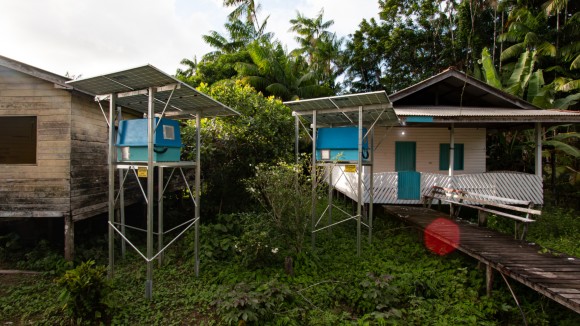
Adaptation is a way to live with climate change. The Intergovernmental Panel on Climate Change defines adaptation as a process of adjustment to actual or expected climate and its effects, to moderate harm or exploit beneficial opportunities. Around the world, communities implement various adaptation measures to cope with extreme heat, cold, or floods. These measures include green roofs, trees, and native plants in urban spaces to moderate temperature change, flood defenses and seawalls to protect areas from inundation, as well as behavioral changes in daily routines, such as limiting outdoor activities during heatwaves. Although we know that many adaptation options exist and how they work, we still need to understand whether and where local and global communities are making progress in adaptation.
In this cross-journal collection, we showcase studies that focus on adaptation in urban and rural areas. Studies that address the equity and efficiency of different measures, the financing required, and the limitations and barriers that prevent adaptation, along with strategies to overcome them. We primarily highlight studies from the Global South, the region most vulnerable to climate change, where the need to advance and expand adaptation efforts is urgent.
Editors
-
Chenghao Wang, PhD
University of Oklahoma, United States
-
Edmond Totin, PhD
Université Nationale d'Agriculture, Bénin, and the World Vegetable Center, West and Central Africa - Coastal & Humid Regions, Bénin
Communications Sustainability is edited by both in-house professional editors and Editorial Board Members.
Guest Editor for Communications Sustainability
Chenghao Wang, PhD, University of Oklahoma, United States
 Dr. Chenghao Wang is an assistant professor in the School of Meteorology and the Department of Geography and Environmental Sustainability at the University of Oklahoma. He received his Ph.D. in Civil, Environmental and Sustainable Engineering from Arizona State University. Before joining the University of Oklahoma, he was a postdoctoral researcher at Stanford University and a New Map of Life fellow at the Stanford Center on Longevity. His research focuses on the complex dynamics of urban environments, their interactions with regional and global climates, and their impacts on people and society through multiscale numerical modeling, remote sensing, and data analytics.
Communications Earth and Environment is edited by both in-house professional editors and Editorial Board Members.
Guest Editor for Communications Earth and Environment
Edmond Totin, PhD,Université Nationale d'Agriculture, Bénin
 Dr. Edmond Totin is a social scientist by training. He has expertise in the management of agricultural innovation, climate adaptation and governance. He is a lecturer at the Université Nationale d’Agriculture of Bénin (West - Africa). Before joining the university, Edmond served as a Scientist for policy and institutions at the International Crops Research Institute for the Semi-Arid Tropics (ICRISAT) and as adaptation expert at Climate Analytics Gmbh, with a leading role in bridging the gaps between climate science and policy. He has a long and engaging experience in climate change and food security across Africa. Edmond served as one of the Coordinating Lead Authors on the AR6-Africa Chapter of the IPCC 6th assessment report.
Nature Communications is edited by in-house professional editors.
Scientific Reports is managed by in-house professional editors and edited by Editorial Board Members.
Our editors work closely together to ensure the quality of our published papers and consistency in author experience.
