
Neuromorphic Nanophotonics
- Submission status
- Open
- Submission deadline

This Collection supports and amplifies research related to SDG 9: Industry, Innovation & Infrastructure.
The emergence of neuromorphic computing represents a paradigm shift in the way we approach information processing and machine learning. By mimicking the architecture and function of the human brain, neuromorphic computing systems promise to deliver enhanced performance in tasks such as pattern recognition, sensory processing, and cognitive reasoning, all while consuming significantly less energy compared to traditional computing methods. Introducing nanophotonics into this field is particularly exciting, as it enables ultra-fast and energy-efficient data processing through light, allowing for dense integration of neuromorphic devices ranging from fan-in/out to computational elements and non-linear activation functions. The motivation for this Collection stems from the need to consolidate and showcase the latest advancements in neuromorphic nanophotonics, as researchers across disciplines are beginning to explore the synergistic potential of light-based neural networks and nanoscale photonic devices.
The scope of this Collection will encompass a wide array of topics involving nanophotonics, including innovative neuromorphic computing architectures/algorithms, material platforms for neuromorphic sensing & computing, neuromorphic nanophotonic devices for linear computations and non-linear activations, reconfigurable & programmable optoelectronic devices for visual perception, the design, fabrication, and large-scale integration of neuromorphic nanophotonic devices, the training and intelligent manipulation of nanophotonic systems, and applications in machine learning tasks.
Furthermore, we aim to highlight interdisciplinary approaches that draw on principles from materials science, optical engineering, and neuroscience to push the boundaries of neuromorphic computing.
By fostering dialogue among researchers, this Collection aspires to pave the way for breakthroughs in next-generation computing architectures that could revolutionize various applications, from artificial intelligence to data processing and beyond.

Editors
-
Zhixing Gan, PhD
Nanjing Normal University, China
-
Xingyuan (Mike) Xu, PhD
Beijing University of Posts and Telecommunications, China
-
Nikos Pleros, PhD
Aristotle University of Thessaloniki, Greece
Zhixing Gan, PhD, Nanjing Normal University, China
Dr. Zhixing Gan is currently an associate professor at School of Computer and  Electronic Information, Nanjing Normal University, China. He earned his Bachelor of Science in Applied Physics from Northeastern University, China, in 2010, followed by a PhD from Nanjing University in 2015. His primary research interests include photophysics, photoluminescence, and photothermal/photoelectronic conversion of emerging nanomaterials, such as carbon nanomaterials, 2D materials, and halide perovskites. Against the backdrop of the rapid advancements in artificial intelligence, his recent research interests focus on developing artificial synaptic devices with neuromorphic features. Leveraging bio-inspired photophysical effects in these low-dimensional materials, this research aims to integrate novel photonic mechanisms into the design of next-generation neuromorphic devices.
Xingyuan (Mike) Xu, PhD, Beijing University of Posts and Telecommunications, China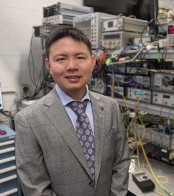
Dr. Xingyuan Mike Xu received the PhD degree from Swinburne University of Technology. He is currently a Professor with Beijing University of Posts and Telecommunications, Beijing, China. His research interests include neuromorphic optics, optical signal processing, and optical frequency combs.
Nikos Pleros, PhD, Aristotle University of Thessaloniki, Greece
Dr. Nikos Pleros is a Full Professor at the Department of Informatics, Aristotle  University of Thessaloniki, Greece, and Head of the Wireless and Photonics Systems and Networks (Win.Phos) research laboratory (http://winphos.web.auth.gr/ ) at the Centre for Interdisciplinary Research and Innovation at the same University. His research interests extend along a broad range of photonic technologies and their use for communications, computing and sensing, including linear optics, photonic neural networks, optical RAMs, optical interconnects, silicon photonics and photonic integrated circuit technologies, optical switching and fibre-wireless networks. He has more than 470 archival journal publications and conference presentations including several invited contributions, while his work has been cited >8.200 times with an h-index of 45 (GS). He holds 7 US and 3 National Patents in the fields of photonic biosensing and neuromorphic photonics, having co-invented a series of new architectures for matrix-vector and matrix-matrix multiplication circuits using integrated photonics. He has held positions of responsibility at several major conference committees including ECOC, OFC and SPIE Photonics West and has coordinated several FP7 and H2020 European projects, having raised in total a research funding of >15M Euro since 2010. He has received the 2003 IEEE Photonics Society Graduate Student Fellowship, the 2018 AUTH Excellence Award for his research project funding ID, the 2021 Greek Innovator Award and the 2021 AUTH Excellence Award for Innovation and Research. Dr. Pleros is also a Scientific Advisor at the US start-up company Celestial AI.
