
Transport Mechanisms in Energy Materials
- Submission status
- Closed
- Submission deadline
Energy serves as a fundamental pillar for both economic and social development. The advancement of cutting-edge energy materials stands as a crucial cornerstone in driving the transition towards a new energy-driven economy. Despite the progressive enhancement of material performance, significant barriers persist in the efficiency of energy conversion and storage, thereby constraining the broader adoption of new energy technologies across various sectors. One critical bottleneck pertains to the transport of electrons and ions, playing a pivotal role in hampering the efficacy of energy conversion and storage. This limitation is notably evident in areas such as electric and thermal transport within thermoelectric materials, ion and electron conveyance in lithium battery materials, and charge transfer in optoelectronic materials. Unveiling the transport mechanisms within energy materials stands as the bedrock upon which we can bolster transport efficiency and devise novel energy materials.
The integration of computational material methods, artificial intelligence technology, and advanced in-situ experimental characterization techniques constitutes a foundational approach for unraveling the microstructural transport mechanisms within energy materials. The recent surge in mechanism elucidation, powered by these integrated methodologies, is widely acknowledged as a pivotal avenue for material innovations, consequently propelling advancements in new energy applications. This collection is dedicated to tracking the latest developments and publishing intriguing investigations pertaining to transport mechanisms within energy materials.
The topic will include, but are not limited to:
- Thermal and electron transportation mechanisms in Thermoelectric materials
- Charge transfer mechanisms in optoelectrical materials
- Li-ion and electron transportation mechanisms in electrode materials
- Novel materials and designs for energy-related applications.
- Multiscale computational material methods for energy applications.
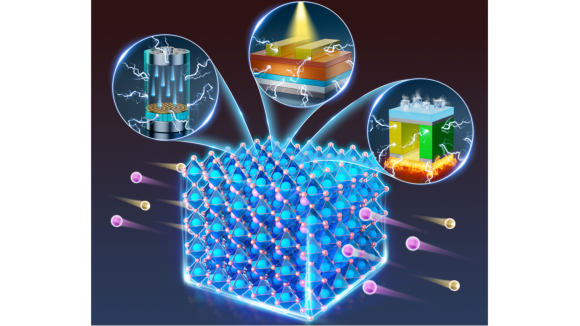
Editors
-
Jianjun Liu, PhD
Shanghai Institute of Ceramics, Chinese Academy of Sciences, China
-
Zhen Zhou, PhD
Zhengzhou University, China
The Collection will publish original research Articles, Reviews, Perspectives and Comments (full details on content types can be found here). Papers will be published in npj Computational Materials as soon as they are accepted and then collected together and promoted on the Collection homepage. All Guest Edited Collections are associated with a call for papers and are managed by one or more of our Editorial Board Members and the journal's Editors.
This Collection welcomes submissions from all authors – and not by invitation only – on the condition that the manuscripts fall within the scope of the Collection and of npj Computational Materials more generally. See our editorial process page for more details.
All submissions are subject to the same peer review process and editorial standards as regular npj Computational Materials articles, including the journal’s policy on competing interests. The Guest Editors have no competing interests with the submissions, which they handle through the peer-review process. The peer review of any submissions for which the Guest Editors have competing interests is handled by another Editorial Board Member who has no competing interests. See our Collections guidelines for more details.
This Collection is not supported by sponsorship.
