Hazards in Mountain Regions
- Submission status
- Open
- Submission deadline
 This Collection supports and amplifies research related to SDG 13 - Climate action
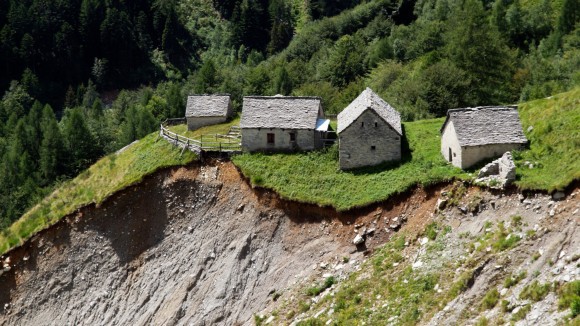
Mountain regions are increasingly exposed to hazards driven by rapid climate change. Extreme rainfall and heatwaves, combined with shrinking glaciers, reduced snow cover, and thawing permafrost, can destabilise slopes and disrupt hydrological systems. These processes increase the likelihood of floods, landslides, debris flows, ice-rock avalanches, and cascading multi-hazard events, posing threats to ecosystems, infrastructure, and communities. Understanding these complex interactions is essential for predicting risks and developing effective adaptation strategies.
This cross-journal collection from Communications Earth & Environment, Communications Sustainability, Nature Communications, and Scientific Reports brings together research that explores the physical mechanisms and societal impacts of mountain hazards under changing climatic and cryospheric conditions. Contributions addressing risk governance, adaptation approaches, and socio-economic implications are also encouraged.