
Collections
-
-
Collection |
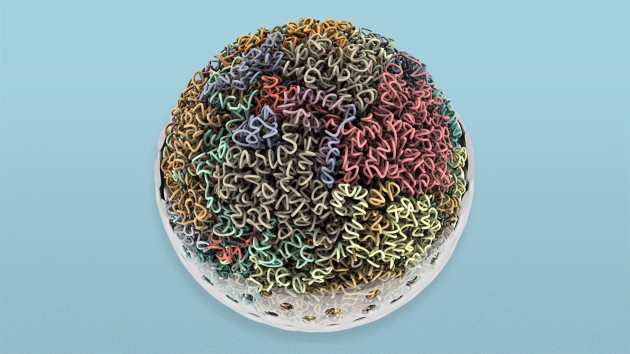 4D nucleome
The 4D Nucleome (4DN) program, funded by the National Institutes of Health Common Fund, was established in 2015 to map the three-dimensional organization of the nucleus in space and time (the 4th dimension).
Image: Frank Alber and Ye Wang -
Collection |
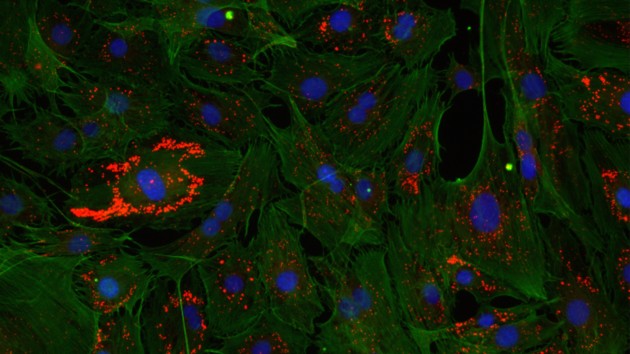 Cellular Senescence 2025
This Collection invites research on cellular senescence, its mechanisms in aging and age-related diseases, interactions with inflammation and immunity, and interventions targeting senescent cells to promote healthy longevity.
Image: Diana Jurk / Mayo ClinicOpen for submissions -
Collection |
 A year of stem cell and developmental biology
In recent years, the field of stem cell and developmental biology has seen remarkable breakthroughs that have deepened our understanding of how organisms grow, age and regenerate, with major implications for medicine and biotechnology.
Image: Dr. Christopher Thomas, Marseille Developmental Biology Institute (IBDM), CNRS & Aix-Marseille Université -
Collection |
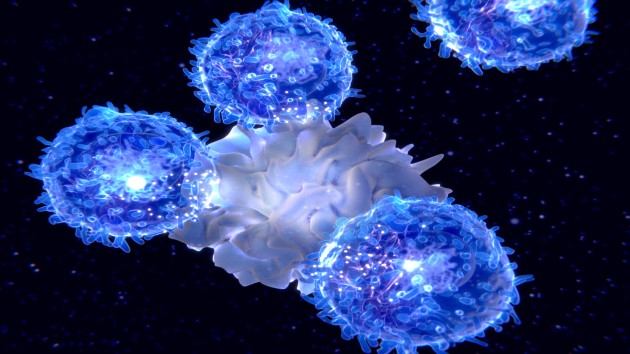 Signalling Pathways of Innate Immunity
In this cross-journal Collection, we invite research into the complex signalling pathways of innate immunity, emphasising the activation and regulation of pattern recognition receptors in response to microbial and endogenous triggers.
Image: © JUAN GAERTNER/SCIENCE PHOTO LIBRARY/Stock Illustrations/GettyimagesOpen for submissions -
Collection |
 Nobel Prize in Physiology or Medicine 2024
The 2024 Nobel Prize in Physiology or Medicine has been awarded jointly to Victor Ambros and Gary Ruvkun "for the discovery of microRNA and its role in post-transcriptional gene regulation".
-
Focus |
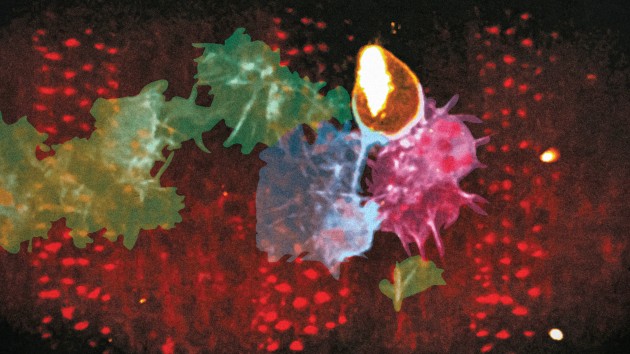 Focus on cell death
Our understanding of distinct and diverse modes of cell death and their contributions to homeostasis and disease has significantly progressed in recent years. In this Focus, we highlight exciting advances in this field with commissioned content, an Editorial, Research Highlights and a selection of related research articles published by Nature Cell Biology.
Image: Andrew J. Davidson, University of Glasgow -
Collection |
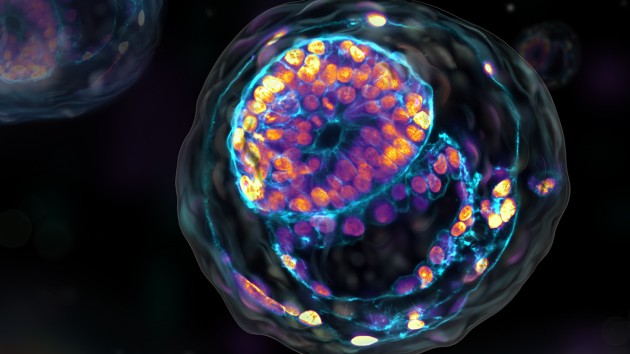 Innovations in Stem Cell Biology 2024
From the generation of embryo-like structures to the establishment of cell-based approaches to model or treat disease, the field of stem cell and developmental biology has impressively progressed during the past few months.
Image: Jacob Hanna and Maayan Visuals – Oldak B. et al. Complete human day 14 post-implantation embryo models from naive ES cells. Nature 622, 562–573 (2023). https://www.nature.com/articles/s41586-023-06604-5 -
Collection |
 Genome editing
This Collection provides an overview of current progress in developing targeted genome editing technologies, including a selection of protocols for using and adapting these tools in your own lab.
Image: LuckyStep48 / Alamy Stock Vector -
Focus |
 Celebrating 25 years of cell biology
2024 marks twenty five years since the launch of Nature Cell Biology.
Image: CHRISTOPH BURGSTEDT/SCIENCE PHOTO LIBRARY/Getty -
Collection |
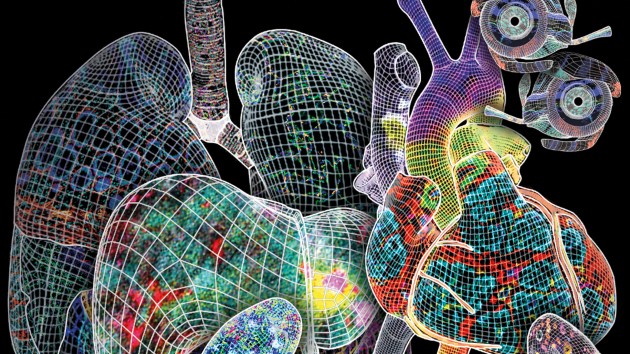 Human BioMolecular Atlas Program
Inaugurated in 2018, the Human BioMolecular Atlas Program (HuBMAP) endeavours to construct comprehensive spatial maps that feature a range of biomolecules such as RNA, proteins, and metabolites in human organs at single-cell resolution.
Image: Heidi Schlehlein -
Collection |
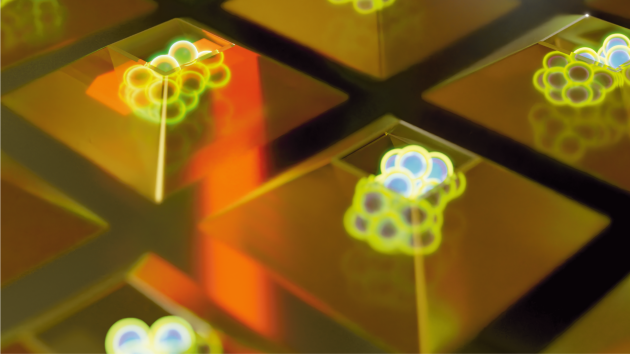 Innovations in Stem Cell Biology 2023
Stem cell models of development, regeneration, and disease are quickly advancing. New technologies and concepts are continuously combined with existing knowledge to create more realistic systems to improve our understanding of these intricate processes. In this collection, we highlight papers published in 2022-2023 across Nature Portfolio journals on topics including embryonic development and stem cells, reproductive biology, synthetic tissues and embryo models, clinical and translational research and tissue stem cells.
Image: Jean-Baptiste Sibarita, Virgile Viasnoff, and Anne Beghin
 Cell death and inflammatory signalling
