Thank you for visiting nature.com. You are using a browser version with limited support for CSS. To obtain
the best experience, we recommend you use a more up to date browser (or turn off compatibility mode in
Internet Explorer). In the meantime, to ensure continued support, we are displaying the site without styles
and JavaScript.
The 4D Nucleome (4DN) program, funded by the National Institutes of Health Common Fund, was established in 2015 to map the three-dimensional organization of the nucleus in space and time (the 4th dimension). In its first phase, the consortium focused on developing and benchmarking experimental and computational methods for measuring genome architecture. This effort generated a foundational resource of chromatin interaction data across key human cell types. The program’s second phase, beginning in 2021, shifted focus toward understanding chromatin dynamics and their functional implications for human health and disease. As the 4DN program approaches its conclusion in 2025, this collection highlights pivotal advances from its final five years published across Nature Portfolio.
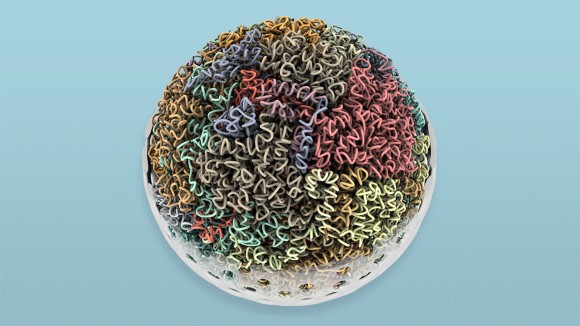
The 4D Nucleome Project demonstrates the use of genomic assays and computational methods to measure genome folding and then predict genomic structure from DNA sequence, facilitating the discovery of potential effects of genetic variants, including variants associated with disease, on genome structure and function.
Our genomes are highly structured, which facilitates gene regulation. An ambitious project has catalogued the organization of DNA in the nuclei of human cells.
Upon fertilization and during early mammalian development, major changes in cellular plasticity occur. This is accompanied by large-scale epigenome remodelling, as has been recently highlighted by the application of genomics techniques to this developmental period.
Szalay et al. discuss cross-kingdom similarities and differences in 3D chromatin folding in relation to gene regulation, including in bacteria, archaea, mammals and plants. This comparison reveals certain factors as ancestral sculptors of the genome, but also that evolution tolerates considerable variety in genome organization.
Here, the authors describe approaches to investigating 3D genome architecture and dynamics. They discuss the physical organization and dynamic regulation of the genome and highlight studies that have provided insights into the roles of genome structure and regulation in kidney health and disease.
Gene regulation in animals depends chiefly on enhancers, yet the underlying mechanisms are poorly understood. This Review discusses enhancer–promoter interactions and transcription activation, focusing on how enhancer–promoter selectivity is achieved and on recent technical advances that may provide new insights into transcription activation.
In this Review, Zhang et al. discuss how recent advances in computational methods are helping to reveal the multiscale features involved in genome folding within the nucleus and how the resulting 3D genome organization relates to genome function.
In this Review, Gaulton et al. discuss how single-cell epigenomic methods generate cell type-, subtype- and state-resolved maps of candidate cis-regulatory elements in heterogeneous human tissues that can help to interpret the genetic basis of common traits and diseases.
In this Review, Preissl, Gaulton and Ren discuss single-cell epigenomic methods and data analysis tools, their readiness for profiling cis-regulatory elements in human tissues and the insight they can provide into dynamic, context-specific gene regulation.
There is a rapidly growing appreciation of the complexities of 3D genome organization, as well as associations with gene expression and wider cellular and organismal phenotypes, including diseases. In this Review, the authors describe diverse experimental methods for manipulating 3D genome organization — from fine-scale control of DNA contacts to large-scale nuclear repositioning — which are facilitating detailed testing of the biological functions of 3D genome organization.
Rigorous record-keeping and quality control are required to ensure the quality, reproducibility and value of imaging data. The 4DN Initiative and BINA here propose light Microscopy Metadata Specifications that extend the OME Data Model, scale with experimental intent and complexity, and make it possible for scientists to create comprehensive records of imaging experiments.
Schooley et al. find that mitotically bookmarked loci drive a transient chromosome folding state during G1 entry that is subsequently modulated by factors inherited through the cytoplasm.
Goel et al. produce high-resolution three-dimensional genome structure mapping from mitosis to G1 phase to show unseen interactions between enhancers and promoters in prometaphase. Polymer modeling indicates the interactions are facilitated by chromosome compaction.
This study uses chromatin tracing to identify alterations in single-cell 3D genome conformation during the progression of Kras-driven mouse lung adenocarcinoma and pancreatic ductal adenocarcinoma, and proposes Rnf2 as a regulator of the 3D genome.
This study characterised the landscapes and changes of RNA m6A in brains of individuals with or without Alzheimer’s disease, and revealed roles of a promoter antisense RNA next to MAPT in neuronal gene regulation that promote neuronal survival.
Orthogonal acute inducible degradation cell lines are used to delineate the mechanisms of how extrusive cohesin, cohesive cohesin and condensin interact to remodel chromosome architecture from interphase to mitosis.
The authors here show that chromatin interactions during mouse fetal development are spatiotemporally dynamic. Integrating interactomes with other datasets predicts target genes for candidate enhancers and helps interpret noncoding risk variants in the human genome.
In this study, TSA-seq was used to compare the distribution and association of genomic regions with the nuclear lamina, nucleoli and pericentric heterochromatin across four human cell lines.
Yin Yang 1 (YY1) aids in the formation of enhancer–promoter (E–P) loops independently of cohesin. YY1 maintains a subset of E–P interactions in interphase and establishes an overlapping yet distinct set after mitotic exit.
Hamazaki, Yang et al. report that an early pulse of retinoic acid robustly induces human gastruloids with a neural tube, segmented somites and more advanced cell types than conventional gastruloids.
Here the authors report that chromatin-associated RNAs (caRNAs) could play both cis and trans-regulatory roles in establishing cell-type-specific chromatin architecture by showing their capability to improve the prediction of genome folding.
Functional characterization of the regulatory landscape of the adjacent costimulatory genes CD28, CTLA4 and ICOS in primary human T cell subsets identifies context-dependent programs controlling this locus critical for immune homeostasis.
Condensin-depleted mitotic chromosomes compartmentalize and form contacts among regulatory elements despite lacking transcription and most chromatin-associated factors. Heterochromatin protein 1 (HP1) proteins are surprisingly dispensable for compartmentalizing constitutive heterochromatin.
In this work, the authors apply polymer models to reconstruct the 3D structure of the genome during SARS-CoV-2 infection and examine how the virus impacts key mechanisms of chromatin organization.
Single-cell transcriptome profiling of mouse embryos and newborn pups is combined with previously published data to construct a tree of cell-type relationships tracing development from zygote to birth.
Genome-wide replication timing maps of mouse embryos from the zygote to the blastocyst stage were generated using single-cell Repli-seq, shedding light on the establishment of the epigenome at the beginning of mammalian development.
Messenger RNAs transcribed from olfactory-receptor genes may have non-coding functions that include recruitment of transcriptional enhancers and inhibition of potentially thousands of competing alleles to ensure stable transcription of a single allele.
Cell lineage specification involves substantial chromatin conformation reorganization. Here, the authors integrate in-situ Hi-C and PLAC-seq to map the dynamic changes in 3D chromatin structure during Treg cell differentiation. Furthermore, the authors further characterize the role of Foxp3 in the establishment of Treg-specific chromatin interactions by different Foxp3-mutant mouse lines.
How chromatin-associated RNAs (caRNAs) are spatially organized in the context of the multiscale genome architecture is unclear. Here the authors suggest how the 3D genome architecture can modulate the spatial distribution of caRNAs at different scales, and how in turn caRNA could affect the dynamic 3D genome organization.
Most mammalian TAD boundaries, which separate functional chromosomal domains, bind the CTCF protein. Here, the authors identify multi-level clustering of CTCF binding sites at TAD boundaries and confirm their individual contribution to TAD formation.
Here authors present SAMOSA-ChAAT, a method for resolving how chromatin-interacting proteins restructure individual chromatin fibers, in high throughput and at scale. They provide evidence that the imitation switch family remodeling enzymes sense nucleosome density to program internucleosomal spacing on individual molecules.
Here, using population-based modeling on ensemble Hi-C data, the authors provide an expansive overview of how the genic chromatin microenvironment influences its potential involvement in different functions, such as transcription, DNA replication, and chromatin compartmentalization. Their results unveil a key role of nuclear speckles in genome organization.
Here the authors show transposable elements, formerly considered junk DNA, are a source of CTCF binding sites that contribute to species-specific 3D-genome structure, and may impact gene regulation during the course of mammalian evolution.
Luan et al. find that CTCF shapes the transcriptional landscape in part by suppressing the initiation of upstream antisense transcription at hundreds of divergent gene promoters.
Two main mechanisms have been proposed to shape 3D genome architecture - loop extrusion and phase separation. Here the authors combine these mechanisms in polymer models in a manner that best fits 3D genome, based on both Hi-C and super-resolution locus imaging data, proposing that these two physical processes can indeed coexist simultaneously within cells to define loops and TADs.
A study shows that the three-dimensional conformation of the human genome influences the positioning of DNA replication initiation zones, highlighting cohesin-mediated loop anchors as essential determinants of their precise location.
This paper describes the ‘4DN Data Portal’ that hosts data generated by the 4D Nucleome network, including Hi-C and other chromatin conformation capture assays, as well as various sequencing-based and imaging-based assays. Raw data have been uniformly processed to increase comparability and the portal is implemented with visualization tools to browse the data without download.
A new technique called immunoGAM, which combines genome architecture mapping (GAM) with immunoselection, enabled the discovery of specialized chromatin conformations linked to gene expression in specific cell populations from mouse brain tissues.
Phase separation has been suggested as a mechanism for heterochromatin formation through condensation of heterochromatin-associated factors. Here the authors show Polycomb complex PRC1 forms condensates on chromatin. Using optogenetic tools they nucleate local Polycomb condensates to show that this phase separation leads to subsequent histone modifications and chromatin compaction.
Depletion of BRD4 reduces the chromatin occupancy of NIPBL, resulting in aberrant genome folding. Loss of BRD4 impedes neural crest differentiation, which can be rescued by depletion of WAPL.
Long-range dependency benchmarks for DNA foundation models are scarce. Here, the authors present DNALONGBENCH to fill this gap, showing that current foundation models still lag behind expert models in capturing long-range genomic dependencies.
This work presents Perturb-tracing, integrating CRISPR screening with barcode readout and chromatin tracing for loss-of-function screens, enabling the identification of chromatin folding regulators at various length scales.
pSABER combines the power of signal amplification by exchange reaction (SABER) with the deposition of fluorescent or colorimetric substrates by horseradish peroxidase to enable enhanced signals for in situ hybridization in cells and tissues.
Obtaining a high-resolution contact map using current 3D genomics technologies can be challenging with small input cell numbers. Here, the authors develop ChromaFold, a deep learning model that predicts cell-type-specific 3D contact maps from single-cell chromatin accessibility data alone.
Enhancer-driven genomic recording of transcriptional activity in multiplex (ENGRAM) is used for multiplex recording of the cell-type-specific activities of dozens to hundreds of cis-regulatory elements with high fidelity, sensitivity and reproducibility.
A novel computational method for imputing missing data in multiplexed DNA FISH data is reported, improving the performance of downstream analysis including loop calling and cell type clustering.
GAGE-seq is a joint assay for 3D genome and transcriptome in single cells using combinatorial indexing to increase throughput. Applied to complex tissues, GAGE-seq enables the analysis of links between 3D organization and gene expression in rare cell types.
scGHOST offers a computational tool to annotate single-cell subcompartments from scHi-C or imaging data through graph representation learning with constrained random walk sampling.
We introduce multinucleic acid interaction mapping in single cells (MUSIC), for concurrent profiling of multiplex chromatin interactions, gene expression and RNA–chromatin associations within individual nuclei, as a tool for exploring chromatin architecture and transcription.
Repetitive DNA intervals play important roles in the nucleus but are difficult to study due to their reiterated nature. Tigerfish introduces a novel computational platform for the design of interval-specific in situ hybridization probes.
Chromatin boundary elements are hard to define and characterize. Here the authors report Site-specific Heterochromatin Insertion of Elements at Lamina-associated Domains (SHIELD) for high-throughput screening of barrier-type DNA elements in human cells.
Multiplexed DNA FISH technologies are powerful tools to reveal chromatin spatial organisation. Here, the authors developed SnapFISH, a computational pipeline to identify chromatin loops from multiplexed DNA FISH data.
High-throughput DNA or RNA labelling with optimized Oligopaints (HiDRO) reveals more than 300 factors that influence genome folding during interphase, including 43 genes that were validated as either increasing or decreasing interactions between topologically associating domains.
The Integrative Genome Modeling platform is a tool for population-based three-dimensional genome structure modeling and analysis by integrating various experimental data sources.
While large-scale 3D genome architecture is well studied, the limits of resolution have hindered our understanding on the fine scale. Here the authors mapped 1D epigenomic profiles to fine-scale 3D chromatin structures with their deep learning model CAESAR. The model predicted fine-scale structures, such as short-range chromatin loops and stripes, that Hi-C datasets fail to detect.
Chromosome conformation capture techniques have recently revealed features beyond chromatin loops such as architectural stripes. Here the authors present their stripe detection tool ‘Stripenn’ to detect and quantitate stripes from any type of chromatin conformation capture data. They show that architectural stripes are enriched at transcriptionally active and accessible genomic regions.
Micro-Meta App is an intuitive, highly interoperable, open-source software tool designed to facilitate the extraction and collection of relevant microscopy metadata as specified by recent community guidelines.
Automated and single-cell CUT&Tag is used to characterize the effects of KMT2A fusion proteins on chromatin in human primary leukemia samples, identifying oncogenic networks and fusion-specific therapeutic vulnerabilities.
This analysis systematically evaluates cross-linking chemistry and chromatin fragmentation strategies commonly used in 3C assays and introduces an improved Hi-C protocol for detecting loops and compartments.
Recent advances in super-resolution microscopy have made it possible to measure chromatin 3D structure and transcription in thousands of single cells. Here, authors present a deep learning-based approach to characterise how chromatin structure relates to transcriptional state of individual cells and determine which structural features of chromatin regulation are important for gene expression state.
The genome-wide investigation of chromatin organization enables insights into global gene expression control. Here, the authors present a computationally efficient method for the analysis of chromatin organization data and use it to recover principles of 3D organization across conditions.
This Analysis reports a computational approach to implement Hi-C, SPRITE and GAM, which allows researchers to assess the performances of the three technologies to capture DNA contacts in chromatin three-dimensional models.
ChromEMT combines a fluorescent DNA binding dye that selectively enhances DNA and nucleosomes in electron microscopy with multi-tilt tomography, to enable the imaging and reconstruction of nuclear chromatin ultrastructure and 3D organization.
This protocol describes a CRISPR prime editing-based method for the sequential and unidirectional tracing of insertional events in mammalian cells, generating a dynamic recording of such information within living cells.
This protocol provides guidelines for performing single-cell combinatorial indexing cleavage under targets and tagmentation. This method builds on the existing cleavage under targets and tagmentation method and uses a combinatorial indexing step to allow single-cell profiling of chromatin modifications.
This protocol describes an experimental and computational approach for mapping higher-order DNA interactions that relies on tagging cross-linked fragmented chromatin through an iterative split-and-pool barcoding process.
The authors provide protocols for chromatin tracing (for direct 3D tracing of chromatin folding along individual chromosomes) and multiplexed imaging of nucleome architectures and RNAs in single cells of cell lines and mammalian tissue, respectively.
The authors provide experimental and computational procedures, including details on building an automated fluidic exchange system, for high-resolution imaging of multiple transcripts and chromatin structure in fixed cells or cryosectioned tissue.