
About the Editors
Editor in Chief
 Professor Jasmeet Kaler, BVSC. And AH, MSc, PhD
School of Veterinary Medicine, University of Nottingham
United Kingdom
My research includes using data/big data to advance our understanding of livestock health, welfare and behaviour. The main goal of my research is to improve animal health and welfare on farms. To achieve this I combine understanding of disease biology, epidemiology, animal behaviour, animal personality with use of innovative technologies (precision livestock technologies), data analytics and predictive modelling in my studies. I am also interested in decision making of stakeholders in this domain esp farmer and vet behaviour.
Associate Editor
 Jorge Vázquez Diosdado, PhD
School of Veterinary Medicine and Science, University of Nottingham
Sutton Bonington, Loughborough, UK
Dr. Jorge is a Mathematician working in Precision Livestock Technologies. His research interest is the application of statistical and mathematical modelling, machine learning, signal processing, sensor technology to improve the health and welfare of farm animals.
 Gianmarco Ferrara, PhD
University of Messina
Messina, Italy
Professor Ferrara is a veterinary microbiologist who is focused on veterinary virology (cell-virus interactions, feline herpesvirus, pseudorabies virus, coronaviruses, schmallenberg virus, antivirals, oncolytic virotherapy, etc.). His expertise also includes zoonotic diseases (Coxiellosis, etc.) and wildlife diseases.
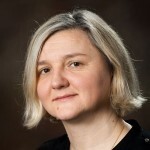 Renata Ivanek, DVM, PhD
Cornell University
Ithaca, NY, USA
My One Health research draws from my expertise in epidemiology, veterinary medicine, public health, mathematical modeling, biostatistics, machine learning, and risk assessment. Ongoing research in my computer lab aims to identify and evaluate approaches for controlling human and animal infectious diseases. Additionally, we work on improving antimicrobial stewardship in livestock and sustainably increasing food safety along the farm-to-table food supply chain. My team also tackles the technical and ethical challenges of AI applications in food and veterinary systems, and the related data governance, standardization, and sharing.
 Shokoofeh Shamsi, PhD
Charles Sturt University
Wagga Wagga, NSW, Australia
Professor Shokoofeh Shamsi is a veterinary parasitologist specializing in the study of parasites that impact animal health, welfare, and productivity. Her research addresses key challenges in veterinary science, including zoonotic parasite transmission, food safety, and the role of parasites in animal disease. She is particularly passionate about integrating parasitology education and research to improve animal health outcomes and advance veterinary practices globally. Through her work, she aims to promote a One Health approach, bridging veterinary and human health to tackle shared challenges.
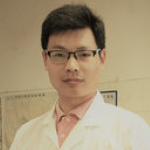 Shu-cheng Huang, PhD
College of Veterinary Medicine, Henan Agricultural University
Henan, China
Shu-cheng's research mainly focuses on the nutritional metabolic diseases and toxic diseases (mycotoxin, heavy metal etc.) of livestock and poultry, especially the development of natural plant extracts to study the regulatory mechanism of bone health of broiler chicken and mycotoxin detoxification mechanism based on the perspective of gut-organ axis. He is working on a series of Chinese herbal extracts to maintain animal intestinal health, increase immunity and disease resistance, enhance animal welfare, and thus improve the meat quality of livestock and poultry.
Advisory Editor
 Annisa Chand, PhD
Springer Nature, Germany
annisa.chand@nature.com
Annisa joined Nature Research in March 2019. She completed her Bachelors in Veterinary Sciences and her PhD in Endocrinology at the Royal Veterinary College, University of London. During her time at the Royal Veterinary College she conducted research in animal reproduction, sperm cryopreservation and immunology, as well as gaining valuable practical experience in livestock handling and dairy farming. For her doctoral studies she specialised in pituitary gland development and function in zebrafish, looking at the local hormonal regulation of pituitary secretion via the natriuretic peptide system. She went on to do her first postdoctoral position at King’s College London studying neuronal plasticity in olfaction, where she published evidence of a new form of plasticity in olfactory bulb dopaminergic neurons. Prior to joining the Nature Food team, she worked on microglia function in neurodegeneration at the Charité Universitätsmedizin-Berlin. Science communication has long been her passion, having been involved in widening access to veterinary education and organising scientific outreach events for the general public. Since 2025, she has been an Advisory Editor for npj Veterinary Sciences. Annisa is based in the Berlin office.
Editorial Board Members
Cristian Alvarez-Rojas, PhD, School of Veterinary Medicine, Pontificia Universidad Católica de Chile, Santiago, Chile
Pedro Amado Cecilio, PhD, LMVR, NIAID, NIH, Rockville, MD, USA
Joerg Jores, PhD, University of Bern, Bern, Switzerland
Stefania Kapsetaki, PhD, IMBB-FORTH, Greece
Guoliang Li, PhD, Jiangxi Agricultural University, Nanchang, China
Jun-Sik LIM, DVM, MPH, PhD, Saw Swee Hock School Of Public Health, National University of Singapore, Singapore
Sabine Mann, DVM, PhD, Cornell University College of Veterinary Medicine, Ithaca, NY, USA
Chloe Manning, PhD, Animal and Plant Health Agency, London, UK
Suresh Raja Neethirajan, PhD, Dalhousie University, Halifax, Canada
Gang Ye, PhD, Sichuan Agricultural University, China
Jing Zhang, PhD, Lanzhou Veterinary Research Institute, Chinese Academy of Agricultural Sciences, China
Interested in joining the journal team?
If you are interested in joining the journal as an Editorial Board Member or Associate Editor, please complete this form. Associate Editors are part of the editorial team that handle manuscripts, while Editorial Board Members are regular reviewers and are consulted for ad hoc advice. We will contact you if your expertise meets the needs of the journal.
Nature Portfolio journals are committed to promoting practices that support diversity, equity and inclusion in science communication and publishing, and we strongly encourage gender, race, ethnic, geographic, career stage and other diversity in our journal teams. Our in-house staff will use your information only for the purposes of identifying new editorial team or board members. Please contact the journal by email if you would like to remove your information from these records.
Please note that we are not able to respond to all applicants.
