

University of Oxford
United Kingdom (UK)
Time frame: 1 June 2025 - 30 May 2026Profile
The Nature Index tracks primary research articles from 178 applied, health, natural and social sciences journals, across many different publishers, chosen by an independent group of researchers. The Nature Index provides absolute Count of primary research articles and fractional Share counts of author contribution to articles. The positions in the table below reflect University of Oxford's position overall, domestically, within their sector, and in various subject areas based on their Share. Each position links to the corresponding table where University of Oxford is listed.
Position by research output Share
Position by research output Share in subject areas
Research
University of Oxford has the following research output in the current window (1 June 2025 - 30 May 2026) of the Nature Index. Click on Count to view a list of articles representing the corresponding Share value.
Overall research output
Research outputs by subject area
Leading research topics
In the Current Index (12-month rolling window), University of Oxford published the most articles in these research topics. Learn more about Nature Research Intelligence Topics.
| Topics | Count | Share |
|---|---|---|
| Clinical Sciences | 183 | 36.57 |
| Particle and High Energy Physics | 172 | 23.35 |
| Organic Chemistry | 38 | 20.06 |
| Physical Chemistry | 52 | 18.40 |
| Astronomical Sciences | 97 | 17.74 |
| Bioinformatics and Computational Biology | 73 | 16.97 |
| Macromolecular and Materials Chemistry | 63 | 15.65 |
Share output for the past 5 years

Turn complex research questions into confident strategic decisions
When you're under pressure to set direction, justify investment, or understand your competitive position, you need more than raw data — you need trusted insights you can act on.
Benchmark your performance against global peers using robust, methodologically sound analysis.
Combine quantitative metrics with qualitative expert insight to uncover strengths, gaps and emerging opportunities.
Gain tailored, decision-ready recommendations aligned to your strategic priorities.
Talk to us to learn more about our data dashboards and bespoke strategy reports.

Grow research skills, confidence and careers with training built for every stage of the research lifecycle.
Developed with Nature Portfolio journal Editors and internationally renowned experts. Discover three ways to learn:
Self-paced, online courses in convenient bite-sized units, covering key skills across scientific writing, publishing, grant writing, data analysis, and more.
Expert trainer-led workshops with hands-on exercises and real-time feedback across core research skills, delivered via interactive group sessions.
Editor-led workshops combining core principles in writing and publishing, personalised 1:1 feedback from Nature Portfolio Editors and hands-on exercises.
Explore course catalogues and workshop agendas, enquire about the options or request institutional pricing.
Collaboration
Nature Index collaborations highlight fruitful collaborations that lead to high quality research around the world. A collaboration can be between any two institutions or locations co-authoring at least one article in the journals tracked by the Nature Index. The collaboration score between two institutions is the sum of each of their Shares on the papers to which both have contributed. The table and charts below highlight the leading collaborators with University of Oxford.
Top 5 domestic collaborators with University of Oxford by Share
Collaborating institutions
Note: Hover over the bars to view details about each institution's Share.
| Collaborating Institution | Collaborators' Share | Collaboration Score |
|---|---|---|
| University of Cambridge | 27.26 / 39.02 | 66.27 |
| Imperial College London (ICL) | 29.78 / 32.81 | 62.59 |
| UCL | 25.21 / 28.21 | 53.42 |
| Oxford University Hospitals NHS Trust (OUH) | 31.39 / 11.70 | 43.08 |
| UK Research and Innovation (UKRI) | 31.01 / 10.96 | 41.97 |
Top 5 international collaborators with University of Oxford by Share
Collaborating institutions
Note: Hover over the bars to view details about each institution's Share.
| Collaborating Institution | Collaborators' Share | Total Share |
|---|---|---|
| Max Planck Society | 21.21 / 17.95 | 39.16 |
| Harvard University | 17.35 / 15.62 | 32.97 |
| French National Centre for Scientific Research (CNRS) | 20.57 / 10.96 | 31.53 |
| Chinese Academy of Medical Sciences & Peking Union Medical College (CAMS & PUMC) | 20.32 / 5.68 | 26.00 |
| Helmholtz Association of German Research Centres | 14.44 / 10.50 | 24.94 |
Job finder
-
Research Scientist in AI for Healthcare
Oxford Suzhou Centre for Advanced Research Suzhou, Jiangsu (CN)
View more job listings on Nature Careers.
Latest supplements
Nature Index 2026 Regenerative medicine
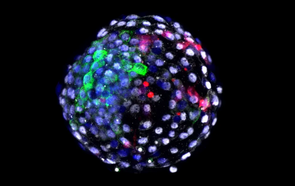
Regenerative medicine has the potential to transform the treatment of chronic and life-threatening diseases. But major challenges remain, such as overcoming immune rejection and ensuring that new therapies are developed using more inclusive data sets. In this supplement, we explore the discoveries that are driving the field, the barriers that could limit its progress, and the teams and institutions that are making their mark.

Nature Index 2026 Nanoscience and nanotechnology
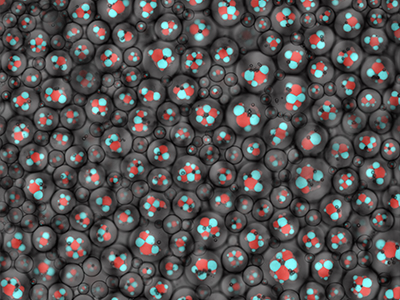
From programmable RNA architectures to next-generation materials for energy and healthcare, researchers are harnessing the unusual properties of the nanoscale to tackle some of society's biggest challenges. This supplement explores the discoveries that are driving the field, the hurdles that remain and the institutions that are leading in nanoscience and nanotechnology research.
Relationships
Affiliated institutions
The following affiliated institutions are wholly owned, operated, administered or contains research facilities for University of Oxford. All affiliations for an affiliated institution are credited to the institution to which it is affiliated. Each of the affiliated institutions listed below has its own research profile.
-
University of Oxford
- Ashmolean Museum
- CRUK/MRC Oxford Institute for Radiation Oncology
- Oxford Centre for Computational Neuroscience (OXCNS)
- Oxford Centre for Human Brain Activity (OHBA)
- Oxford MRC Weatherall Institute of Molecular Medicine (WIMM)
- Oxford Museum of Natural History
- Oxford Suzhou Centre for Advanced Research (OSCAR)
- Oxford The Jenner Institute
- Oxford University Press (OUP)
- Oxford Wellcome Trust Centre for Human Genetics
Affiliated joint institutions and consortia
Represents joint institutions and consortia for which the institution is designated as a partner institution. Each partner institution of a joint institution or consortium receives an equivalent Share for every affiliation in which the consortium is included.
- ARC Centre of Excellence for Transformative Meta-Optical Systems
- Alan Turing Institute
- Alzheimer Genetic Analysis Group
- Arthritis Research UK Osteoarthritis Genetics (arcOGEN)
- Australo-Anglo-American Spondylitis Consortium (TASC)
- Avian Phylogenomics Project
- British Heart Foundation Oxbridge Centre of Regenerative Medicine (BHF CRM)
- CAMS Oxford Institute (COI)
- CARDIoGRAMplusC4D Consortium
- CDF Collaboration
- COSMOS Consortium
- CRUK Oxford Centre
- Centre For Macroeconomics (CFM)
- Centre for Experimental Social Sciences Santiago (CESS Santiago)
- Centre for Genomic Pathogen Surveillance (CGPS)
- Centre for Geometric Biology (CGB)
- Centre for Quantum Optical Technologies
- Centre for the Observation and Modelling of Earthquakes, Volcanoes and Tectonics (COMET+)
- Chinese Academy of Medical Sciences Oxford Institute (CAMS Oxford Institute)
- Collaboration for AIDS Vaccine Discovery (CAVD)
- Colorectal Cancer Genetics Consortium (COGENT)
- DIAGRAM Consortium
- Drosophila 12 Genomes Consortium
- Early Growth Genetics Consortium (EGG)
- Eijkman Oxford Clinical Research Unit (EOCRU)
- Electron Physical Science Imaging Centre (ePSIC)
- European Network for Genetic and Genomic Epidemiology (ENGAGE) Consortium
- European University of Brain and Technology (NeurotechEU)
- Future Circular Collider Design Study (FCC)
- Genetic and Environmental Risk in Alzheimer's Disease (GERAD)
- Genotype-to-Phenotype UK National Virology Consortium
- Global BPGen Consortium
- Global Station for Biosurfaces and Drug Discovery (GSD)
- Grupo Oncológico Cooperativo del Sur (GOCS)
- H1 Collaboration
- HKU-Oxford Joint Laboratory for Quantum Information and Computation
- Henry Royce Institute
- Hong Kong Center for Cerebro-Cardiovascular Health Engineering (COCHE)
- Human Brain Project (HBP)
- ICGC Prostate Cancer Project: Adenocarcinoma
- IceCube Collaboration
- Integrated Research on Developmental Determinants of Ageing and Longevity (IDEAL)
- InterAct Consortium
- International Centre for Carbonate Reservoirs (ICCR)
- International Consortium for Blood Pressure (ICBP)
- International HapMap Project
- International Stroke Genetics Consortium (ISGC)
- JDRF/Wellcome Trust Diabetes and Inflammation Laboratory (DIL) Oxford
- John Adams Institute for Accelerator Science (JAI)
- Joint Universities Pandemic and Epidemiological Research (JUNIPER)
- KACST & Oxford Petrochemicals Research Center (KOPRC)
- KEMRI-Wellcome Trust Research Programme CGMRC
- King Abdulaziz University and Oxford University for Intelligence Artificial Intelligence in Precision Medicine Centre (CAIPM)
- LICR Oxford Branch
- MAESTRIA
- MDUK Oxford Neuromuscular Centre
- MRC Anatomical Neuropharmacology Unit
- Mahidol Oxford Tropical Medicine Research Unit (MORU)
- Maison française d'Oxford (MFO)
- Malaria Genomic Epidemiology Network (MalariaGEN)
- Multiproxy Approach for the Reconstruction of the Glacial Ocean Surface (MARGO)
- NIH Oxford-Cambridge Scholars Program (OxCam)
- NIH-Oxford-Cambridge Scholars Program (OxCam)
- NIHR Applied Research Collaboration, Oxford Thames Valley
- NIHR Blood and Transplant Research Unit (BTRU) in Donor Health and Behaviour at University of Cambridge
- NIHR Blood and Transplant Research Unit (BTRU) in Precision Cellular Therapeutics
- NIHR Blood and Transplant Research Unit in Donor Health and Genomics
- NIHR Health Protection Research Unit in Emerging and Zoonotic Infections (NIHR HPRUEZI)
- NIHR Health Protection Unit in Healthcare Associated Infections and Antimicrobial Resistance
- NIHR Oxford Biomedical Research Centre (OxBRC)
- NIHR Oxford Musculoskeletal Biomedical Research Unit (BRU)
- NIHR School for Primary Care Research
- Novo Nordisk Research Centre Oxford (NNRCO)
- OXION Ion Channels and Disease Initiative
- Orentreich Foundation for the Advancement of Science (OFAS)
- Oxford Centre for Diabetes, Endocrinology and Metabolism (OCDEM)
- Oxford Christ Church
- Oxford Drug Discovery Institute
- Oxford Endometriosis Care and Research (CaRe) Centre
- Oxford Molecular Diagnostics Centre
- Oxford University Clinical Research Unit (OUCRU)
- Oxford University Clinical Research Unit Indonesia (OUCRU Indonesia)
- Oxford University Clinical Research Unit-Nepal (OUCRU-NP)
- Oxford-GSK Institute of Molecular and Computational Medicine (IMCM)
- PROCARDIS Consortium
- READNA
- Research into Inflammatory Arthritis Centre Versus Arthritis (RACE)
- SBND Collaboration
- SCU-University of Oxford Huaxi Joint Centre for Gastrointestinal Cancer
- Singapore Peking Oxford Research Enterprise (SPORE)
- Software Sustainability Institute
- Statistical Methods Development
- Structural Genomics Consortium (SGC Oxford)
- SuperSTEM Laboratory
- Supernova Cosmology Project (SCP)
- The ATLAS Collaboration
- The Autism Genome Project Consortium (AGP)
- The Esophageal Adenocarcinoma GenEtics Consortium (EAGLE)
- The George Institute - UK (TGI UK)
- The LAGUNA-LBNO Collaboration
- The LHCb Collaboration
- The Mechanisms of Severe Acute Influenza Consortium (MOSAIC) Project
- The Pierre Auger Collaboration
- The T2K Collaboration
- The ZEUS Collaboration
- Translational Gastroenterology Unit (TGU)
- TreatOA Consortium
- Tribolium Genome Sequencing Consortium
- Tyndall Centre for Climate Change Research
- Type 2 Diabetes Genetic Exploration by Next-generation sequencing in multi-Ethnic Samples (T2D-GENES) Consortium
- UK ALMA Regional Centre (UK ARC)
- UK Cystic Fibrosis Gene Therapy Consortium
- UK Inherited Retinal Dystrophy Consortium (UKIRDC)
- UK SPINE
- UK10K Consortium
- Wisconsin Astrobiology Research Consortium (WARC)
- Wuhan-Oxford Joint Catalysis Laboratory
- XJTU-Oxford International Joint Laboratory for Catalysis