
Graphene Quantum Dots: Synthesis and Applications
Summary
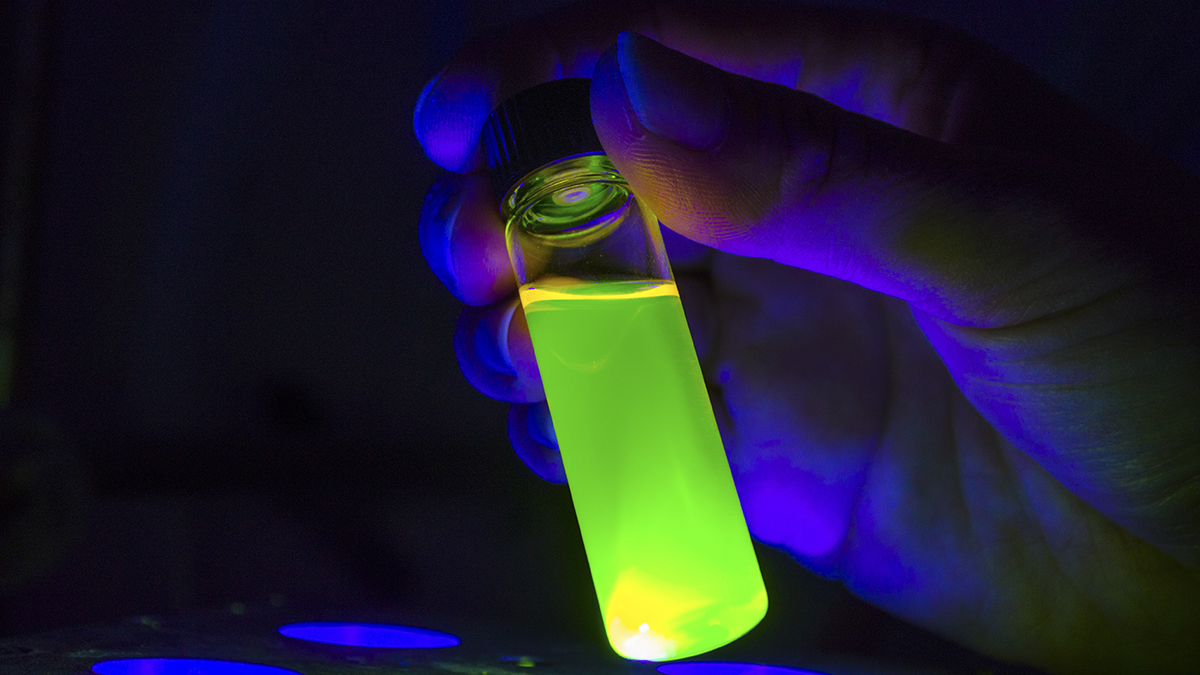
Graphene quantum dots (GQDs) represent a class of zero-dimensional nanomaterials derived from graphene with dimensions typically below 20 nm. Their reduced size induces a non-zero bandgap and strong quantum confinement effects, endowing them with tunable photoluminescence, high surface area and exceptional chemical stability. Synthesis methods broadly fall into two categories: top-down approaches, which fragment larger carbon sources such as graphene oxide via oxidative cutting or laser ablation, and bottom-up approaches from molecular precursors through pyrolysis or hydrothermal routes. Surface functionalisation and heteroatom doping further modulate optical, electrical and catalytic properties, enabling precise control over quantum yield and emission wavelength. Owing to their biocompatibility, low toxicity and versatile processing, GQDs have found applications across diverse fields. In optoelectronics, they serve as fluorescent inks, light-emitting diodes and photodetectors. In biomedicine, they function as imaging probes and drug-delivery vehicles. In energy and sensing, they enhance the performance of batteries, supercapacitors and electrochemical sensors. Recent advances have focused on scalable, green synthesis techniques and integration into functional composites to unlock their global potential for sustainable technology and healthcare.
Research from Nature Portfolio
Recent studies have demonstrated high-yield, green routes for GQD production using renewable biomass. Microwave-assisted oxidative cutting of carbonaceous precursors achieved yields exceeding 80%, producing hydrophilic GQDs with excitation-independent photoluminescence and quantum yields around 23%. These materials were applied in highly selective sensors for ferric ions, achieving detection limits in the micromolar range. In parallel, a one-pot exfoliation and disintegration approach generated both hydrophilic and hydrophobic nitrogen-doped GQDs. The hydrophilic variant showed excellent biocompatibility, high photoluminescence quantum yield and stability for cellular imaging, while the hydrophobic form yielded composite electrodes with enhanced areal capacitance for supercapacitors. Such work underscores the feasibility of synchronised production of functionalised GQDs and their seamless integration into devices.
Graphene Quantum Dots: Synthesis and Applications publication trend
The graph below shows the total number of articles in graphene quantum dots: synthesis and applications across all publications each year (not limited to Nature Index journals).
Technical terms
Graphene quantum dots (GQDs): Nanoscale fragments of graphene with dimensions below 20 nm exhibiting discrete electronic states due to quantum confinement.
Quantum confinement: Spatial restriction of charge carriers in nanoscale materials leading to discrete energy levels and tunable optical properties.
Top-down synthesis: Production of GQDs by cleaving larger carbon structures, such as graphene oxide, via oxidative cutting or physical methods.
Bottom-up synthesis: Assembly of GQDs from molecular precursors through reactions like pyrolysis or hydrothermal treatment.
Heteroatom doping: Introduction of non-carbon atoms (e.g. nitrogen, sulphur) into the graphene lattice to modify electronic and optical characteristics.
Photoluminescence: Emission of light from a material upon absorption of photons, a key feature exploited in imaging, sensing and optoelectronics.
References
- High yield synthesis of graphene quantum dots from biomass waste as a highly selective probe for Fe3+ sensing. Scientific Reports (2020).
- One-Pot Synthesis of Hydrophilic and Hydrophobic N-Doped Graphene Quantum Dots via Exfoliating and Disintegrating Graphite Flakes. Scientific Reports (2016).
- Graphene Quantum Dots Electrochemistry and Sensitive Electrocatalytic Glucose Sensor Development. Nanomaterials (2017).
- Graphene Quantum Dots by Eco-Friendly Green Synthesis for Electrochemical Sensing: Recent Advances and Future Perspectives. Nanomaterials (2021).
About these summaries
This Nature Research Intelligence Topic summary is created with the cited references and a large language model. We take care to ground generated text with facts, and have systems in place to gain human feedback on the overall quality of the process in line with our AI principles. We strive to create accurate and useful summaries for people unfamiliar with the research topic and that supports this goal. These pages are a beta release and will be updated as we learn how best to help people gain value from a research topic summary.
Nature Index 2026 Chemistry
Chemistry research is undergoing a period of transformation, driven by new technologies and mounting environmental pressures. In this supplement, we explore the trends behind China’s extraordinary rise in chemistry output, and why efforts to curb the use of PFASs are accelerating worldwide. We also look at the innovations that could redefine how chemicals are designed, produced and recycled.

Turn complex research questions into confident strategic decisions
When you're under pressure to set direction, justify investment, or understand your competitive position, you need more than raw data — you need trusted insights you can act on.
Benchmark your performance against global peers using robust, methodologically sound analysis.
Combine quantitative metrics with qualitative expert insight to uncover strengths, gaps and emerging opportunities.
Gain tailored, decision-ready recommendations aligned to your strategic priorities.
Talk to us to learn more about our data dashboards and bespoke strategy reports.

Grow research skills, confidence and careers with training built for every stage of the research lifecycle.
Developed with Nature Portfolio journal Editors and internationally renowned experts. Discover three ways to learn:
Self-paced, online courses in convenient bite-sized units, covering key skills across scientific writing, publishing, grant writing, data analysis, and more.
Expert trainer-led workshops with hands-on exercises and real-time feedback across core research skills, delivered via interactive group sessions.
Editor-led workshops combining core principles in writing and publishing, personalised 1:1 feedback from Nature Portfolio Editors and hands-on exercises.
Explore course catalogues and workshop agendas, enquire about the options or request institutional pricing.