Thank you for visiting nature.com. You are using a browser version with limited support for CSS. To obtain
the best experience, we recommend you use a more up to date browser (or turn off compatibility mode in
Internet Explorer). In the meantime, to ensure continued support, we are displaying the site without styles
and JavaScript.
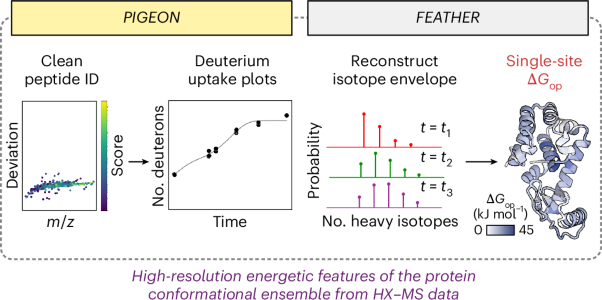
The dynamics of protein ensembles are crucial for protein function, yet information about ensemble energies remains challenging to obtain. Chenlin Lu et al. have developed a method called PIGEON-FEATHER for calculating ensemble free energies at single-amino-acid or near-single-amino-acid resolution from hydrogen exchange–mass spectrometry data. The cover image depicts the mapping of ligand-induced changes in the Escherichia coli Lac repressor.
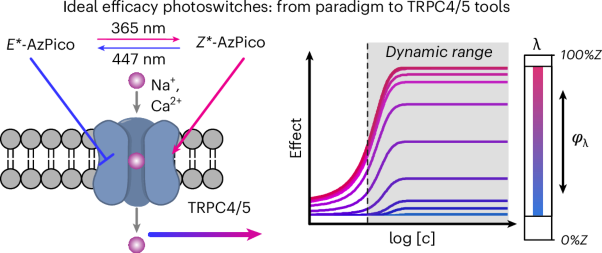
Ideal efficacy photoswitching is introduced as a concept in controlling protein activity with light. Largely independent of the concentration of a light-responsive compound, it enables TRPC4 and TRPC5 channels to be precisely agonized or antagonized depending on the color of light used.
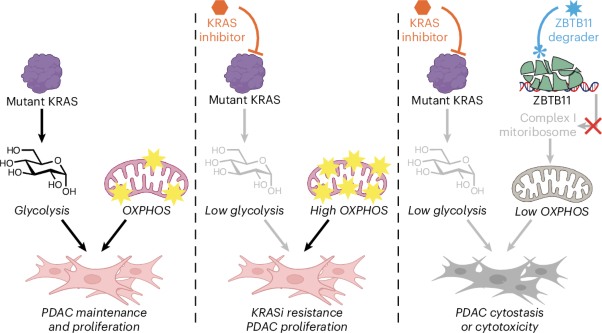
Cereblon-based molecular glue degraders provide a powerful strategy to target previously intractable proteins. This approach has now enabled selective elimination of a metabolically essential zinc finger transcription factor that drives resistance to KRAS inhibition in pancreatic cancer.
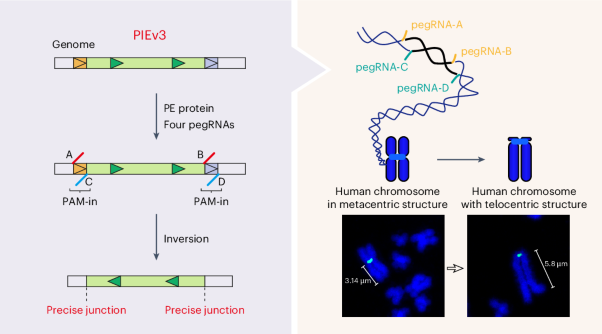
We developed the prime editing tool PIE, which produces precise inversions of large genomic segments and chromosomal structural variations in mammalian cells. PIEv3b achieves high inversion efficiency and outperforms nuclease- and integrase-based methods, enabling chromosome reconfiguration from metacentric to telocentric forms.
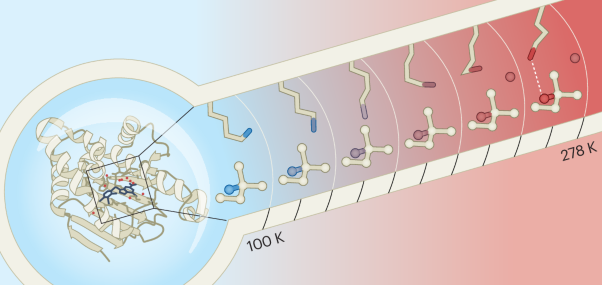
This Perspective discusses how elevated-temperature crystallography uncovers hidden dynamic states of protein, ligand and water molecules, expanding insights into the protein conformational landscape for drug discovery and design.
Using chemical photoswitchable reagents to exert purely wavelength-dependent control over biological systems in deep tissue and in vivo requires a concentration-independent design paradigm. Here, such photoswitchable ligands are realized by ensuring that E/Z isomers have opposing efficacies yet similarly high affinity, allowing them to probe transient receptor potential C4 and C5 channel functions up to the tissue level.
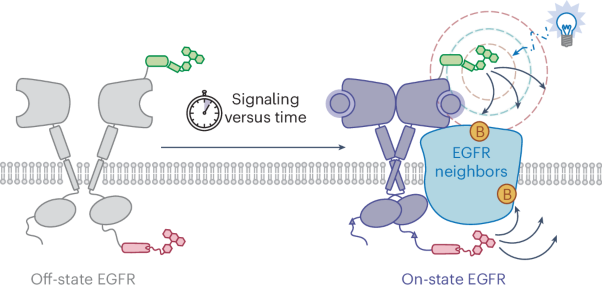
A multiscale photoproximity labeling proteomics workflow captures dynamic neighborhoods of extracellular and intracellular epidermal growth factor (EGF) receptor interactomes during early, middle and late signaling upon activation by EGF.
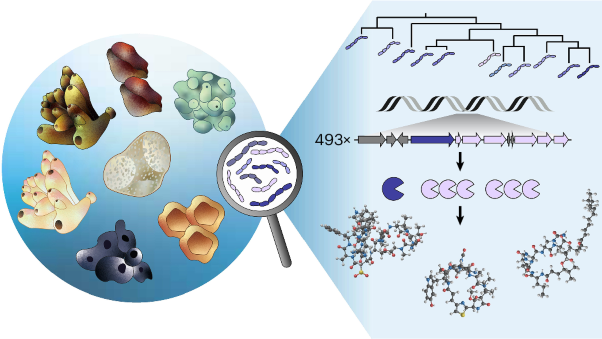
Marine sponges host bacteria that produce diverse bioactive compounds. Here, the authors conduct a large-scale metagenomic, single-bacterial and biochemical study to reveal the untapped biosynthetic potential of ‘Entotheonella’ symbionts, a talented producer taxon from microbial dark matter.
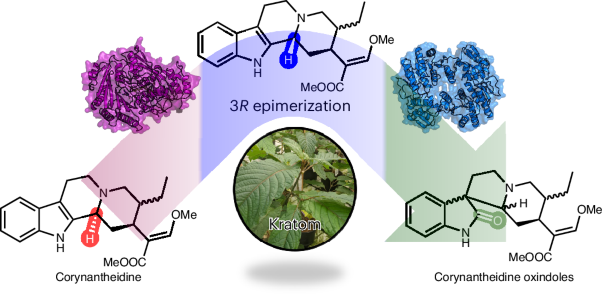
Monoterpene indole alkaloids are formed via a 3S stereoselective condensation between secologanin and tryptamine. Here the authors uncover the mechanism of epimerization behind uncommon 3R-containing alkaloids in Mitragyna speciosa (kratom) and study their inclusion in downstream biosynthesis.
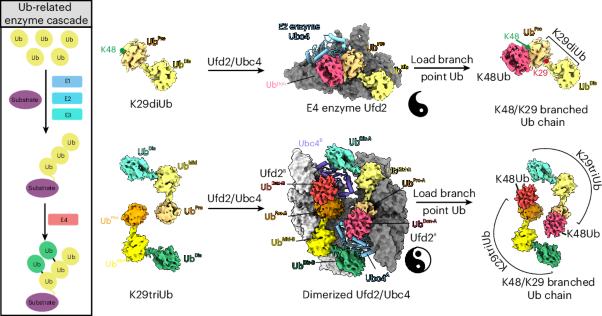
Tong et al. chemically trapped the structure of the E4 enzyme Ufd2, which mediates K48 branched ubiquitination on K29diUb and K29triUb, identifying Ufd2’s core region as a K29diUb binding domain and a dimeric conformation for distal ubiquitin stabilization.
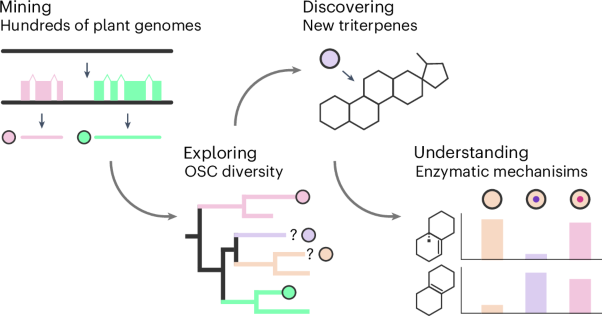
In plants, oxidosqualene cyclases (OSCs) perform a highly complex single reaction to generate the basis of all triterpenoid diversity. Here the authors leverage genome mining and transient expression to uncover multiple evolutionary and mechanistic insights for OSCs across the plant kingdom.
Depletion of a transcriptional factor ZBTB11 using molecular glue degraders can overcome oxidative-phosphorylation-mediated KRAS inhibitor resistance in pancreatic ductal adenocarcinoma with low acute neurotoxicity.
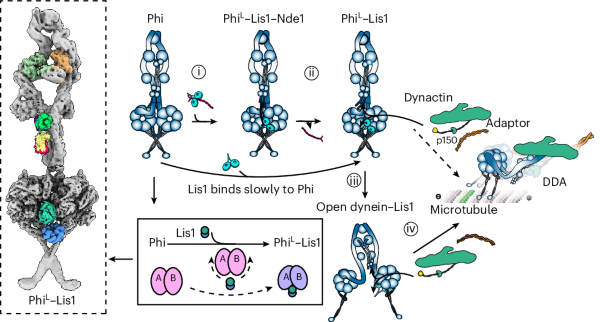
Cryo-electron microscopy and biochemical reconstitution analysis reveals that Nde1 enhances Lis1 binding to autoinhibited dynein, promoting formation of a Phi-like–Lis1 intermediate during dynein activation.
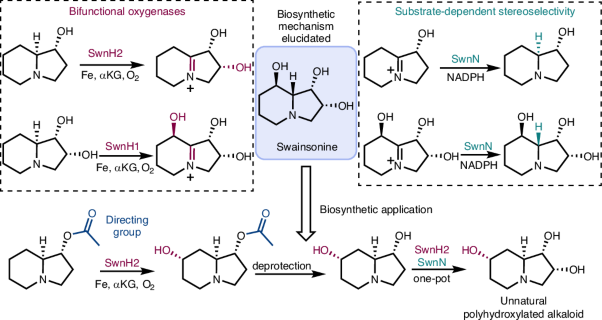
Swainsonine is a potent α-d-mannosidase inhibitor, but its biosynthesis remains poorly understood. Here the authors reveal an intriguing epimerization mechanism involving two nonheme iron and α-ketoglutarate-dependent enzymes and an imine reductase.
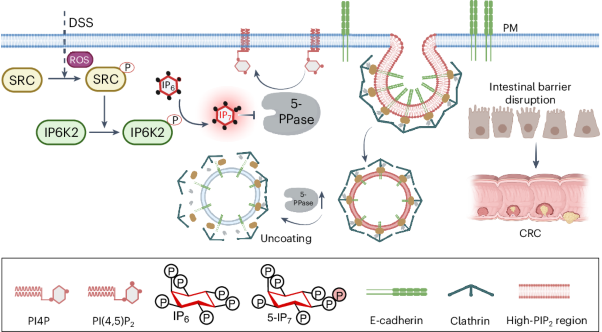
Dextran sulfate sodium is a colitis inducer that stimulates a ROS–Src–IP6K2 signaling axis to generate 5-IP7, which sterically inhibits PI(4,5)P2 phosphatases to promote PI(4,5)P2-mediated E-cadherin endocytosis and epithelial junction breakdown.
Hydrogen exchange–mass spectrometry (HX–MS) is used to qualitatively assess how perturbations such as mutations and ligand binding impact protein ensembles. However, in theory, HX–MS data contain the information necessary to derive residue-level energies of local unfolding (ΔGop). Now, a method called PIGEON-FEATHER has been developed, which can unambiguously determine residue-level ΔGop from conventional HX–MS datasets.
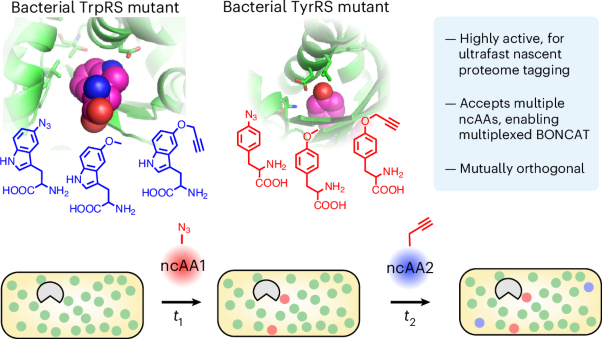
Engineered aminoacyl-tRNA synthetase (aaRS) mutants have been developed that facilitate ultrafast bioorthogonal noncanonical amino acid tagging (BONCAT) of newly synthesized proteins in diverse bacteria, including ESKAPE pathogens. The substrate polyspecificity of the aaRS mutants enables pulse-chase BONCAT and differential tagging of temporally distinct nascent proteomes in cells.
This study presents prime-editing-based inversion with enhanced performance, a prime editing-based system that enables efficient and precise genomic inversions from kilobase to chromosome scale, offering a powerful tool for chromosomal engineering, disease modeling and studying three-dimensional genome architecture.