
Abstract
Innovative Physical Education (PE) teaching methods rely on technologies and innovative environments to improve the fitness and efficiency of students. Such teaching/ training methods need periodic assessments to improve quality and cope with modern trends. This article introduces an Active Teaching Assessment Method (ATAM) using fuzzy decision support systems (FDSS). By analyzing performance data and physiological features, a Fuzzy Decision Support System may provide individualized training programs for athletes. FDSS considers factors like fitness level, recovery rate, and injury history to provide personalized suggestions. The fuzzy generates a series of membership functions based on the different performance levels of the students. Such performance levels provide optimal efficacy-adhered teaching methods randomly. The random outputs are combined based on student feasibility factors; the feasibility factors include PE time and academic performance. The active assessments are classified based on suitable outputs to persuade new PE sessions. The assessment is provided using fuzzy decision recommendation through feasible derivative improvements. In this process, the fuzzy derivatives only consider the best-fit (maximum efficient) teaching method. Therefore, the recommendations from the best fit are provided with a much better assessment from the previous sessions. With 12 categories, it can handle various classroom situations and student requirements. Compared to other methodologies, ATAM’s evaluation time of 75 s is the shortest, indicating excellent efficiency. Lastly, an output combination percentage of 85% best integrates performance and recommendation indicators.
Introduction
Physical education (PE) teaching is a teaching process that improves learning through sports and student health development. Physical education teaching ensures that every student receives health benefits via education services. “Improves learning through sport” means that learners gain essential physical, social, and cognitive abilities such as teamwork, discipline, perseverance, goal-setting, and leadership by engaging in structured physical activities. Physical education develops these required skills and enhances overall learning above the academic curriculum1. PE teaching contains various methods to create or encourage children to perform physical activities. Physical education teaching using big data is used for educational institutions2. A deep learning (DL) algorithm is used to identify the necessary information to provide a proper curriculum for the students3. The extensive data-based PE teaching method provides accurate exercises and assignments to the students. “Accurate exercises and assignments” refers to specially designed programs of physical fitness, such as strength training, conditioning runs, stretching exercises, and rehabilitation exercises, that students are advised of based on their class performance, class fitness, and scholarship in the PE course. The big data is analyzed and produced for the teaching method, which minimizes the complexity of increasing the students’ academic growth4. A bidirectional long short-term memory (Bi-LSTM) algorithm-based PE teaching method is also used for the institutions. The Bi-LSTM algorithm identifies the important indexes required for the teaching process. The Bi-LSTM algorithm increases the accuracy in providing necessary educational services to the students5.
A decision system (DS) analyses the massive amount of data provided to perform specific organizational tasks6. DS-based models are commonly used to optimize PE teaching systems. A decision tree algorithm-based PE teaching method is implemented in universities7. The DS trains the datasets with feasible attributes for the teaching system. The trained modules produce effective teaching strategies for the institutions, which minimize the complexity of improving the knowledge level of the students8. The DS-based method enhances the quality and standard range of the universities. A decision system-based model is also used to improve the overall quality level of PE teaching systems. DS is used to plan the PE curriculum to enhance strategic decision-making, optimize resource utilization, and evolve student instruction from dynamic data analysis. By analyzing students’ performance, rates of participation, and available resources in a systematic way, DS models remove administrative delay so that physical education programs become more responsive and sensitive to the physical development needs of students9. The decision system first evaluates the curriculum’s fundamental values and characteristics, eliminating unwanted latency in the teaching process. By considering curriculum goals, learning outcomes, and fitness standards at the outset, the system avoids redundant or conflicting activities, thus preventing teaching delays (“latency”) and maximizing PE sessions’ efficiency, concentration, and enthusiasm for students10. The overall quality of service (QoS) range is improved among the students, which increases efficiency in understanding the exact meaning of the tasks. The decision system enhances PE teaching systems’ performance and feasibility range11.
Physical education teaching evaluation is a complicated task to perform in every educational application12. The PE teaching evaluation produces optimal datasets to improve students’ academic performance. PE teaching is mainly provided to guide students with enormous skill and knowledge levels13. A fuzzy stochastic algorithm-based PE teaching evaluation method is used to evaluate the teachers’ teaching abilities. A questionnaire is provided to the students to gather optimal details about teaching and learning services14. The questionnaire minimizes the latency and energy consumption level in the evaluation process. PE teaching improves the efficiency and effectiveness of the range of teaching services to the students15. A principal component analysis (PCA) based PE teaching evaluation method is used to analyze the educational quality range of the institutions. The PCA technique identifies the optimal characteristics and data that contain the exact teaching effects of the system. The PCA technique detects the drawbacks of the teaching system, which are provided to improve the quality of the systems16,17.
In fuzzy logic, the degree of membership may be represented as a continuous number between zero and one. As a result, fuzzy logic shines in contexts where thinking is more approximative than explicit and precise. According to classical set theory, everything may be classified as belonging to a set or not. Members of fuzzy sets may have membership degrees between zero and one. The membership functions define the 0 to 1 membership values assigned to each point in the input space. Typical membership function forms include triangles, trapezoids, and a Gaussian curve. In a fuzzy logic system, the decision-making process is based on fuzzy rules, which are IF-THEN statements. Creating a mapping from an input to an output using fuzzy logic is known as a fuzzy inference system. It requires using membership functions, and fuzzy inputs are transformed into fuzzy values via fuzzyification. To get fuzzy results, Rule Evaluation applies fuzzy rules to fuzzy inputs. Fuzzy results from each rule are combined in the Aggregation of Outputs. To defuzzify is to transform a fuzzy output into an unambiguous number back. Incorporating fuzzy decision support systems is the driving force behind this research, which aims to meet the demand for novel physical education (PE) instruction approaches. Many current physical education (PE) approaches need to consider the nuances and variety of students’ academic and athletic pursuits. The current endeavor seeks to address this knowledge gap by developing and implementing an Active Teaching Assessment Method (ATAM) that utilizes fuzzy logic to evaluate and improve teaching tactics regarding student performance, time limitations, and academic outcomes. The suggested approach aims to enhance university physical education instruction by utilizing fuzzy membership functions with decision-making procedures to generate enhanced, data-driven suggestions. Figure 1 shows the Gaussian Membership Function.

Gaussian membership functions.
In the proposed ATAM, suggestions are made by comparing data from the current session with previous sessions through fuzzy derivatives. Each session’s performance and recovery factors are compared, and the system determines the best teaching style based on the highest efficiency and interest attained. The “best application” recommendation is the teaching approach with the best pupil outcomes (e.g., best fitness improvement, fastest recovery, most vigorous involvement) in past sessions. Such recommendations are not arbitrary but optimized and conditioned by data comparison of past and current session results to generate more precise and tailored teaching interventions over time.
Advantages
By including fuzzy membership functions, the ATAM technique offers a thorough evaluation that considers subtleties. Evaluation is quick thanks to its fast 75-second time. Its recommendation factor of 5.0 shows how well it adjusts pedagogical approaches. With its 12 categories, ATAM can adapt to different classroom situations. It combines performance and recommendation indicators to achieve an 85% output combination rate, leading to better results.
“With its 12 categories, ATAM can fit various classroom conditions” alludes to the categorization system implemented within the Active Teaching Assessment Method (ATAM). The 12 categories are unique physical education learning environments and student populations, i.e., differences in fitness levels (low, medium, high), recovery rates (fast, moderate, slow), engagement levels (high or low), and academic congruence with performance in PE. By dividing students into these 12 groups based on their live performance data and learning needs, ATAM enables teachers to tailor instruction in real time. For example, less fit and less motivated students get easier, motivating exercises, while highly fit and motivated students get more difficult fitness exercises. This adaptability in the differing categories ensures that various class settings, such as mixed-ability or mixed motivational settings, are adequately addressed, offering PE teaching that is more personalized, inclusive, and productive.
Motivation and problem statement
Physical education (PE) is integral to university programs that enhance students’ health, physical fitness, teamwork, and cognitive abilities. Over the past few years, education systems have used increasingly sophisticated technologies to tailor learning, maximize resource allocation, and involve students more actively. Big data analytics, machine learning algorithms, and decision support systems have successfully been used to maximize educational processes in many areas, including PE. But with all such technological developments, PE teaching does not commonly adjust in response to student needs, levels of fitness, recovery capacity, and academic potential, leading towards a mismatch in instructional provision versus optimization of learning performance.
Although prior approaches involving big data, decision trees, and deep learning models like Bi-LSTM models have enhanced the delivery of some aspects of the curriculum, they lack in anticipating the inherent uncertainties and multi-dimensional variability involved in students’ physical and academic profiles. Conventional assessment models primarily utilize fixed categorizations and static evaluations, making them inadequate in delivering genuinely adaptive and personalized teaching. Existing methods seldom blend fitness recovery rates, history of injury, time management, and academic performance within an integrated, adaptable system. Furthermore, existing systems cannot perform iterative refinement based on student progress from session to session, a key component to enabling performance gains to be maintained in the long term.
In this study, personalized suggestions generated by the Fuzzy Decision Support System (FDSS) specifically target physical attributes of students, such as fitness level, recovery rate, and injury history. While physical education inherently contributes to overall well-being, including mental health, the scope of this work focuses exclusively on enhancing physical health, fitness development, and injury prevention, rather than direct cognitive or psychological outcomes. Active evaluations are ongoing, and a session-by-session diagnostic examination of students’ physical performance is based on fuzzy logic rules. Appropriate outputs are the personalized exercise recommendations, training modifications, or learning activities that result from these diagnoses. These outputs should maximize each student’s progress based on their immediate physical and recovery status.
This study aims to outline a dynamic adaptive Active Teaching Assessment Method (ATAM) based on FDSS to adapt and tailor physical education teaching. The added value is real-time pedagogical strategy adjustments, considering physical and academic limitations, and adding adaptive fuzzy decision-making for enhanced overall responsiveness to individual students’ needs and enhancement of physical development.
PE teachers can apply the suggested ATAM model to track students’ performance in real time, provide tailored exercises, minimize risk injuries, and maximize student motivation. The anticipated outcomes are increased student participation, increased speed of physical skill achievement, enhanced fitness level, and increased session effectiveness compared to conventional static PE teaching models.
Research questions
The research questions are
-
How can Fuzzy Decision Support Systems (FDSS) improve the assessment and reform of physical education teaching methods in universities?
-
What are the key factors influencing the effectiveness of FDSS in physical education teaching?
-
How can the Active Teaching Assessment Method (ATAM) be integrated into the curriculum to enhance teaching quality?
-
What challenges and barriers might institutions face when implementing FDSS in physical education?
-
How does ATAM compare to traditional methods to improve teaching performance and student engagement in physical education courses?
Key points and contributions of the paper
The key points of the study are:
-
(1)
PE teaching assessment method using fuzzy decisions considering the impacting factors;
-
(2)
Best-fit solution extraction and recommendation through multiple considerations and fuzzy derivatives;
-
(3)
Data incorporated analysis for description-based assessment;
-
(4)
A comparative study with different variants related to the explanations and briefings.
The main contributions of the study are:
-
The study introduces fuzzy decision support systems to present ATAM, an evaluation strategy for physical education (PE) courses in higher education.
-
The proposed approach employs fuzzy logic to tailor lessons to each student’s needs, considering available physical education time and prior academic achievement.
-
The proposed study presents a new strategy for iteratively refining based on session data to extract the most effective teaching methods.
-
The study proposes a physical education (PE) paradigm that considers student engagement, collaboration, and fitness levels as an alternative to more conventional evaluation strategies.
-
The method emphasizes concrete, evidence-based suggestions that teachers may use to enhance their pedagogical practices and students’ classroom results.
“Physical education time” is the amount of time devoted to PE classes, and “prior academic achievement” is students’ previous work in PE classes, e.g., fitness tests and participation scores. Both assist ATAM in tailoring teaching styles by balancing time available against students’ learning history and physical development requirements. Engagement, collaboration, and fitness levels add a deeper understanding of assessing student advancement than standard measurement. Engagement induces habit and motivation; cooperation reinforces cooperation and socialization; and fitness defines actual bodily gain. Together and separately, they offer a wider, more active, and tolerant system that standard tests are prone to fall short of. Students’ physical education classroom results refer to measurable results like improvements in fitness, skill development, levels of participation, and teamwork abilities. These results, in addition to representing academic learning, also represent physical improvement. Enhanced classroom results result in increased cardiovascular fitness, muscular strength, coordination, and overall health, leading to improved performance in the short term and good health lifestyle habits in the long term.
Hence, this research suggests a new Active Teaching Assessment Method (ATAM) based on Fuzzy Decision Support Systems (FDSS) to methodically enhance physical education (PE) teaching approaches in universities. This research seeks to create a methodical, evidence-based, and responsive model that maximizes student performance, motivation, and academic achievement through fuzzy-based iterative assessment and enhancement by pinpointing gaps in existing PE teaching approaches. Here, the term “academic achievement” refers to the performance of pupils in classes related to Physical Education. The measurement parameters in the assessment form include physical tasks or project accomplishments, fitness test scores, PE grades, and participation level. Herein is not referenced in the overall academic success of all courses taken at the school.
Organizations of the study
The rest of this paper is structured as follows: “Related works” section presents related work on physical education technology and fuzzy logic applications. Section “Data used” describes the data used in the study. Section 4 outlines the proposed methodology, including fuzzy membership function design and mapping derivation. Section “Active teaching assessment methods” presents the experimental setup and verification results. Section “Fuzzy-based evaluation” presents implications, limitations, and future research directions. Lastly, Section “Conclusion” concludes the paper.
Related works
Feng et al.18 proposed integrating a virtual reality (VR)-based physical education (PE) teaching model. The model’s main aim is to improve young people’s physical quality. VR technology provides effective teaching methods, creating a unique environment between students and teachers. It also offers learners various interactive services, minimizing the learning process’s latency. The proposed VR-based model enhances students’ enthusiasm for learning physical activities. The research limitation includes a need for long-term studies assessing individual differences among students.
García-Massó et al.19 designed an effective PE teaching method to improve the effectiveness and customized exercises in high schools. The method analyses both static and dynamic postural control with traditional exercises. The analyzed information produces optimal information to enhance the development range in teaching systems. The technique maximizes the stability and feasibility level of postural control in adolescents. The size and variety of the study’s sample population may restrict the effectiveness of PE teaching.
Moon et al.20 introduced a system for observing virtual real-time lessons in physical education (SOVRTL-PE). The introduced model is an observation tool that detects instructional exercises in teaching systems. It also addresses the validity and stability range of high school teachers. The introduced SOVRTL-PE increases the reliability and performance range of PE teaching systems. The study could only include some physical education teaching methods and exercises.
Sturm et al.21 developed a mixed method for the PE system. The actual goal of the process is to evaluate the need-supportive teaching level of teachers among the students. Content analysis is implemented in the method, which analyzes the basic physiological needs of the students. The analyzed value minimizes the complexity of providing necessary services to the learners. The developed method improves the quality of the teaching systems. School regulations, the demographics of students, and the learning environment might affect teacher quality ratings.
Kakazu et al.2 proposed a new study for PE student teachers’ beliefs. It is used as an evaluation model to evaluate the influence of professional socialization among students. The proposed model is a step-wise approach that collects the optimal dataset for the evaluation process. It also creates positive intentions regarding physical activities, increasing the quality of the classroom environment. The proposed model enhances the efficacy and feasibility range of physical education. PE student instructors’ beliefs are assessed using self-reported data, which could be biased by societal attractiveness or response acquiescence.
Zhu et al.22 introduced deep learning (DL) and music-based flipped classrooms for PE. The flipped classroom provides a music-integrated teaching process. The effects of teaching modes are analyzed using the DL algorithm, which produces relevant data for the development process. The introduced model increases the students’ autonomous learning ability. Experimental results show that the introduced model improves the quality and effectiveness level of PE teaching systems. Teaching modalities may affect student learning depending on preferences and engagement.
Wang et al.23 developed a VR and particle swarm optimization (PSO) algorithm-based PE teaching method for universities. The developed method creates an interactive teaching experience for the students via VR technology. The PSO algorithm is mainly used here to create a compelling student learning environment. The developed method improves the overall efficiency and athletic abilities of the students. There needs to be more clarity on how advances in athletic ability translate to performance in the real world outside the virtual environment.
Bao et al.24 proposed a physical education (PE) evaluation method using mobile edge computing, which is used here to construct an evaluation index for hybrid teaching. The results demonstrated that it improves the efficiency level of the evaluation process and the research gap, with a need for more investigation into particular criteria for assessing hybrid teaching.
Zhang et al.25 suggested a teaching quality monitoring approach for PE. The edge computing optimization model is implemented as an approach to improve the quality of teaching in ordinary colleges. Enhances the knowledge capability level of the students. Limited research on edge computing optimization’s long-term implications on physical education students’ understanding.
Ding et al.26 elaborated a teaching management system for PE in colleges. A support vector machine (SVM) algorithm is used in the model to personalize the learning improvement range of the learners. Minimizes the complexity of the management process. SVM-based individualized learning enhancement solutions in physical education need more research.
Xie et al.27 applied a new PE teaching management system for universities. A multi-agent model is used here to provide various flexible teaching management services to the applications. The applied model improves the quality range of the teaching systems. Limited study on multi-agent model user acceptance and usefulness in PE teaching management.
Han et al.28 developed a new PE evaluation method for colleges and universities. A neural network (NN) algorithm analyzes the exact status of the learning process. This increases the evaluation process’s accuracy and creates a research constraint on the lack of comparison analysis of NN algorithms’ accuracy and reliability in PE assessment methods.
Wang et al.29 employed PE teaching management for colleges using intelligent edge-cloud computing is implemented to minimize the loss of resource data during teaching services. Improves the performance and significance level of the systems with the need to investigate intelligent edge-cloud computing integration difficulties in teaching PE management systems.
Zhang et al.30 applied a motion attitude recognition system using a quaternion algorithm for PE teaching. The quaternion algorithm eliminates unwanted errors during the teaching period, enhancing the accuracy of the acquisition process. Few studies have examined the efficacy of quaternion algorithm-based movement orientation detection systems in PE.
Zhao et al.31 proposed a framework to evaluate the decision matrix for individuals based on multi-objective heuristic decision-making considering various criteria. Decisions can be made on the combination of evaluation criteria for each student and corresponding alternatives based on their skills using techniques for ordering performance similar to ideal solutions in dealing with a multi-criteria decision system. The shortcoming of this study was that the results varied according to learning applications.
Siyuan Li et al.32 suggested the Fuzzy evaluation model for physical education teaching methods in colleges and universities using artificial intelligence. The framework utilizes the expanded cuckoo search optimization algorithm, incorporating natural/human language and fuzzy instructions. It considers three assessment perspectives: the management stage, instructors, and pupils. The scores for each parameter are then inputted by the teaching expert into the modified cuckoo search algorithm, which uses an impartial function to evaluate the assessment outcome. It integrates the pupils’ mobility mechanism and movement vector deconstruction based on functional criteria. The suggested model with improved cuckoo search optimization is used in a system that assesses the quality of teaching. At 96.8% teaching efficiency in physical education, 95.04% participation rate, 95.49% student satisfaction, and 87.36% learning progress, the results show that the proposed algorithm has achieved the highest scores across multiple assessment categories.
Alex Adams et al.33 recommended Video Feedback for Effective Motor Skill Learning in Online Physical Education. This research aimed to examine the effect of various instructional strategies, including video feedback, on the learning and maintenance of two-disc golf skills: the spin putt (SP) and the backhand throw (BT). Forty-three undergraduates participated in the study by randomly assigning them to one of three groups: visual cue sheet (VCS), self-assessment (SA), or delayed instructor feedback (TF). They worked on their spin putt and backhand throw skills over four virtual practice sessions. They were tested on both abilities before, during, and throughout the retention period. The posttest findings show that the SA and VCS groups made considerable progress in their BT approach. On the posttest, all participants showed considerable improvement in SP technique; on the retention test, however, only the VCS group maintained these gains in both disc golf abilities. There was no statistically significant difference in the groups’ disc golf abilities on all three measures. These results indicate that video feedback, especially when paired with real-time instruction via VCS or SA, may significantly improve online motor skill development.
The highlighted related works (Table 1) identify robust innovation in physical education using technology, machine learning, and decision systems. They also identify transparent drawbacks like static evaluation, partial blending of academic and time considerations, and low flexibility to immediate pupil performance. The works validate the significance of customization, real-time monitoring, and technological advancement in PE teaching, but simultaneously recognize outstanding imbalances in inclusive, adaptive teaching methods. Drawing on these roots, this current research presents a dynamic fuzzy decision support system (FDSS) that comprehensively models fitness, academic, time, and teamwork, along with a best-fit extraction approach through fuzzy derivatives and session mapping. By closing the gap between static assessment models and dynamic data-driven instructional refurbishment, our Active Teaching Assessment Method (ATAM) introduces an integrated, dynamic system conducive to academic and athletic development.
Based on the critique of current approaches, this study is novel in filling the critical gaps in adaptability, time-academic integration, and best-fit teaching practices through a new fuzzy-based decision support model. The gaps in the literature prompted the development of an integrated methodological framework outlined in the subsequent sections.
Data used
The data explored for this proposal is obtained from (https://data.world/city-of-ny/2emc-na4n) and presents statistical values from PE Training for school-level students. The training model is different for 4th-grade students, with 400. The training model is classified as best-fit estimation by max (performance/ instructions). This performance is estimated based on the pupils’ minimum and maximum possible instructions. Figure 2 gives a diagrammatic illustration of the data analysis.

Data and analysis from the input.
The data representation is presented on the left side of Fig. 2, where the best-fit and least-fit classifications are performed. The mean value is ½ \(\:\times\:\) No. of students \(\:\times\:\frac{instruction\:received}{instruction\:given}\); this is used to combine / re-instruct students on their performance. The fuzzy defined in this method validates the time and academic performance impacts over the mean value. The derivatives are the extractions of (best-fit ⊗ time) and (best ⊗ academic) for which the recommendations are provided (Refer to Fig. 2).
The phrase “This performance is estimated based on the least insignificant and maximum instructions given to the students” is employed to discuss students’ physical education (PE) performance. Specifically, it mentions how well students executed physical activity under minimal and maximal instruction conditions. The performance is intended to point towards physical dimensions like fitness levels, exercise behavior, rate of recovery, and skill execution during PE training sessions. Such performance estimates were critical for the fuzzy decision support system to categorize the students’ best-fit and least-fit levels and adjust the Active Teaching Assessment Method (ATAM) accordingly.
Active teaching assessment methods
This section describes the methodology for creating an Active Teaching Assessment Method (ATAM) from Fuzzy Decision Support Systems (FDSS). The methodology design comprises model formulation, data collection, the fuzzification process, the generation of membership functions, and decision extraction techniques. Each step is intended to systematically solve the uncertainties of students’ performance and constraints in the learning environment.
Methodological Thinking Process.
The proposed Active Teaching Assessment Method (ATAM) is intended to respond actively to various interrelated variables influencing physical education (PE) performance. Considering that students’ performance, fitness levels, recovery rates, academic achievement, and participation are variable and uncertain, fuzzy logic was considered the model of choice due to its ability to process imprecise and multi-dimensional information. The reasoning process started with identifying key input variables, which were then used to design matching fuzzy membership functions to model different performance levels. Fuzzy rules were intended to transform inputs into optimal-best fit teaching approaches with a context- and personalized-recommendation system. For iterative refinement, the approach was designed to continuously improve recommendations in an ongoing session-by-session monitoring using fuzzy derivatives for learning best teaching adjustments. Notably, both time considerations and learning outcomes were included in the fuzzy evaluation to prioritize comprehensive student development. Such a train of thinking guarantees that not only is the method algorithmically sound but also pedagogically consistent with actual educational processes, allowing for adaptive, evidence-based reform and innovation in university physical education pedagogy.
The suggested assessment method fulfills a significant research need by providing a comprehensive strategy to evaluate PE, which fixes many research gaps in existing methodologies. First, it considers student activities, teamwork, academic achievement, test scores, and fitness. This complete view of student PE performance and involvement is more accurate and nuanced. Second, fuzzy logic handles PE evaluation uncertainties like student capacities and teaching tactics. Fuzzy logic offers qualitative assessments and subjective requirements, making evaluation more flexible and nuanced. The proposed method also emphasizes effectiveness and performance improvement, providing practical information for instructors and educators to improve teaching strategies and student learning results. The strategy accelerates assessment and improves decision-making by automating aspects of the review process and giving data-driven recommendations. The suggested evaluation method addresses the limits of previous methodologies by providing a more complete, adaptable, and efficient way of assessing PE that matches its complexity and varied character.
The physical education teaching methods improve understanding among students. This research presents a unique Active Teaching Assessment Method (ATAM), and fuzzy decision systems are explicitly used to reform and reinvent PE teaching methods in universities. One of the most important innovations is the incorporation of fuzzy variables and functions related to the degree of membership, which simultaneously considers the limitations of physical education time and students’ academic success as essential criteria in determining the most effective instructional methods to recommend for improving PE teaching techniques in universities. Compared to the various teaching and learning optimization strategies already in use, this is a unique concern because these techniques frequently miss the particular time needs and skill development features of physical education programs. Another feature of this approach is incorporating a novel best-fit solution extraction technique for determining the most effective teaching method in PE. The proposed ATAM combines multiple fuzzy membership assessments across various performance levels to determine the most effective teaching method. This method is then refined iteratively by utilizing fuzzy mapping between the data from the current and previous sessions.
The research context is innovative since it explicitly integrates fuzzy logic and systems for decision support in the university’s physical education curricula domain. Fuzzy logic and systems that support decisions are mainly applied to reform and innovate PE teaching techniques, which have yet to be investigated compared to other academic disciplines. In addition, the work highlights the significance of data-driven descriptive assessment approaches that incorporate a wide range of aspects into the fuzzy decision framework. These factors include student activities, objectives, teamwork, and fitness levels. These models go beyond simply analyzing theoretical understanding or exam scores. Implementing Fuzzy Decision Support Systems (FDSS) into university physical education (PE) curricula can revolutionize the field by bringing more effective and individualized lessons. Individualized training plans that consider each student’s unique fitness level, personal preference, and health measurements are made possible by FDSS’s use of fuzzy logic to deal with imperfect data. This technology boosts engagement and motivation by combining gamification components with real-time individualized feedback. In addition, FDSS ensures the optimal allocation of facilities and equipment by monitoring consumption trends and projecting demand, thereby optimizing resource utilization. In addition to helping with injury management and prevention, FDSS tracks student performance and rehabilitation. Overall, FDSS makes university physical education programs more active, data-driven places where students may improve their health and fitness.
Reform and innovation are observed in this education and provide reliable computation in physical education. This work aims to improve the efficiency and performance of the student and training. Here, the feasibility factor is enhanced in this work for the different student states of learning and teaching skills. The teaching skills differ, and training is monitored based on student sessions. The teaching methods are associated with student-level learning and provide reliable student processing.
Fuzzy theory excels in complex systems, such as training or educational programs, where decision-making is fraught with ambiguity and imprecision. In contrast to traditional binary logic, which only accepts yes/no answers, fuzzy logic allows values between 0 and 1. These values allow for more intricate and flexible reasoning, representing levels of truth or membership in a given collection.
Fuzzy decision support systems (FDSS) are used by the provided Active Teaching Assessment Method (ATAM) to apply fuzzy theory. The membership function creation of these systems allows the model to account for various characteristics, such as students’ fitness, recovery rate, and academic accomplishment, among many others. The fuzzy system considers these criteria and finds the best-fit methods of education to create individualized training programs. Each student may have their results tweaked to fit their needs, giving them a tailored approach to improving their PE grades. An illustrative model of the proposed ATA method is presented below in Fig. 3.

Illustrative model of the proposed ATA method.
The reform and innovation of physical education teaching are observed in the decision-making process and provide reliable processing. The quality is maintained for efficient computation based on the recommendation. The recommendation is observed in this case and derives the training for the student. The interaction, quality, and performance are monitored, and accessibility is better. This work focuses on physical education, which includes the ability and disability of the students and determines their professional development. In this case, the observation is performed for the goal setting among the students and improves the training. The examination is observed in this work and provides the assessment level of processing. Such teaching/ training methods need periodic assessments to improve quality and cope with modern trends. The periodic observation is maintained in this PE and deploys the quality of education among the students. The strategies observe the best fit from the teaching methods and examine the derivations. Metrics, including fitness level, recovery rate, and injury history, are part of the extensive performance and physiological data collected using this approach. Fuzzy logic allows for more flexible and novel assessments using fuzzy sets to represent vague or imprecise concepts such as student engagement and instructional clarity. Fuzzy logic can classify variables like fitness into different membership levels, such as low, medium, and high, using fuzzy sets and membership functions. This allows for the interpretation of the data. A rule basis is set up, and fuzzy rules provide detailed suggestions depending on these classes; for instance, athletes who are not very fit and have slow recovery times should do lighter training. “Low,” “medium,” and “high” are some possible fuzzy sets that might be used to classify student engagement, with membership functions measuring the level of engagement. When these fuzzy inputs are subjected to rules like “IF student engagement is high AND instructional clarity is medium THEN teaching method effectiveness is high,” this study can evaluate various teaching techniques relative to one another. To provide an easy and realistic recommendation, the procedure includes fuzzifying the input data, assessing the rules, aggregating the rule results, and finally, defuzzification. The technique allows for a flexible and thorough evaluation, which is perfect for educational environments because of its inherent complexity and heterogeneity. The fuzzy inference system processes the data that arrives according to the rules, which subsequently defuzzify to provide unambiguous and precise training suggestions. Using this method, training may be personalized to each athlete’s requirements and circumstances in real-time. To keep training programs effective and responsive, the FDSS is constantly adding new data and feedback. This helps to improve performance and decrease the risk of injury.
Fuzzy logic is applied to deal with the uncertainty and variability involved in physical education testing. In contrast to conventional binary logic, which labels students as merely “fit” or “unfit,” fuzzy logic provides membership values scaled between 0 and 1 for all characteristics. For example, student engagement is split into fuzzy sets like “low,” “medium,” and “high.” In this environment, engagement means active physical movement and involvement in physical education activities and in-class physical movement. The membership function quantifies the degree of membership of each learner in each level of engagement, allowing more nuanced and adaptable teaching suggestions.
This work introduces the fuzzy decision-making approach to obtain the best fit. The preliminary step is examining the PE teaching sessions.
In the above Eq. (1), the examination performed for the teaching sessions for physical education is labeled as \(\omega\). Equation 1 mentioned above is probably a mathematical model part of a fuzzy decision-making framework used to evaluate and improve university PE teaching methods. Fuzzy logic is most helpful in making decisions when the facts or outcomes lie on a spectrum, not binary. This approach considers the multi-faceted nature of educational settings, where factors often interact in ways that traditional decision-making models do not. Allocation of resources, instructional quality, and student engagement are all aspects that fall under this category.
Within this structure, the Equation integrates various components, each of which may be represented as a fuzzy variable, into a composite decision-making metric, denoted by \(\omega\). The model considers partial truths and uncertainty by prioritizing these variables using fuzzy logic. As a result of the more adaptable and precise assessment of teaching methods, administrators and educators may make better decisions that satisfy the program’s goals while also addressing the needs of individual students.
Here, the students are symbolized as \(\:{u}_{0}\:\text{a}\text{n}\text{d}\:{u}_{n}\), the teaching is described as \(\:\:{t}_{c}\). The periodic monitoring is observed in this case, and it is represented as \(\:\:{y}_{c}\), here the accessibility is defined as \(\:\:{y}_{b}\). The activities of the students are observed as \(\:\:{c}_{v}\), the planning is symbolized as \(\:\:{n}_{l}\). The assessment is described as \(\:\:m{\prime\:}\), and PE is labeled as \(\:\:{h}_{y}\), and the sessions are represented as \(\:\:{s}_{i}\). The organization is symbolized as \(\:\:{o}_{z}\), the strategies of teaching the students are labeled as \(\:\:r^{\prime\:}\). The quality check is performed for every set of processing, and it is represented as \(\:\:{q}_{i}\). The training phase differs for the students in the different sessions, and it is symbolized as \(\:\:{g}_{r}\). The teamwork is represented as \(\:\:t^{\prime\:}\), and the performance and efficiency are enhanced in this work and symbolized as \(\:\:\rho\:\:and\:\eta\:\). The planning is observed for the PE, and it deploys the different strategies for the students and organizes accordingly, and it is formulated as\(\:\text{}\left(\raisebox{1ex}{${\text{c}}_{\text{v}}\text{*}{\text{n}}_{\text{l}}$}\!\left/\:\!\raisebox{-1ex}{$\frac{{\text{m}}^{{\prime\:}}\text{+}{\text{h}}_{\text{y}}}{\sum\:_{{\text{s}}_{\text{i}}}\left({\text{o}}_{\text{z}}+\text{r}^{\prime}\right)\text{-}{\text{y}}_{\text{c}}}$}\right.\right)\). The teaching session is observed in this Equation, which is associated with the different levels of students’ understanding and activities. From this session-based processing, the classification is processed for the teaching methods.
The classification is observed in the above Eq. (2), and it is represented as \(\:\:\varDelta\:\), in this, two methods are introduced, and they are inclusive practice and professional development, and they are symbolized as\(\:\:I\:\text{a}\text{n}\text{d}\:{f}_{v}\). Here, the first method includes the student’s accessibility for varying abilities and disabilities, and they are represented as \(\:\:{l}_{t}\:and\:{d}_{i}\). The processing deploys the organization of the activities and enhances the student’s skills and accessibilities, and it is represented as \(\:\:\left(\frac{\left({o}_{z}+\omega\:\right)}{\prod_{{t}_{c}}\left({u}_{n}\text{*}{r}^{{\prime}}\right)}\right)+\left({l}_{t}+{d}_{i}\right)\). This method provides a positive and supportive environment for several students. The second method is professional development, which encourages the student in PE. The classification process from Fig. 1 (based on mean) is analyzed in Fig. 3 below. This analysis utilizes the raw data presented in the dataset.
The above (Fig. 4) \(\:\:\varDelta\:\)analysis for 400 \(\:\:{u}_{n}\)and mean = 0.65 (max) is presented as an extracted value from the dataset. These best and least fit values are directly obtained from \(\:\:\frac{Instruction\:received}{instruction\:given}\:\) estimation as directed by the dataset. This is validated using fuzzy with the constraint consideration to verify the \(\:\:\varDelta^{\prime}s\) actual impact and the precise best-fit output extraction. Collaboration is developed among the students and provides the necessary training to develop the skills. This computation process enhances performance, and teamwork is used to share knowledge. Professional development is used to state the activities among the teamwork and determine the training phase for the students, and it is equated as \(\:\:\left[\left(\rho\:+t^{\prime\:}\right)\text{*}\left({c}_{v}+{g}_{r}\right)\right]\text{*}{q}_{i}\). From this classification module, the evaluation is performed for efficiency and is equated in the following Eq. (3).

Classification analysis from raw data.
The evaluation is performed for the efficiency of the student PE improvement, and it is described as\(\alpha\). The training phase is used to understand better and determine the sessions for the teaching levels. Based on the teaching levels, the training differs and examines the reliability of the processing among the number of students. Both methods are associated with this efficiency method, which includes practice and professional development. In this processing step, the students monitor the activities, and based on this, the assessment is assigned for skill development. The student training is provided based on the accessibility and assessment levels of the different session levels. A particular task is assigned to intermediate-level students, whereas high school students are assigned different tasks. The quality is maintained in this case, and reliable output is provided based on the training phase. This classification of methods is used to estimate the better efficiency from the teamwork in which the examination is carried out for the organization with the strategies and planning, and it is represented as \(\:\left(\frac{\sum_{\left({t}^{{\prime}}+{g}_{r}\right)}\left[\left(\omega\:\text{*}{u}_{n}\right)+\left(\varDelta\:\text{*}{o}_{z}\right)\right]}{{r}^{{\prime}}+{n}_{l}}\right)\). Post to this performance evaluation is performed in the following Eq. (4).
The evaluation is carried out for the performance of the student development, and that includes levels of teaching, and it is represented as \(\:\:{t}_{0}\). In this case, the student performance is monitored based on the activities and assessment method, and it is formulated as \(\:\:\left(\frac{\sum_{{s}_{i}}\left({u}_{0}+{g}_{r}\right)}{\left({{c}_{v}+{m}^{{\prime}}}/{{n}_{l}+{y}_{c}}\right)}\right)\). The evaluation step is associated with the inclusive practice for the ability and disability students. The performance is observed in this case for the different computation sets and, based on this accessibility, is evaluated for teamwork. The teaching levels are achieved through the organization of the training. The training features indicate the previous step of processing. In this work, the mapping is performed with the current and the previous state to obtain a better performance level indication. From the given raw data, the performance and efficiency estimation of the training methods from Grades 1 to 4 is validated as in Fig. 5.

Validation presentation of \(\:\:\alpha\:\left(\eta\:\right)\)and \(\:\:\alpha\:\left(\rho\:\right)\)
This performance is examined for the quality of the student activities and measured from these strategies. The strategies are observed in this case by determining the levels of teaching among the students. Thus, the evaluation for efficiency and performance are processed in Eqs. (3) and (4). Post to this method, the following model is used for the decision-making approach. The fuzzy generates a series of membership functions based on the different performance levels of the students.
Student performance levels are quantified in the context of physical education activity, such as strength, endurance, flexibility, recovery speed, and quality of exercise participation. These performance levels are employed to create fuzzy membership functions to design teaching methods for physical activity and training performance, specifically, rather than overall academic or cognitive ability. The “optimal teaching strategies” refer to particular physical education pedagogy methods, like exercise routines, physical drills, fitness conditioning programs, and injury prevention exercises, designed to complement students’ current real-time fitness level, recovery rate, and performance rating. The teaching strategies are tailored to optimize physical capabilities and learning performance in the physical education environment.
Table 2 clarifies important variables applied in fuzzy-based assessment, transparently explaining how each affects student grading, customized recommendations, and adaptive planning within the ATAM system.
Fuzzy-based evaluation
To ensure the validity of the efficiency of the suggested ATAM framework, experiments were performed on actual physical education data sets. Performance was evaluated based on several factors, such as evaluation rate, recommendation quality, classification accuracy, evaluation time, and output combination rate, with baselines. The suggested work’s Fuzzy Decision Support System (FDSS) evaluates and optimizes PE teaching techniques using fuzzy logic. In this scenario, the FDSS would function as follows:
Information gathering
Student academic achievement, physiological characteristics, fitness levels, recovery rates, injury history, and physical education session durations are among the input data that the FDSS collects. Because of their intrinsic imprecision or uncertainty, these inputs are well-suited for fuzzy logic analysis. This work introduces the fuzzy model to reform and innovates physical education teaching methods associated with efficiency and performance. In this case, the assuming value ranges from 0 to 1, and the fuzzy model was chosen. The fuzzy is used to develop the boundary values associated with the fuzzification method, which includes the training phase and goal setting among the students. The following Eq. (5) is used for the fuzzification approach for the different performance levels among the students.
The fuzzification is obtained by equating the above Eq. (5), and it is described as \(\:\:{z}_{c}\). Inclusive practice and professional development are considered and provide efficient processing. Here, the mapping is observed between the current and previous state of the method and estimates the time and academic, and they are labeled as \(\:\:{m}_{e}\:and\:{a}_{d}\), the goal setting is symbolized as \(\:\:{g}_{0}\). The constraints are observed in this work, and it is represented as \(\:\:{c}_{i}\). The classification is executed in this case for the quality improvement in PE, and it is represented as \(\:\:\left(\frac{\raisebox{1ex}{${l}_{t}$}\!\left/\:\!\raisebox{-1ex}{${r}^{{\prime\:}}+{\Delta\:}$}\right.}{{\sum\:}_{{m}^{{\prime\:}}}\left({q}_{i}+{h}_{y}\right)}\right)\). The fuzzification is observed in this case by examining the better mapping among the previous state of processing, and the value determination is followed up. The accessibility is observed in this case and determines the goal setting for the student. This method’s membership function is designed assuming the value ranges from 0 to 1. Thus, the fuzzification results in the membership function that identifies the assessment level for the student. From this membership, the function is executed in this fuzzy model.
The membership function provides efficiency and performance-related improvement in this work. The assuming value in the range [0, 1] is described as \(\:\:m\left({t}_{c}\right)\)where the teaching is used to assume values in the membership function. The universal of information states that the session is taken for the levels of students to guide improvement. The membership function is represented as \(\:\:{h}_{m}\). The defined set of ordered pairs is the deviation factor labeled as \(\:\:{\varnothing}\). Thus, the membership is formulated in Eq. (6), providing reliable processing for time and constraints.
The FDSS creates fuzzy membership functions for every input component. A few examples of the kinds of states or degrees of performance that these functions may transfer into fuzzy sets include “high fitness,” “moderate recovery,” and “low academic performance.” Instead of giving each input a hard and fast binary value, the system may represent the extent to which it belongs to these fuzzy sets using the membership functions. Figure 6 presents the fuzzy process illustration.

Fuzzy process illustration using \(\:\:m\left({t}_{c}\right)\)
Fuzzy inference
To assess the interrelationships of the input variables, the FDSS evaluates the membership functions according to a set of fuzzy rules. A rule may specify, for instance, that a “moderate intensity” training program is suggested for students with a “high fitness level” and a “moderate recovery rate.” For the system to make more accurate and versatile judgments, these rules deal with the imprecision and overlap between various parameters.
The fuzzy process is performed for \(\:\:{t}_{o}\in\:\alpha\:\left(\eta\:\right)\)and \(\:\:\alpha\:\left(\rho\:\right)\)for \(\:\:{z}_{c}\)using \(\:\:{c}_{i}\). This \(\:\:{c}_{i}\) impacts the \(\:\:{z}_{c}\) process using \(\:\:m\left({t}_{c}\right)\in\:\alpha\:\left(\rho\:\right)\)and \(\:\:\alpha\:\left(\eta\:\right)\) for \(\:\:\alpha\:\left(\eta\:\right)\)for \(\:\:{\Delta\:}\)such that \(\:\:\varphi\:\)is the extractable output. In this case \(\:\:({z}_{c}\: \oplus {m}_{e})\) and \(\:\:\left({z}_{c} \oplus {a}_{d}\right)\) are the feasible combinations to suppress \(\:\:{c}_{i}\) in all \(\:\:{t}_{o}\). Depending on the \(\:\:{l}_{t}\)and\(\:\:{d}_{i}\) due to the \(\:\:{C}_{i}\) impact, the \(\:\:{z}_{c}\)is performed across \(\:\:\varDelta\:\). This extraction is validated for studying the impact over \(\:\:\alpha\:\left(\eta\:\right)\) and \(\:\:\eta\:\left(\rho\:\right)\)and thus, the analysis \(\:\:\left(with\:{c}_{i}\right)\) is presented in Fig. 6.
The constraints \(\:\:\left({m}_{e}\:and\:{a}_{d}\right)\)impact the performance and efficiency factors for different methods (grades). This is due to \(\:\:m\left({t}_{c}\right)\) that identifies at least one \(\:\:\varphi\:\) in any of the \(\:\:{l}_{o}\). The \(\:\:{d}_{i}\) and \(\:\:{l}_{t}\) imbalance results in the \(\:\:{t}_{o}\)evaluation between successive grades. Therefore \(\:\:\left({z}_{c} \oplus {m}_{e}\right)\) and \(\:\:\left({z}_{c} \oplus {a}_{d}\right)\)are responsible for \(\:\:{\Delta\:}\) across best and least-fit solutions. If the best-fit solution before and after \(\:\:{c}_{i}\) this particular Δ is retained for recommendation with the current monitored session. The alternating \(\:\:m\left({t}_{c}\right)\) is constructed based on \(\:\:I\) and its reachability to \(\:\:{s}_{i}\) and \(\:\:{t}_{o}\) (Refer to Fig. 7). the sigmoid function is equated below from this function assumption.

\(\:\:\alpha\:\left(\eta\:\right)\)and\(\:\:\alpha\:\left(\rho\:\right)\) analysis with \(\:\:{C}_{i}\) consideration
In Eq. (7), the sigmoid function is performed in this fuzzy model and is represented as \(\:\:\sigma\:\). Here, the physical education teaching is used to deploy the teaching method for the PE. The Euler’s number here represents the number of cases in the derivation that is explored for the decision-making approach, and it is represented as \(\:{\:s}^{0}\). It represents the fuzzy number denoted as the open fuzzy membership function. Thus, the sigmoid function is formulated for the membership function, and from this case, the determination of time and academics is estimated in the below Eq. (8).
The determination is performed for the constraints in this work, labeled as \(\:\:\beta\:\). The derivation is used to determine the membership function and examine the levels of teaching, and it is formulated as \(\:\:\left(\varphi\:+\frac{{t}_{0}+{h}_{m}}{{y}_{b}-{c}_{v}}\right)\). Here, both the time and academics are considered in this case, and for this, a fuzzy model is proposed. The value range is processed in this model and examined from this teaching strategy, where the determination is performed for better output. This determination addresses the time and academic constraints, followed by derivation. The derivation covers the academic portion in the fixed time duration computed by the process. This derivation from the sigmoid function, which is used for the performance and different levels of teaching, is equated in the below Eq. (9).
In Eq. (9), derivation from the sigmoid function is used for teamwork and organization. Here, both performance and efficiency are maintained and perform better computation. Time and academic constraints are considered, and the derivation is for the best fit. The deviation detected from performance and efficiency is analyzed in Fig. 8.

\(\:\:\varnothing\:\)detected from \(\:\:\alpha\:\left(\eta\:\right)\:\text{a}\text{n}\text{d}\:\alpha\:\left(\rho\:\right)\)
In the above Fig. 7, the \(\:\:\varphi\:\)identified from \(\:\:{c}_{i}\)included \(\:\:{z}_{c}\) is analyzed. Depending on \(\:\:{l}_{o}\) and \(\:\:m\left({t}_{c}\right)\)the \(\:\:\varphi\:\:\forall\:\:\alpha\:\left(\eta\:\right)\) and \(\:\:\alpha\:\left(\rho\:\right)\)is computed. This precision estimation relies on \(\:({y}_{b}+w)\:\) and \(\:\:\sigma\:\)for identifying \(\:\:\varphi\:\). The above deviation is estimated in an output of the cumulative \(\:\:m\left({t}_{c}\right)\) in contrast to the \(\:\:{c}_{i}\) outputs between the illustrated values in Figs. 4 and 5. The fuzzy thus generates the precise mean value-based deviations for recommendations. The scope of this work is to obtain the best fit from the derivation that addresses the time and academic constraints. Based on this approach, performance and efficiency are monitored and maintained. Thus, the derivation is formulated in this method, and from this, fixing the best fit from the derivation is obtained by equating the following Eq. (10).
The fixing of the best fit is accomplished in the above Eq. (10), and it is symbolized as \(\:\:{x}_{g}\), the best fit is described as \(\:\:{b}_{f}\). In this case, activities are considered and provide reliable processing based on the constraints that have been addressed. Here, the best fit is examined for teamwork and provides the feasible output, and it is equated as \(\:\:\left(\frac{{n}_{l}+{b}_{f}}{{t}^{{\prime\:}}+{y}_{c}}\right)\). Fixing the best fit is evaluated in Eq. (10) from this derivation. From this, the deviation decides to obtain the merging for the feasible output from the best fit. It is formulated in the below Eq. (11) as follows.
The decision-making is processed in the above Eq. (11), and it is equated as\(\:\:\phi\:\); the mapping is performed with the current and previous state of computation and is symbolized as\(\:\:{o}_{v}\:and\:c{\prime\:}\). The mapping is labeled as\(\:\:{p}_{g}\), where the assessment is performed, and the better output is determined based on the constraint. The best-fit detection decision is illustrated in Fig. 9. To arrive at a final verdict or suggestion, the FDSS integrates the results of the fuzzy inference procedure. This may include tailoring a training program to meet the needs of a certain group or deciding on the most effective approach to physical education instruction. To ensure the suggestion suits the student, we consider the greatest membership level in the most important fuzzy sets while concluding.
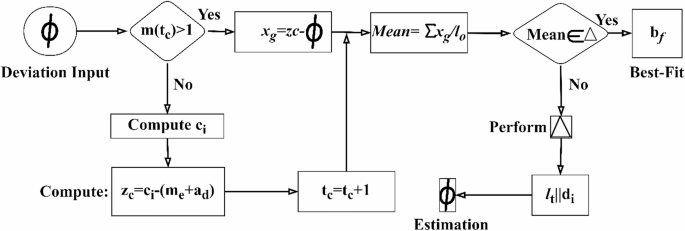
Best-fit detection decision illustration.
The \(\:\:{b}_{f}\)the solution is extracted if the \(\:\:mean\:\in\:\varDelta\:\)is true from \(\:\:{x}_{g}\:\forall\:m\left({t}_{c}\right)\). This case is validated using \(\:\:{x}_{g}\) and \(\:\:{z}_{c}\) for completed and classified \(\:\:\varphi\:\)inputs with the \(\:\:{c}_{i}\) consideration for more than 1 \(\:\:m\left({t}_{c}\right)\), the \(\:\:{x}_{g}\)is analyzed between the mean \(\:\:\varphi\:\)for any inputs and \(\:\:{l}_{o}\). Therefore the \(\:\:{b}_{f}\)pursues \(\:\:m\left({t}_{c}\right)>1\) and \(\:\:{\Delta\:}\)induced inputs for detecting performance and efficiency-oriented \(\:\:{l}_{o}\). In this case, the best fit is used as a recommendation-based output for multiple \(\:\:{c}_{i}\forall\:\alpha\:\left(\eta\:\right)\) and \(\:\:\alpha\:\left(\rho\:\right)\) (Refer to Fig. 8). the time and academic methods are considered here, and better output learning from the different teaching levels is performed. The best fit is derived from the decision-making approach associated with the fuzzy model. In this case, both the class level of teaching is performed and provides efficient performance for the strategies. Here, merging happens for the feasible output from the best fit. In this case, the following Eq. (12) is used to state the assessment monitoring for the levels of teaching based on the training.
The monitoring is performed in the above Eq. (12) and is symbolized as \(\:\:M\), and the merging is labeled as \(\:\:g{\prime\:}\). Here, merging is used to deploy the strategies and quality and determine the efficiency and performance. In this case, a constraint is observed, and the teaching method for the students is provided with best-fit values. The best fit is obtained by merging feasible output from the deviation factor. The computation is performed with the different sessions and evaluations, and the feasible solution is finally observed. The monitoring is used to perform a reliable assessment of every teaching and training method. After this merging process, the recommendation is performed from the previous session and is equated in Eq. (13).
The recommendation is observed in the above Eq. (13), and it is symbolized as \(\:\:R\), where the efficiency and performance are taken into consideration. The constraints are addressed, and the academic portion is covered within the fixed duration. In this process, the best fit is obtained from the derivation method. Thus, the recommendation is given as to whether it is a feasible output. This decision is made using the membership function, which provides a feasible solution for the teaching levels of sessions. Based on the \(\:\:{b}_{f}\)the performance and efficiency analysis is revisited for its recommendations.
During physical education classes, teachers may put into practice the system’s suggested lesson plan or training program. We track how well this suggestion works, and we may use the information from these sessions to make better selections. As a result of this iterative approach, PE technique evaluation and optimization may be fine-tuned to account for evolving student performance and other contextual variables. Ultimately, this proposed work’s FDSS uses fuzzy logic to manage the complexities and variations in physical education instruction, paving the way for better, more tailored learning experiences for students. This analysis is presented in Fig. 10.

Performance and efficiency revisiting with \(\:\:R\)analysis
The above illustration in Fig. 9 shows the after-math impact of \(\:\:{z}_{c}\)with \(\:\:{c}_{i}\) for the different methods for grades. The \(\:\:\alpha\:\left(\eta\:\right),\:\alpha\:\left(\rho\:\right)\), and their corresponding \(\:\:R\) for the varying \(\:\:{u}_{n}\)is analyzed in the above representation. Depending on the number of \(\:\:{l}_{o}\) and \(\:\:m\left({t}_{c}\right)\) the mean is varied accordingly for \(\:\:R\)extraction as the chances of \(\:\:{p}_{g}\)using \(\:\:{O}_{V}\) and \(\:\:c{\prime\:}\)are combined to generate a \(\:\:{b}_{f}\)the \(\:\:g{\prime\:}\)provides maximum \(\:\:R\). The fuzzy generates maximum \(\:\:{c}_{i}\) less chances for reducing suppression and thereby increasing the \(\:\:R\). The PE is observed periodically, and the strategies for the two methods discussed are improved: inclusive practice and professional development. In this process, the fuzzy derivatives only consider the best-fit (maximum efficient) teaching method. Therefore, the recommendations from the best fit are provided with a much better assessment from the previous sessions.
The following is the summary of the key features and innovations of an ATAM in PE teaching techniques, distinguishing this work from existing literature. In addition to test results, the descriptive evaluation techniques (Eqs. 1–4) consider various data-driven elements, such as student activities, goals, teamwork, and fitness development. One of the most important factors that set this work is the comprehensive modeling of PE-specific variables within the fuzzy framework. In the fuzzy decision model that has been proposed, a novel function of membership formulation is utilized. This formulation explicitly integrates PE time limits and student academic achievement as input variables. To be more specific, the membership function in Eq. (6) includes information about sessions, teaching time, student goals, and success indicators such as activities and planning.
In contrast to previous research, which primarily concentrated on test results or physical fitness indicators, this multi-factor membership function distinguishes itself from those studies. The model design utilizes a new “best-fit” solution extraction technique (Eqs. 9–11). This method examines fuzzy derivatives across many performance levels to choose the teaching strategy that is the most effective. This iterative refinement procedure, which uses data from earlier sessions, differentiates it from the fuzzy decision-making approaches that are typically utilized.
A short description of the comparative study part is given in Table 3.
In Fig. 11, the evaluation rate for the proposed work increases for the varying sessions based on hours and tasks/sessions that deploy 200 students. Here, the reform and innovation of PE are generated from the different teaching methods. In this case, efficiency and performance are examined, and constraints that include time and academics are avoided. The fuzzy model is introduced based on the derivation method and merges the feasible output. The examination of the session for PE is observed, and it is represented as \(\:\:\left(\left({q}_{i}+{g}_{r}\right)({{y}_{b}+{y}_{c}}/{{t}^{{\prime\:}}})\right)\). The periodic monitoring is attained in this PE and determines the time and academic reviews. Here, the recommendation system is performed for the teaching sessions and obtains the derivation, and it is formulated as \(\:\:\left({c}_{v}\text{*}{y}_{b}\right)+\frac{\left({q}_{i}+{y}_{c}\right)}{\left({o}_{z}\text{*}{r}^{{\prime\:}}\right)}\). The evaluation time to compute the best fit in this process is reduced, and the feasible output is observed merging. Here, the derivation is observed for the best-fit solution, where the feasible output is estimated for the recommendation. The processing method deploys efficiency and performance in this proposal work and provides a lesser evaluation rate.

Evaluation rate.
The recommendation is improved, and the 100 students’ performance in this graph for the different sessions is observed based on hours and tasks/sessions. In this case, the time and academic method are considered and provide a better teaching session in PE. The efficiency is monitored and provides reliable output from the derivation process, and it is equated as \(\left(({\omega\:\text{*}r^{\prime\:}}/\:{{g}_{r}+{y}_{c}})/({\Sigma_{m^{\prime\:}}\left({n}_{l}\text{*}{o}_{z}\right)})\right)\). The performance is enhanced, and the membership function is determined to be better in this approach. This approach estimates the reliability of the time and academic methods. Here, efficiency is observed, and the derivation is used to obtain the best fit for this work. The approach determines the better extraction of PE time and covers the necessary academic portion. Based on this methodology, the merging is observed to improve the constraints and maintain the teaching session. Two types of teaching sessions are included in this study in which professional development and inclusive practice are considered. The computation process is obtained using these two methodologies to find the best fit (Fig. 12).

Classifications.
The classification model improved in this work for the varying sessions based on hrs. and tasks/sessions for analyzing 300 students. Equation (2) indicates the classification model for teaching methods, including professional development and inclusive practice. In this method, the membership function is used to state the efficiency and performance of this work and avoids the constraints. Both the time and academics are included in this case to obtain the teaching sessions among the students. From the classification model, the PE strategies are used, and it is formulated as \(\:\:\left[\left(\rho\:+t{\prime\:}\right)\text{*}\left({c}_{v}+{g}_{r}\right)\right]\). The derivation process is used to deploy the teaching methods and provides reliable output based on the derivation process. The organization of methods is examined for the activities and teamwork for the students, and it is represented as \(\:\:\left(\frac{{{y}_{b}-{g}_{r}}/{{n}_{l}+{o}_{z}}}{{{s}_{i}+{c}_{v}}/{{t}^{{\prime\:}}+{m}^{{\prime\:}}}}\right)\). In this case, the derivation is observed and provides the best-fit solution based on the goal set in the assessment. The PE teaching sessions are considered, and the goal setting from the evaluation method is examined to better the classification model (Fig. 13).

Recommendations.
In Fig. 14, the evaluation time for the proposed work decreases for the 400 students in varying sessions based on HRs and tasks and sessions. Here, the time taken to compute the process is reduced for the 400 students, which is taken into consideration. Teaching sessions are considered for this case’s different strategies and recommendation models. The performance is observed in this model and provides the efficiency among the derivation methods. The best-fit solution is obtained at a shorter time. The derivation from the sigmoid function is used in this fuzzy logic system. The merging of the solution is observed by equating \(\:\text{}\left[\left(\text{I+}{\text{f}}_{\text{v}}\right)\text{+}\left(\frac{{\text{t}}_{\text{c}}\text{+}{\text{u}}_{\text{n}}}{\raisebox{1ex}{${\text{o}}_{\text{z}}\text{*}{\text{q}}_{\text{i}}$}\!\left/\:\!\raisebox{-1ex}{${\text{n}}_{\text{l}}$}\right.}\right)\right].\) Two methods are used to decrease the evaluation time among the 400 students and to provide the teaching session using different strategies. This method decides to generate the deviation factor for the best solution. The decision is made for the efficiency and performance development of the learning modules for every processing set. Thus, the evaluation time for the proposed methods is reduced in this case.

Evaluation time.
The output combination is enhanced in this work for the different HR sessions, tasks, and sessions that employ 300 students. In this proposed method, the academic portions are covered in fixed time duration, and from this, the processing step is included for reliable output and is represented as \(\:\:\left(\frac{{m}_{e}+{a}_{d}}{{c}_{i}+{u}_{0}}\right)\). The strategies work for the number of students in this graph 300 students are considered for the output combination where the mapping is observed between the current and previous state of the method and estimates the time and academic. The mapping model is used to obtain efficient results that determine the goal setting for the students. Based on this approach, the performance and efficiency are monitored and maintained. Thus, the derivation is formulated in this method, and the best fit from the derivation is. The combination of factors is considered to observe for the betterment of the result and provide the assessment level for the different strategies for different students. The combination is obtained from professional development and inclusive practice for the student-level improvement of the session (Fig. 15).

Output combination.
Comparative analysis
The Bi-LSTM algorithm was used because it is well-suited for time-series analysis, tracking the improvement of student fitness performance over many sessions. This aspect allows the model to forecast trends in future performance, enabling teachers to make predictive adjustments in instruction and improve exercise recommendation accuracy.
The Active Teaching Assessment Method (ATAM) that has been suggested has the best evaluation rate factor of 5.5, which means that it is more effective and comprehensive than other algorithm-based techniques (Table 4). An impressive recommendation value of 5.0 indicates that ATAM can provide practical instructional approaches. With 12 categories, it can handle various classroom situations and student requirements. Compared to other methodologies, ATAM’s evaluation time of 75 s is the shortest, indicating excellent efficiency. Lastly, an output combination percentage of 85% best integrates performance and recommendation indicators.
The “student activities” are exercise participation, “teamwork” collaborative capacity, “academic achievement” previous PE-related academic accomplishment, “test scores” tests of skill and fitness, and “fitness” students’ physical health status. All of them are factors that are elements for all-around assessment. They shed light on the fuzzy decision model to build individualized, adaptive teaching plans that maximize physical development and academic success in physical education classes.
Discussion
The experimental outcomes clearly show that the suggested Active Teaching Assessment Method (ATAM) based on Fuzzy Decision Support Systems (FDSS) attains noticeable improvements in all tested performance factors compared to conventional, big data-based, and deep-learning-based physical education (PE) methods. In particular, the ATAM model provides a higher evaluation rate, improved recommendation factor, wider classification range, shorter evaluation time, and greater output combination rate. This indicates that ATAM can render rapid, accurate, and dynamic assessments required by dynamic teaching and training scenarios.
The system can handle ambiguous, multi-dimensional data such as varying student fitness levels, recovery rates, academic achievement, and session capacity more effectively through fuzzy membership functions compared to stiff traditional practices. Furthermore, dynamic derivation mapping enabled adaptive fine-tuning session by session of teaching suggestions so adjustments were not fixed but continuously optimized based on real-time student feedback and changing conditions. Dynamic adaptability is a significant improvement over earlier static or one-size-fits-all education systems.
Nonetheless, although the proposed algorithm provides improvements within laboratory-tested conditions, challenges still need to be addressed. To begin with, the extent to which ATAM can be utilized with various student groups in varying educational institutions should be investigated more deeply. Educational institutions can have varied curriculum layouts, physical education schedules, socio-economic environments, and technology infrastructures that can affect the performance of the model. Secondly, though fuzzy decision systems are more versatile, they add complexity to rule creation and membership function calibration, for which expert intervention in implementation becomes necessary.
In addition, demographic heterogeneity, like age, gender, socio-cultural status, and levels of physical ability, was not directly addressed in the current study and ought to be covered in future model adaptations to facilitate greater generalizability and fairness. Another drawback is the reliance on adequate and quality data collection; in low-resource environments where such data are scarce or of inferior quality, the full potential of the fuzzy model cannot be fulfilled. Despite these constraints, the results strongly promote the feasibility, adaptability, and pedagogical merit of applying fuzzy decision support systems to reform physical education pedagogies. By facilitating individualized, real-time, data-driven teaching interventions, the ATAM framework addresses the need for more inclusive, efficient, and responsive PE pedagogies in today’s schools.
Future studies might include integrating machine learning algorithms for fuzzy rule optimization on an automated level, multi-institution pilot trials to evaluate scalability, and incorporating psychological and behavioral engagement measures to develop even more comprehensive assessment models.
Conclusion
The summary of the proposed active teaching assessment method is presented in this final section. The methods for different grades obtained from the dataset are utilized to analyze this proposal. The fuzzy decision systems are used under distinguishable levels to improve students’ PE efficiency and performance. Unlike the other assessment/ validation methods, the impact of PE time and academics is considered a constraint in this method. This fuzzy decides the final best-fit solution for recommendations towards different methods. The recommendation is provided by assimilating the best-fit solutions from different teaching levels. The membership functions before decision-making are constructed by elucidating the possibilities for academic and time-based interventions in the previous decisions. The best-fit solution is refined by better matching the current and prior data until its maximum is reached. The derivative improvements are previously classified for before and after constraints that improve the recommendations. There is no evidence that it can scale to larger populations or other settings, and setting it up can drain resources. The method’s generalizability is further limited because it may require adjustment for different physical education programs. Future studies must address these constraints and guarantee widespread and practical applicability in varied educational contexts.
Limitations
Due to its complexity, inadequate training could make ATAM’s deployment difficult. Additional investigation into its scalability across varied groups is necessary. Inadequate data threatens the method’s validity, affecting its accuracy. Expertise and a large amount of computational resources are required for implementation. The lack of extensive long-term trials raises concerns over continued effectiveness over time.
Future work
Future work will conduct extended pilot studies across multiple universities, allowing for a broader evaluation of the Active Teaching Assessment Method (ATAM) and its scalability in diverse educational settings. Integrating advanced data analytics, such as machine learning algorithms, could improve the precision of the Fuzzy Decision Support System (FDSS) by enabling personalized assessments based on student performance data. In general, this work advances the field of PE teaching innovation research by providing a comprehensive, ordered methodological framework incorporating theoretical analysis, model development, experimental testing, and critical discussion. Subsequent research will seek to apply this framework to larger populations and multiple settings to facilitate further generalization and testing of its utility.
Research questions answered and contributions
This research showed that FDSS enhances PE assessment by managing uncertainty, fitness, recovery, academic individualization, and adaptive real-time decision-making. Its success depends on reliable performance data, session feedback, and good-quality fuzzy rules. ATAM can be implemented in curricula through real-time measures and individualized interventions. Its technical complexity, data requirements, and institutional change are limitations. Relative to classic approaches, ATAM provides faster assessments (75s versus 90–120s), higher recommendation precision, session adaptation maximization, and 85% output combination efficacy, leading to significantly improved student engagement and achievement gains. ATAM’s enhanced value makes it more dynamic, personalized, and efficient than static or classical PE assessment models.
Scholars and researchers can leverage the ATAM framework to support their investigation into personalized PE training patterns, design adaptive teaching units, and extend fuzzy logic utilization to sports science, rehabilitation therapy, and healthcare monitoring areas. It offers an emulatable model for interactive performance assessment and customized intervention planning.
The fundamental goal of this study was to overcome the disadvantages of astatic, rigid PE testing techniques using a dynamic, flexible system that dynamically adjusts itself based on the students’ current physical and academic situations. Experimental results vindicate this goal by demonstrating enhanced testing efficiency, greater recommendation accuracy, lower test time, and improved result incorporation, unequivocally validating the supremacy of the strategy over conventional methods.
The method suggested is efficacy-focused by offering individually tailored instructional approaches in response to moment-by-moment participation, fitness, recovery rate, and scholarly burden of unique students. Performance enhancement is ensured by continuous adjustment to training intensity and concentration, giving each student adequate exercises to support development with minimized risk, fatigue, and disengagement, thereby hastening and more enduring learning attainment. Though obstacles like data collection, expert rule-making, and computationally heavy demands are noted, these are seen to be overcome and under management with phased deployment, directed teacher training, and incremental growth. The ultimate gains of improved adaptability, efficiency, and individualization in physical education weigh against the hassle of overcoming such initial obstacles. Through these clarifications and augmentations, this study enhances its role as a new contribution toward developing dynamic, data-based, and adaptive physical education assessment and instructional systems with a considerable edge over conventional and prevailing contemporary approaches.
Data availability
All the data are included in the article.
References
Vidal, J., Bravo, D. A. & Rengifo, C. F. Teaching physical sciences using arduino physics lab at the Universidad Del Cauca. IEEE Rev. Iberoam. Tecnol. Aprend. 17 (3), 223–229 (2022).
Kakazu, K. & Chow, J. Y. Influence of acculturation and professional socialization on student teachers’ beliefs about teaching physical education. Asian J. Sport Exerc. Psychol. 3 (3), 192–199 (2023).
Wong, J. Y. & Oh, P. H. Teaching physical education abroad: perspectives from host cooperating teachers, local students and Australian pre-service teachers using the social exchange theory. Teach. Teacher Educ. 136, 104364 (2023).
Chong-gao, C. & Połap, D. Design of action correction assistant system in physical education teaching and training based on .NET platform. Mob. Netw. Appl. 27 (3), 1228–1239 (2022).
Beard, J., & Konukman, F. Teaching online physical education: The art of connection in the digital classroom. J. Phys. Educ. Recreat. Dance. 91 (7), 49–51. https://doi.org/10.1080/07303084.2020.1785772 (2020).
Lu, C., Barrett, J., & Lu, O. Teaching Physical Education Teacher Education (PETE) Online: Challenges and Solutions. Brock Educ: J. Educ. Res. Pract. 29 (2), 13–17 (2020)
Lai, J. W. & Cheong, K. H. Educational opportunities and challenges in augmented reality: Featuring implementations in physics education. IEEE Access. 10, 43143–43158 (2022).
De-kun, J. & Memon, F. H. Design of mobile intelligent evaluation algorithm in physical education teaching. Mobile Netw. Appl 27 (2), 527–534. https://doi.org/10.1007/s11036-021-01818-1 (2022).
Bo, Z. & Jixin, W. Simulation of optical image enhancement algorithm based on reinforcement learning in evaluating the quality of physical education teaching for college students. Opt. Quant. Electron. 56 (2), 174 (2024).
Zhai, Q. & Chen, X. Design and application of optical communication technology based on machine learning algorithms in physical education teaching information management system. Opt. Quant. Electron. 56 (1), 111 (2024).
García-Rodríguez, M. P., Conde-Velez, S., Delgado-García, M. & Carmona Márquez, J. Learning environments in compulsory secondary education (ESO): validation of the physical, learning, teaching and motivational scales. Learn. Environ. Res. 27 (1), 53–75. https://doi.org/10.1007/s10984-023-09464-y (2024).
Deng, C., Feng, L. & Ye, Q. Smart physical education: governance of school physical education in the era of new generation of information technology and knowledge. J. Knowl. Econ. 15, 13857–13889. https://doi.org/10.1007/s13132-023-01668-0 (2024).
Aparicio-Herguedas, J. L., Fraile-Aranda, A. & Rodríguez-Medina, J. Teaching skills in physical education teacher training: theoretical and factor models. Humanit. Social Sci. Commun. 10 (1), 1–8 (2023).
Lin, J. & Song, J. Design of motion capture system in physical education teaching based on machine vision. Soft Comput, 1–10. https://doi.org/10.1007/s00500-023-08779-5 (2023).
Chen, X. K. & Yu, J. Evaluation model of physical education integrated ideology and politics based on principal component analysis. Mob. Netw. Appl. 27 (3), 1240–1251 (2022).
Li, Y. & Shen, C. Application of infrared image defect detection based on data information visualization technology in intelligent physical education teaching. Opt. Quant. Electron. 56 (2), 160 (2024).
Su, X. The study of physical education evaluation based on a fuzzy stochastic algorithm. Soft. Comput. 26 (16), 7917–7923 (2022).
Feng, Y., You, C., Li, Y., Zhang, Y. & Wang, Q. Integration of computer virtual reality technology to college physical education. J. Web Eng. 21 (7), 2049–2071 (2022).
García-Massó, X., Salvador-Fuertes, Á., Sánchez-Santacreu, M., Borrego, A. & Llorens, R. Effectiveness of customized exergames to improve postural control in high school physical education. IEEE Trans. Learn. Technol. 99, 1–10 (2023).
Moon, J., Webster, C. A., Brian, A., Stodden, D. F. & Mulvey, K. L. Development of the system for observing virtual real time lessons in physical education (SOVRTL-PE): A tool to support preservice teachers’ applied learning experiences. Comput. Educ. 196, 104738 (2023).
Sturm, D. J., Bachner, J., Renninger, D., Haug, S. & Demetriou, Y. A cluster randomized trial to evaluate need-supportive teaching in physical education on physical activity of sixth-grade girls: A mixed method study. Psychol. Sport Exerc. 54, 101902 (2021).
Zhu, Z., Xu, Z. & Liu, J. Flipped classroom supported by music combined with deep learning applied in physical education. Appl. Soft Comput. 137, 110039 (2023).
Wang, J., Yang, Y., Liu, H. & Jiang, L. Enhancing the college and university physical education teaching and learning experience using virtual reality and particle swarm optimization. Soft Comput. 28 (2),1277–1294. https://doi.org/10.1007/s00500-023-09528-4 (2024).
Bao, L. & Yu, P. Evaluation method of online and offline hybrid teaching quality of physical education based on mobile edge computing. Mob. Netw. Appl. 26 (5), 2188–2198 (2021).
Zhang, J. & Zhang, C. Teaching quality monitoring and evaluation of physical education teaching in ordinary college based on edge computing optimization model. J. Supercomput. 79 (15), 16559–16579. https://doi.org/10.1007/s11227-023-05324-x (2023).
Ding, J. & Su, Y. A teaching management system for physical education in colleges and universities using the theory of multiple intelligences and SVM. Soft Comput. 28 (1), 85–701. https://doi.org/10.1007/s00500-023-09419-8 (2023).
Xie, S. & Xu, J. Design and implementation of physical education teaching management system based on multi-agent model. Int. J. Comput. Intell. Syst. 16 (1), 1–13 (2023).
Han, Q. Using neural network for the evaluation of physical education teaching in colleges and universities. Soft. Comput. 26 (20), 10699–10705 (2022).
Wang, C. & Wang, D. Managing the integration of teaching resources for college physical education using intelligent edge-cloud computing. J. Cloud Comput. 12 (1), 1–14 (2023).
Zhang, Z. Analysis of the application of modern mobile wireless network terminal in the tutoring design of college physical education course teaching. Wirel. Netw. 30 (6), 5319–5331. https://doi.org/10.1007/s11276-023-03277-w (2024).
Zhao, C., Muthu, B. & Shakeel, P. M. Multi-objective heuristic decision making and benchmarking for mobile applications in English language learning. Trans. Asian Low Resour. Lang. Inform. Process. 20 (5), 1–16 (2021).
Li, S., Wang, C. & Wang, Y. Fuzzy evaluation model for physical education teaching methods in colleges and universities using artificial intelligence. Sci. Rep. 14 (1), 4788 (2024).
Adams, A., Belcher, D., Jenkins, A. & Goad, T. Utilizing video feedback for effective motor skill learning in online physical education. Int. J. Kinesiol. High. Educ. 9 (1), 14–30 (2025).
Funding
This work was supported by 2024 Guangdong Provincial Education Science Planning Project (Higher Education Special) 2024 “Construction and Empirical Study of SPOC + BOPPPS Model for Physical Education Teaching in Vocational Colleges from the Perspective of Curriculum Ideology and Politics ” (No. 2024GXJK798) and 2025-2026 Jiangsu Vocational Education Research Project of Jiangsu Society of Technical and Vocational Education: “Research on Online-Offline Hybrid Teaching Practice of Physical Fitness Instruction in Higher Vocational Colleges: Exploration and Application Based on the SPOC+BOPPPS Teaching Model” (No.XHYBLX2025231).
Author information
Authors and Affiliations
Contributions
ZZ: Conceptualization, Methodology, Software; WG: Data curation, Writing- Original draft preparation, Visualization, Writing—Reviewing and Editing; RN: Investigation, Supervision, Validation.
Corresponding author
Ethics declarations
Competing interests
The authors declare no competing interests.
Additional information
Publisher’s note
Springer Nature remains neutral with regard to jurisdictional claims in published maps and institutional affiliations.
Rights and permissions
Open Access This article is licensed under a Creative Commons Attribution-NonCommercial-NoDerivatives 4.0 International License, which permits any non-commercial use, sharing, distribution and reproduction in any medium or format, as long as you give appropriate credit to the original author(s) and the source, provide a link to the Creative Commons licence, and indicate if you modified the licensed material. You do not have permission under this licence to share adapted material derived from this article or parts of it. The images or other third party material in this article are included in the article’s Creative Commons licence, unless indicated otherwise in a credit line to the material. If material is not included in the article’s Creative Commons licence and your intended use is not permitted by statutory regulation or exceeds the permitted use, you will need to obtain permission directly from the copyright holder. To view a copy of this licence, visit http://creativecommons.org/licenses/by-nc-nd/4.0/.
About this article

Cite this article
Zhong, Z., Guo, W. & Nacional, R. Reform and innovation of physical education teaching methods in universities based on fuzzy decision support systems. Sci Rep 15, 21320 (2025). https://doi.org/10.1038/s41598-025-05417-y
Received:
Accepted:
Published:
Version of record:
DOI: https://doi.org/10.1038/s41598-025-05417-y

