The cover image shows a brain within which mitochondria are encapsulated in autophagosome-like vesicles. The golden elements attached to these structures represent ULK1.

Mitophagy protects from neurodegeneration

  • Jun-Ping Pan
  • Ping-Jie Wang
  • Evandro Fei Fang
Article

Announcements

  • Robots (representing immune cells) on a production line

    Our August 2025 issue provided a Focus on immune aging, featuring a series of reviews and opinion pieces, and a panel discussion webcast, covering recent advances in immune aging research.

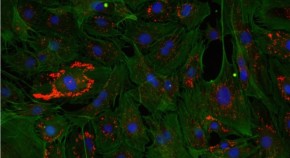
  • Fluorescent microscopy image of senescent cells

    This joint Collection across npj Aging, Nature Aging, Nature Metabolism, Nature Cell Biology and Scientific Reports welcomes submissions on cellular senescence, aiming to deepen our understanding of cellular senescence as both a driver and potential therapeutic target of aging.

    Open for submissions
  • Three trees against a sky. The three trees have green, yellow and then red leaves from left to right.

    Our December 2024 issue provided a Focus on reproductive aging, featuring a series of reviews and opinion pieces on recent advances in reproductive aging research.

Advertisement

  • Sharma and colleagues show that, in Caenorhabditis elegans, age-associated decline in peroxisomal function causally impairs lipid mobilization, resulting in lipid droplet accumulation, metabolic inflexibility and secondary mitochondrial dysfunction. Restoring peroxisomal activity reinstates metabolic resilience during aging.

    • Arpit Sharma
    • Aditi Prabhakar
    • William B. Mair
    ArticleOpen Access
  • Apolipoprotein E (APOE) is the strongest genetic influence in Alzheimer’s disease (AD). Compared to the most frequent allele, ε3, the ε4 allele increases AD risk, and the ε2 allele is protective. Here, in a multicohort proteomic study, the authors show that APOE ε2 and ε4 are linked to distinct early protein signatures before amyloid pathology, helping explain why they have opposite effects on AD risk.

    • Lina Lu
    • Alexa Pichet Binette
    • Niklas Mattsson-Carlgren
    ArticleOpen Access
  • Autophagic activity has a protective role in Alzheimer’s disease in mice. Here the authors investigate the role of autophagy-initiating protein ULK1 and report that its overexpression stimulates autophagic flux, reduces amyloid and tau pathology and delays cognitive decline.

    • Jun-Ping Pan
    • Ping-Jie Wang
    • Evandro Fei Fang
    ArticleOpen Access
  • The authors investigated metabolic remodeling in response to stem cell activation and the effect of aging on this response. Aging muscle stem cells lose a key glutamine-fueled metabolic pathway that powers de novo lipogenesis needed for activation. This study shows that reductive TCA cycling helps preserve stem cell function and may offer a new target against sarcopenia.

    • David E. Lee
    • Lauren K. McKay
    • James P. White
    Article
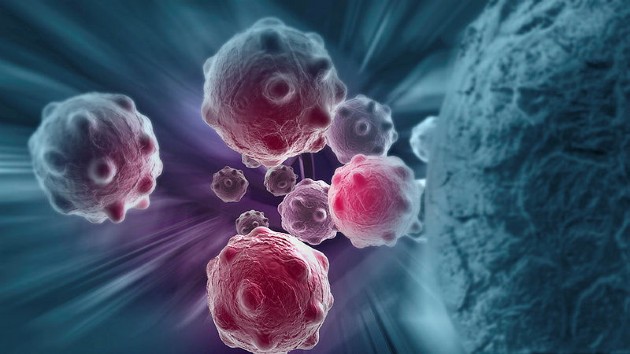
A group of 3D cancer cells emerging

Cancer and aging

This cross-journal Collection invites original research that explicitly explores the role of aging in cancer and vice versa, from the bench to the bedside.
Collection

Advertisement

Nature Careers

Science jobs

Advertisement