

The University of Queensland (UQ)
Australia
Time frame: 1 June 2025 - 30 May 2026Profile
The Nature Index tracks primary research articles from 178 applied, health, natural and social sciences journals, across many different publishers, chosen by an independent group of researchers. The Nature Index provides absolute Count of primary research articles and fractional Share counts of author contribution to articles. The positions in the table below reflect The University of Queensland (UQ)'s position overall, domestically, within their sector, and in various subject areas based on their Share. Each position links to the corresponding table where The University of Queensland (UQ) is listed.
Position by research output Share
Position by research output Share in subject areas
Research
The University of Queensland (UQ) has the following research output in the current window (1 June 2025 - 30 May 2026) of the Nature Index. Click on Count to view a list of articles representing the corresponding Share value.
Overall research output
Research outputs by subject area
Leading research topics
In the Current Index (12-month rolling window), The University of Queensland (UQ) published the most articles in these research topics. Learn more about Nature Research Intelligence Topics.
| Topics | Count | Share |
|---|---|---|
| Chemical Engineering | 45 | 12.20 |
| Clinical Sciences | 67 | 9.91 |
| Bioinformatics and Computational Biology | 34 | 8.41 |
| Ecology | 20 | 7.55 |
| Physical Chemistry | 40 | 7.52 |
| Biochemistry and Cell Biology | 17 | 5.96 |
| Industrial Biotechnology | 13 | 5.70 |
| Oncology and Carcinogenesis | 29 | 5.28 |
Share output for the past 5 years

Turn complex research questions into confident strategic decisions
When you're under pressure to set direction, justify investment, or understand your competitive position, you need more than raw data — you need trusted insights you can act on.
Benchmark your performance against global peers using robust, methodologically sound analysis.
Combine quantitative metrics with qualitative expert insight to uncover strengths, gaps and emerging opportunities.
Gain tailored, decision-ready recommendations aligned to your strategic priorities.
Talk to us to learn more about our data dashboards and bespoke strategy reports.

Grow research skills, confidence and careers with training built for every stage of the research lifecycle.
Developed with Nature Portfolio journal Editors and internationally renowned experts. Discover three ways to learn:
Self-paced, online courses in convenient bite-sized units, covering key skills across scientific writing, publishing, grant writing, data analysis, and more.
Expert trainer-led workshops with hands-on exercises and real-time feedback across core research skills, delivered via interactive group sessions.
Editor-led workshops combining core principles in writing and publishing, personalised 1:1 feedback from Nature Portfolio Editors and hands-on exercises.
Explore course catalogues and workshop agendas, enquire about the options or request institutional pricing.
Collaboration
Nature Index collaborations highlight fruitful collaborations that lead to high quality research around the world. A collaboration can be between any two institutions or locations co-authoring at least one article in the journals tracked by the Nature Index. The collaboration score between two institutions is the sum of each of their Shares on the papers to which both have contributed. The table and charts below highlight the leading collaborators with The University of Queensland (UQ).
Top 5 domestic collaborators with The University of Queensland (UQ) by Share
Collaborating institutions
Note: Hover over the bars to view details about each institution's Share.
| Collaborating Institution | Collaborators' Share | Collaboration Score |
|---|---|---|
| Monash University | 13.39 / 14.79 | 28.18 |
| University of New South Wales (UNSW Sydney) | 15.70 / 11.56 | 27.26 |
| The University of Sydney (USYD) | 13.60 / 13.35 | 26.95 |
| The University of Melbourne (UniMelb) | 11.62 / 9.43 | 21.05 |
| Queensland University of Technology (QUT) | 10.52 / 9.59 | 20.12 |
Top 5 international collaborators with The University of Queensland (UQ) by Share
Collaborating institutions
Note: Hover over the bars to view details about each institution's Share.
| Collaborating Institution | Collaborators' Share | Total Share |
|---|---|---|
| Chinese Academy of Sciences (CAS) | 5.97 / 6.36 | 12.33 |
| The Hong Kong Polytechnic University (PolyU) | 9.31 / 2.62 | 11.93 |
| Nagoya University | 2.38 / 6.89 | 9.27 |
| University of Oxford | 5.00 / 4.08 | 9.08 |
| Harvard University | 4.81 / 4.16 | 8.97 |
Job finder
-
Postdoctoral Research Fellow / Research Fellow in Statistical Genomics
The University of Queensland Brisbane (Suburb), South East Queensland (AU)
View more job listings on Nature Careers.
Latest supplements
Nature Index 2026 Nanoscience and nanotechnology
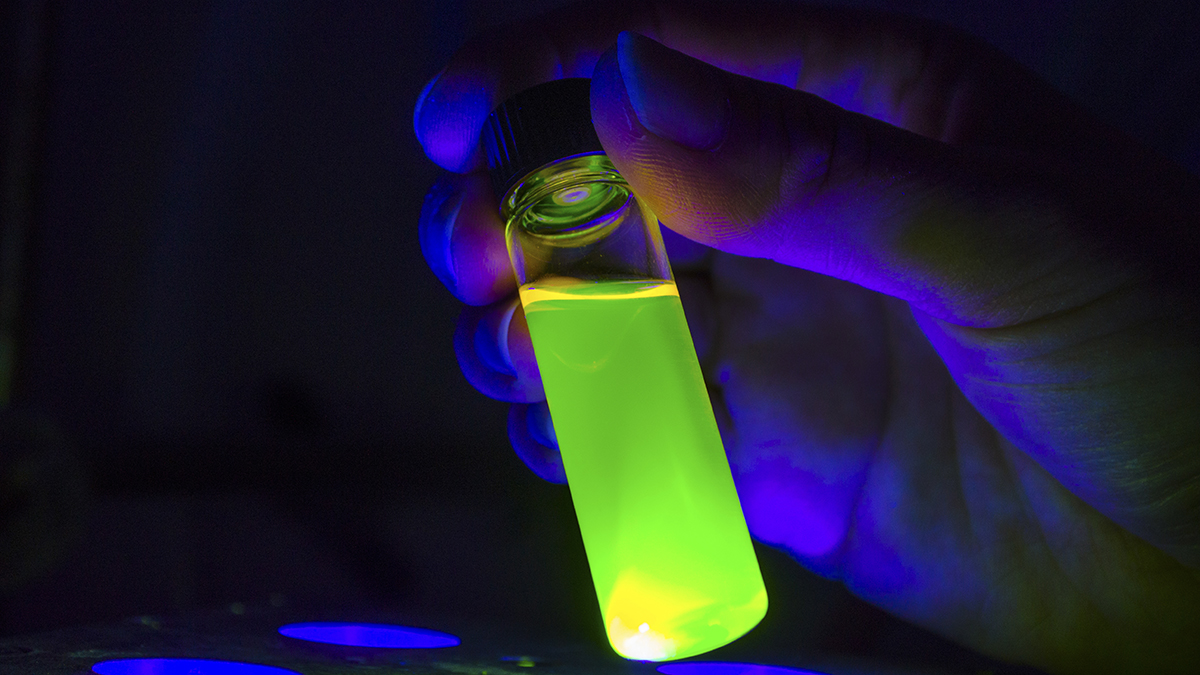
From programmable RNA architectures to next-generation materials for energy and healthcare, researchers are harnessing the unusual properties of the nanoscale to tackle some of society's biggest challenges. This supplement explores the discoveries that are driving the field, the hurdles that remain and the institutions that are leading in nanoscience and nanotechnology research.
Nature Index 2026 Chemistry
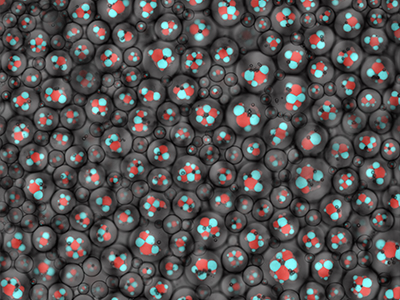
Chemistry research is undergoing a period of transformation, driven by new technologies and mounting environmental pressures. In this supplement, we explore the trends behind China’s extraordinary rise in chemistry output, and why efforts to curb the use of PFASs are accelerating worldwide. We also look at the innovations that could redefine how chemicals are designed, produced and recycled.
Relationships
Affiliated institutions
The following affiliated institutions are wholly owned, operated, administered or contains research facilities for The University of Queensland (UQ). All affiliations for an affiliated institution are credited to the institution to which it is affiliated. Each of the affiliated institutions listed below has its own research profile.
- The University of Queensland (UQ)
Affiliated joint institutions and consortia
Represents joint institutions and consortia for which the institution is designated as a partner institution. Each partner institution of a joint institution or consortium receives an equivalent Share for every affiliation in which the consortium is included.
- ANZgene
- ARC Centre for Complex Systems (ACCS)
- ARC Centre of Excellence for All-sky Astrophysics (CAASTRO)
- ARC Centre of Excellence for Children and Families over the Life Course
- ARC Centre of Excellence for Coral Reef Studies
- ARC Centre of Excellence for Design in Light Metals
- ARC Centre of Excellence for Enabling Eco-Efficient Beneficiation of Minerals
- ARC Centre of Excellence for Engineered Quantum Systems (EQuS)
- ARC Centre of Excellence for Environmental Decisions (CEED)
- ARC Centre of Excellence for Functional Nanomaterials
- ARC Centre of Excellence for Green Electrochemical Transformation of Carbon Dioxide (GETCO2)
- ARC Centre of Excellence for Innovations in Peptide and Protein Science (CIPPS)
- ARC Centre of Excellence for Integrative Brain Function (CIBF)
- ARC Centre of Excellence for Integrative Legume Research (CILR)
- ARC Centre of Excellence for Mathematical and Statistical Frontiers of Big Data, Big Models, New Insights (ACEMS)
- ARC Centre of Excellence for Mathematics and Statistics of Complex Systems (MASCOS)
- ARC Centre of Excellence for Plant Success in Nature and Agriculture
- ARC Centre of Excellence for Quantum Computation and Communication Technology (CQC²T)
- ARC Centre of Excellence for Quantum-Atom Optics (ACQAO)
- ARC Centre of Excellence for Translational Photosynthesis (CoETP)
- ARC Centre of Excellence for the Dynamics of Language
- ARC Centre of Excellence for the History of Emotions (CHE)
- ARC Centre of Excellence in Advanced Molecular Imaging
- ARC Centre of Excellence in Bioinformatics (ACB)
- ARC Centre of Excellence in Convergent Bio-Nano Science and Technology
- ARC Centre of Excellence in Future Low-Energy Electronics Technologies (FLEET)
- ARC Centre of Excellence in Ore Deposits (CODES)
- ARC Centre of Excellence in Plant Cell Walls
- ARC Centre of Excellence in Structural and Functional Microbial Genomics
- ARC Centre of Excellence in Synthetic Biology
- ARC Centre of Excellence in Vision Science (ACEVS)
- ARC Research Hub in Zero-emission Power Generation for Carbon Neutrality
- ARC Training Centre for the Global Hydrogen Economy (GlobH2E)
- Alliance for Vascular Access Teaching and Research Group (AVATAR)
- AuScope Limited
- Australian Centre for Plant Functional Genomics (ACPFG)
- Australian Genome Research Facility (AGRF)
- Australian Infectious Diseases Research Centre (AID)
- Australian National Fabrication Facility (ANFF)
- Australian and New Zealand International Ocean Discovery Program Consortium (ANZIC)
- Australo-Anglo-American Spondylitis Consortium (TASC)
- Centre for Children’s Health Research (CCHR)
- Centre for Youth Substance Abuse Research's (CYSAR's)
- Centro de Recursos Hídricos para la Agricultura y la Minería (CRHIAM)
- Cooperative Research Centre for Water Sensitive Cities (CRCWSC)
- Dermatology Research Centre
- Expedition 318 Scientists
- Functional Annotation of the Mammalian Genome (FANTOM)
- Genetic Factors for Osteoporosis (GEFOS) Consortium
- Health Translation Queensland
- ICGC Breast Cancer Project: Triple Negative/Lobular/Other
- International Genetics of Ankylosing Spondylitis (IGAS) Consortium
- International WaterCentre (IWC)
- JLU-UQ Joint Research Center for Future Materials
- JST-ERATO Yamauchi Materials Space-Tectonics Project
- Joint Remote Sensing Research Program (JRSRP)
- Kathleen Cuningham Foundation Consortium for Research into Familial Breast Cancer (kConFab)
- Mater Research Institute - University of Queensland (MRI-UQ)
- NERP Environmental Decisions Group (EDG)
- NOAA-ARC Linkage Grant project
- NUS Synthetic Biology Research Consortium
- National Centre for Groundwater Research and Training (NCGRT)
- National Environmental Science Programme (NESP)
- National Imaging Facility (NIF)
- Psychiatric Genomics Consortium (PGC)
- Queensland Children's Medical Research Institute (QCMRI)
- Queensland Cyber Infrastructure Foundation (QCIF)
- Queensland Facility for Advanced Bioinformatics (QFAB)
- Queensland Tropical Health Alliance (QTHA)
- Reef Catchments Science Partnership (RCSP)
- SUSTech-UQ Joint Center for Neuroscience and Neural Engineering
- Stem Cells Australia
- Terrestrial Ecosystem Research Network (TERN)
- The Lundbeck Foundation Initiative for Integrative Psychiatric Research (iPSYCH)
- Translational Research Institute (TRI)
- Tribolium Genome Sequencing Consortium
- UQ-JLU Joint Research Centre for Future Materials
- UQ-Ochsner Clinical School
- UQ–IITD Research Academy
- WHO Collaborating Centre for Children's Health and the Environment