
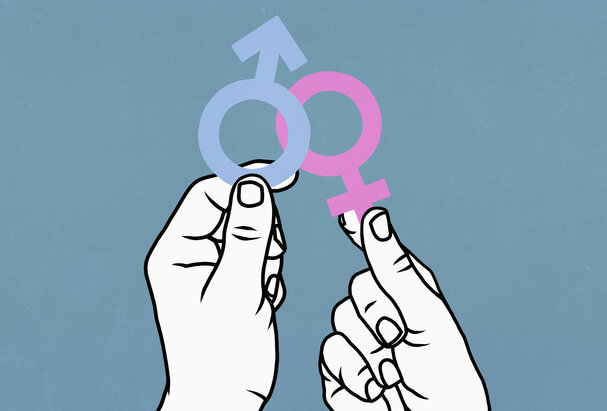
Changes to funding policies and incentives, increased numbers of female journal editors, and the creation of an international research fund to support gender-inclusive studies are among the initiatives that could boost sex and gender analysis in research, a roundtable event held in Seoul heard last month.
Hosted by the Korea Center for Gendered Innovations for Science and Technology Research (GISTeR), a group of researchers and journalists discussed how scientists who include sex and gender analysis in their work, which can add cost and effort, can be better supported.
The discussion comes amid mounting evidence that biomedical and healthcare research is still not adequately accounting for sex and gender aspects of health and illness.
For example, a 2018 study of trial data for 137 drugs approved by the US Food and Drug Administration found that only 22% of phase I trial participants were female. A 2019 analysis of 11.5 million papers indexed in Web of Science and PubMed between 1980 and 2016, led by Cassidy Sugimoto, an information scientist at the Georgia Institute of Technology in Atlanta, found that sex remains largely under-reported in biomedical research, appearing in just 31% of papers published in 2016. Many studies also neglect transgender and non-binary categorizations.
Artificial intelligence and robotics research faces similar problems in failing to consider gender-related issues, Dong-Pyoung Sheen, director of the Center for Technology Foresight at the Korea Institute of S&T Evaluation and Planning, in Eumseong County, told the GISTeR event.
As an example of computer science’s historic overlooking of the issue, Sheen spoke about how a crop of a centrefold picture used in a 1970s edition of Playboy — the “Lena image” — had become the standard benchmark for image-processing research for more than 50 years. Its use has only recently been banned or discouraged by major academic publishers.
The risks of ignoring sex and gender considerations in research can be severe. Sugimoto, who was at the roundtable, noted that in preclinical and laboratory studies, researchers often work with cells or tissues in isolation, where sex-based differences are not typically accounted for. This has led to the longstanding assumption that male and female cells behave similarly in fundamental biological processes, which is not the case in many areas. Stress responses, for example, vary significantly between genders, said Sugimoto. Medications have been withdrawn from the market due to their untested effects on women, she said.
Sang Geon Kim, director of biomedical research planning and strategy at Dongguk Medical Center, in Seoul, agreed that historical biases, such as excluding female mice from experiments, have skewed research findings.
Heisook Lee, president of GISTeR, pointed out that while South Korea has a strong legal framework for sex and gender inclusion, implementation remains largely up to individual researchers. In an opinion piece published by Nature Index last year, Lee and Heajin Kim, senior researcher at GISTeR, cited an analysis that showed that just 5.65% of South Korean biomedical articles published between 2017 to 2021, on average, included sex and gender analysis in the experimental or study design. This figure, they said, is lower than in countries where the inclusion of sex and gender analysis has been mandatory for some research funding, including Canada, the United Kingdom and the United States.
The roundtable attendees speculated about how recent changes under US President Donald Trump will affect efforts to better integrate sex and gender analysis in research design. Last week, the US National Institutes of Health began a mass termination of research grants that fund studies related to LGBT+ health, gender identity and diversity, equity and inclusion (DEI) in biomedicine. How this will affect rates of sex and gender analysis in US-funded research is yet to be seen.
Incentivizing change
The event heard several ideas for how scientists can be motivated and supported in considering sex and gender variables and other issues in their work. With science becoming increasingly competitive worldwide, speakers agreed that sex and gender integration must be incentivized, for example by being a key criterion in evaluating high-quality research.
This would require buy-in from funders and institutions, and work needs to be done to develop indicators for measuring research performance that reflects gender characteristics, said Hyonik Lee, a science policy expert at the Science and Technology Policy Institute, in Sejong City.
The need for greater numbers of female researchers in science, technology, engineering and mathematics (STEM) fields, especially in leadership roles, was also emphasized.
Studies have found that female researchers are more likely to integrate sex and gender considerations into their work, compared with male researchers. A 2017 study in Nature Human Behaviour, for example, found that medical research teams with more women, especially in leadership positions, were more likely to account for sex and gender differences in their studies. Sugimoto said that efforts to ensure gender equity on journal editorial teams were also important.
Hyang Woon Lee, director of the Biomedical Research Institute at Ewha Womans University, in Seoul, called for the creation of an international research fund to support gender-inclusive studies. Given that there is a significant cost increase for researchers who include both male and female animals in studies — Sang Geon Kim estimated a 35% increase for mice — and greater recruitment time needed to find male and female study participants, a fund that is dedicated to supporting such efforts could be an important step.
