
Abstract
To examine the role of inequality in academic achievement, we analyse a cross-national dataset including data from three cycles from 2012 to 2018 from the PISA, an international assessment of 15-year-old students’ math, reading, and science performance. The Gini coefficient and gender inequality index (GII) were used as metrics for a country’s economic inequality and gender inequality, respectively. The results show that gender inequality has a negative association with academic achievement for both boys and girls. Moreover, gender inequality has a stronger association with academic achievement than does economic inequality. We also find that gender inequality in reproductive health may contribute substantially to the association between gender inequality and academic achievement. Despite substantial advances in gender equality worldwide, multisectoral and multilevel approaches from the community to the country level are needed to ensure substantial long-term reductions in economic, gender, and educational inequalities.
Introduction
As a kind of potential human capital, academic achievement determines future employment, socioeconomic status, and financial stability and reflects an individual’s quality of life1,2. According to social-ecological theory3, individual differences in academic achievement can be partly attributed to socioeconomic contexts at the macrosystem level, which is characteristic of a given culture with particular reference to material resources, belief systems, customs, opportunity structures, and so on. However, compared with the abundant research on the relationship between family or school at the microsystem level and children’s academic achievement4,5,6, few educational studies have examined the relationship between economic context and children’s academic achievement. In these studies, economic development has been found to be positively associated with academic achievement7. Using data from the Programme for International Student Assessment (PISA), researchers reported that national foundational advancements, such as advancing to a higher income classification, are associated with significant increases in country-level PISA scores7.
Economic inequality, which refers to the concentration of wealth in fewer hands8,9,10, is associated with a range of negative social phenomena, including higher crime rates, lower social cohesion, and adverse physical and mental health outcomes11,12. To date, many studies have revealed a negative association between economic inequality and academic achievement13,14,15,16,17. For example, researchers analysed six cohorts of PISA scores from 2000 to 2015 and found that within-country economic inequality has a negative association with the academic achievement of students in that country17. A study analysing data from the 2006 PISA showed that more egalitarian countries (those with lower Gini coefficients) have greater average achievement, more very high-achieving students, and fewer very low-achieving students than less egalitarian countries16. One plausible explanation for the negative consequence of economic inequality comes from neo-materialist theory, which posits that the association between economic inequality and a range of social and psychological outcomes reflects adverse circumstances and insufficient resources for individuals18. Another plausible explanation comes from social psychology theories that propose that living in a highly unequal environment can intensify the sense of relative deprivation among low-income individuals, thereby leading to heightened anxiety and stress, which in turn may give rise to a series of negative outcomes19.
Gender inequality has also been found to be associated with academic achievement. Gender is not only a descriptive term of biological difference but also shapes social structures and relations in education, as does ethnicity and class20. Recently, gender has been shown to have unsettling features in comparative education21. Nevertheless, gender equality has typically been a desirable outcome in education22, and policy makers should consider interventions and outcomes through the lens of gender equality when developing education policies. Gender inequality refers to the unequal distribution of power, resources, and status among different gender groups, resulting in hierarchical power structures23. To date, this line of research has typically focused on the relationship between gender inequality and the gender gap in math achievement24,25. However, some findings do not support the idea that boys have an advantage over girls in mathematics26,27. For example, one study that analysed the 2015 Trends in International Mathematics and Science Study (TIMSS) identified some countries, mainly in the Middle East, as outliers with higher academic achievement by girls than boys27. One plausible explanation for this phenomenon could be that under the pressure of survival, girls tend to prefer mathematics-related careers with higher income returns, leading them to exert more effort and perform better in mathematics learning28. However, there is a growing consensus that gender differences in math performance are small or trivial in most countries29,30. These findings support the gender similarities hypothesis, which assumes that males and females are similar in most psychological variables29. Therefore, gender differences in academic achievement may not be as large as we think.
In line with this, two recent studies have shown that gender inequality is associated with academic achievement for both boys and girls22,31. Through the use of qualitative comparative analysis and correlational analyses, gender equality has been found to be the most relevant and consistent factor strongly associated with the 2015 PISA results in 49 countries for all children22. Another study reported that gender equality was consistently correlated with PISA scores at each time point from 2006 to 2018, and changes in gender equality were positively associated with changes in PISA scores for both boys and girls31.
However, these two studies have two noteworthy limitations. One limitation is that their analyses were performed at the country level, and it remains unknown whether their conclusions hold true based on analyses at the student level. Analyses at the country level do not account for the hierarchical structure of the data, and variance at the school level and at the student level may be masked. When results at the country level are used to draw inferences at the student level, it is possible for an ecological fallacy to occur32. For example, at the student level, a frequent finding is that self-concept is positively correlated with achievement in mathematics33. However, PISA has repeatedly reported that self-concept and achievement are negatively correlated at the country level34,35. Therefore, analyses at the country and student levels need to be combined. The other limitation of these studies is that the role of economic inequality is not explored when the role of gender inequality is examined. If gender inequality is separate from economic inequality, one cannot observe how they interconnect or overlap36. More importantly, given the abovementioned association between economic inequality and educational outcomes13,14,15,16,17, it is important for researchers and policy makers to compare the roles of multiple types of inequality31. This approach can provide more accurate knowledge about the relationship between gender inequality and academic achievement.
Accordingly, the present study aimed to examine the relationship between inequality and academic achievement by making two improvements to previous research. First, we combined analyses at the country and student levels to confirm the robust relationship between gender inequality and academic achievement. Specifically, for our analyses, we used multilevel modelling (i.e., HLM), which is deemed to be a suitable analytic approach for PISA37. Moreover, machine learning techniques were used to compare the roles of multiple inequalities in academic achievement. By doing so, we pursued our first objective of investigating whether gender inequality is harmful to children’s academic achievement for both boys and girls. Based on previous findings, we hypothesize that there is a negative relationship between gender inequality and academic achievement and that this relationship is the same for boys and girls22,31. Although it was first proposed over 200 years ago that inequality between the sexes is detrimental for all, even to the sex it favours38, possible straightforward explanations for why gender equality is beneficial for educational results remain to be identified31. Conceivably, gender inequality may manifest in pervasive social practices within families, educational systems, peer relationships, mass media, and culture at large. All these practices socialize children to accept gender stereotypes about their academic capabilities and performance according to social cognitive learning theory39. Negative stereotypes can negatively affect the performance of disadvantaged adolescents through negative expectations40,41, and positive stereotypes can negatively affect their performance by causing them to choke under pressure42,43. Consequently, it is expected that there is a negative association between gender inequality and academic achievement for both boys and girls.
The second contribution of our study is that we account for economic inequality when examining the association between gender inequality and academic achievement. Accordingly, our second objective is to compare the associations between gender inequality and economic inequality with academic achievement. We hypothesize that academic achievement has a stronger association with gender inequality than with economic inequality. Like economic inequality, gender inequality is essentially an inequality of opportunity that is derived from structural circumstances beyond the scope of individual control and responsibility44. Thus, gender inequality and economic inequality are often found to be closely related45. In areas with higher economic inequality, women tend to have lower pay, social status and labour force participation than men45,46,47. However, gender inequality and economic inequality differ in several respects. Despite limited research on their differences, we present exploratory speculation based on social capital theory48, which is derived from the French sociologist Pierre Bourdieu49. Specifically, from the perspective of individual development, economic inequality can be conceived as physical capital that can transform raw material into something profitable50. However, since gender is a social and cultural construct enacted through social cognitive processes that are embedded within social interactions and societal institutions51, gender inequality can be conceived as social capital that involves institutions, relationships, attitudes, and values that govern interactions among people48. Physical capital is embodied in observable materials and is wholly tangible, whereas social capital exists in the relations between persons and is thus less tangible50. More importantly, unlike physical capital, social capital accumulates through a myriad of repeated and varied interactions, both formal and informal; thus, it is conserved and increased through use52. In this sense, social capital may be more deeply rooted and may be a profound factor affecting academic achievement53. In a recent study using panel data from 103 countries from 2006 to 2013, a negative effect of gender equality on income inequality was found, implying the profound role of gender inequality47. Thus, it is expected that gender inequality, as social capital, has a greater association with academic achievement than does physical capital.
To this end, PISA scores and the Gender Inequality Index (GII) were used in this study to index academic achievement and gender inequality, respectively. The PISA is a triannual international assessment of the reading, mathematics, and science literacy and skills of 15-year-old students from numerous countries worldwide that was launched by the OECD in 199754. Through the PISA, the OECD aims to provide valid, comparable, cross-national evidence of education outcomes to inform educational policy decisions54. However, some researchers claim that there are major technical flaws regarding the representativeness of the tests and students55. Critics argue that the PISA harms children and classrooms through its continuous cycle of testing and endangers the well-being of students and teachers through scripted lessons and less autonomy56. In pursuit of best practices in education, the PISA may cause decontextualized observations and analytical rather than empirical practice claims to be gathered57. There are also questions about whether the PISA is an institution-building force challenged by political and ideological neutrality58. Despite these concerns, the PISA has unique characteristics and advantages in terms of item construction, sampling procedures, and sample size37. Given that the GII was first published in 2010, we chose PISA data from 2010 onwards. Furthermore, we used PISA data from multiple years, namely, the 2012 PISA, the 2015 PISA, and the 2018 PISA data, to obtain reliable results.
The GII has been increasingly used in recent studies59,60. It is a composite index based on three dimensions: female reproductive health, gender empowerment and gender labour market status61. Since the GII has three dimensions, this study is well positioned to provide evidence regarding the domains of gender inequality with the strongest links with academic achievement. The GII is unique in that it focuses on critical issues of educational attainment, economic and political participation, and female-specific health –issues, specifically regarding female reproductive health61. Female reproductive health includes two indicators, maternal mortality ratio and adolescent birth ratio, which both have vital implications for women, girls, and their children. One previous study showed that these indicators were strongly associated with children’s PISA scores in 201831. Moreover, the United Nations Development Programme has reported that female reproductive health is the largest contributor to gender inequality worldwide61. Therefore, it is expected that female reproductive health has the strongest association with academic achievement.
Results 1: country-level analysis
The descriptive statistical results for the key variables are presented in Table 1. All the statistical tests reported are two-sided. First, unconditional Pearson correlation analyses at the country level were conducted to explore whether the inequality captured by the current year Gini coefficient and the GII is associated with academic achievement across the three assessment cycles from 2012 to 2015 to 2018. Figure 1 presents the correlation between academic achievement and gender inequality. Unconditional Pearson correlation analyses were also conducted separately for boys and girls. The results show that both country variables are significantly correlated with academic achievement from 2012 to 2018, regardless of gender and subject (see Table 2). Furthermore, when Fisher’s Z test was used to compare correlation coefficients, we found that the correlations between GII and academic achievement were significantly greater than those between the Gini coefficient and academic achievement (overall mean scores of the three tested subjects) in the 2012 PISA (Fisher’s Z = 1.95, P = 0.025), the 2015 PISA (Fisher’s Z = 3.53, P < 0.001), and the 2018 PISA (Fisher’s Z = 2.25, P = 0.012). These results indicate that the GII may have a stronger association with academic achievement than the Gini coefficient from 2012 to 2018. Second, stepwise regression analyses (see Table 3) of economic inequality and gender inequality for academic achievement were established at the country level. In Model 1, the Gini coefficient is included with GDP per capita as a covariate. In Model 2, the GII is added to the regression. The results of Model 1 show that economic inequality is strongly associated with academic achievement in three years: 2012, β = −0.49, p < 0.001; 2015, β = −0.44, p < 0.001; and 2018, β = −0.45, p < 0.001. However, the results of Model 2 show that once the GII is included as an independent variable, the explanatory power of the Gini coefficient disappears, and the association between economic inequality and academic achievement is no longer statistically significant: 2012, β = −0.02, p = 0.915; 2015, β = −0.03, p = 0.755; and 2018, β = −0.09, p = 0.369. In Model 2, the GII became the only significant predictor for the 2012 PISA, β = −0.77, p < 0.001; the 2015 PISA, β = −0.79, p < 0.001; and the 2018 PISA, β = −0.69, p < 0.001. Overall, 18%, 20%, and 15% of the total variance in academic achievement in 2012, 2015, and 2018, respectively, is explained by the GII.

Figures (a), (b), and (c) show scatter plots of academic achievement versus gender inequality index for PISA2012, PISA2015, and PISA2018, respectively. The vertical axis displays the mean scores in three tested subjects (math, reading, and science) for each country in that year, while the horizontal axis represents the corresponding values of the gender inequality index.
To test the robustness of these results, we conducted three types of robustness tests. First, we conducted stepwise regressions of the academic achievement of boys and girls at the country level. The results showed that the only significant predictor variable of academic achievement for both boys and girls was GII (Tables 4, 5). For example, in the 2018 Model 2 of the 2018 PISA, the results for boys indicate that the prediction of the Gini coefficient is not statistically significant (β = −0.04, p = 0.712), while the prediction of the GII is significant (β = −0.69, p < 0.001). For girls in the 2018 PISA study, the prediction of the Gini coefficient was not significant (β = −0.13, p = 0.183), while the prediction of the GII was significant (β = −0.69, p < 0.001). These findings show that the academic achievement of both boys and girls is negatively associated with gender inequality, and the negative association seems to be stronger than that between academic achievement and economic inequality.
Second, the mediation analyses (see Fig. 2 for the mediation path) show that the GII mediates the relationship between the Gini coefficient and academic achievement (see Table 6). The ratio of the indirect effect to the total effect of the Gini coefficient on academic achievement is 96.85% for the 2012 PISA, 92.93% for the 2015 PISA, and 70.22% for the 2018 PISA. These findings confirm that there is a stronger association between academic achievement and gender inequality than between academic achievement and economic inequality.
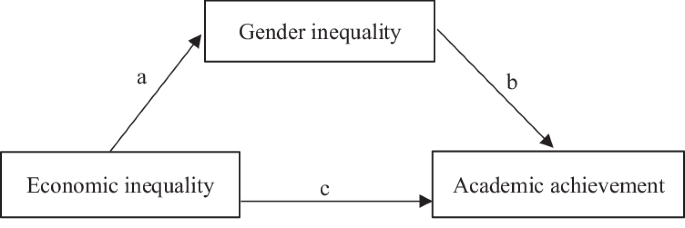
This graph illustrates the pathway from economic inequality to gender inequality to academic achievement. The pathway was initially identified in the stepwise regressions and later confirmed through mediation analysis.
Finally, we investigate the causality between gender inequality and academic achievement using a fixed effects model based on country-year panel data (see Table 7). In the panel regression, we use mean scores for three tested subjects (math, reading and science) and respective scores for math, reading and science literacy to represent country-level academic achievement. The GII and Gini coefficient are used as independent variables. The GDP per capita, the country fixed effect and the year fixed effect are controlled for in the regression. The results show that the coefficients of GII in all four regression models are negatively significant, which suggests that an increase in gender inequality will significantly weaken students’ academic achievement. Specifically, for every unit increase in the GII, reading scores decrease by an average of 0.47 units, math scores decrease by an average of 0.18, and science scores decrease by an average of 0.29 units. These results suggest that gender inequality has the smallest impact on math achievement. However, as shown in each model, the Gini coefficient has no significant effect on students’ academic achievement, suggesting that economic inequality cannot explain changes in academic achievement.
Result 2: individual-level analysis
Multilevel mixed-effects models at the student level were constructed and supported the significant association of gender inequality with academic achievement over the three cycles (Table 8, Model A). Following the PISA guidelines, sampling weights were applied to our analyses. In the model, the student level is nested at the school level, and the school level is nested at the country level. We include two student variables (gender and socioeconomic status), three school variables (location, shortage of staff, and educational resources), and three country variables (GDP per capita, Gini coefficient, and GII). As shown in the results of Model A in Table 8, GII has a significant main effect on academic achievement in all three test subjects for the 2018 PISA, suggesting that when the GII of a country decreases by 0.1 point (the extreme values are 0 and 1), the scores of students in that country increase by 16.58 to 29.36 points. This pattern persists for the 2015 PISA and the 2012 PISA, suggesting a consistent relationship between gender inequality and academic achievement over time.
Notably, the Gini coefficient is nonsignificant for all three years. To further confirm the close relationship between GII and academic achievement, we ran “horse races” at the student level and used three machine learning techniques (LASSO, random forest, XGBoost) for model selection to compare the explanatory power of GII, GDP, and the Gini coefficient for academic achievement for the 2018 PISA. All three machine learning results (see Table 9) show that GII exhibits near-top ranking explanatory power for academic performance among the three country-level variables, consistently surpassing the predictive strength of the Gini coefficient, which is consistent with the results from the multilevel mixed-effects model. The results hold true when the data for boys’ and girls’ students are analysed separately. In summary, the machine learning results also confirm that the gender inequality captured by the GII can predict academic achievement better than the economic inequality captured by the Gini coefficient.
Finally, multilevel mixed-effects models are also constructed for the three dimensions of the GII to determine which dimension of gender inequality is more relevant for academic achievement. As shown in the results of Model B in Table 8, one main finding is that gender inequality in female reproductive health is associated with academic achievement for the 2015 PISA and the 2018 PISA. The full models are provided in Supplementary Tables 3–8.
Discussion
This study showed that gender inequality is negatively associated with academic achievement. Gender is essentially a system of cultural beliefs about gender that influence people’s activities62. Among these beliefs, some may be stereotypical. For example, it is believed that girls are not as good as boys at mathematics, which is a kind of gender stereotype about academic capabilities. According to social cognitive learning theory39, adolescent gender stereotypes about academic capabilities and performance are shaped by pervasive practices. As institutional expressions of societal attitudes and important places for students’ socialization, schools intentionally or unintentionally communicate inequalities to adolescents63,64. For example, the socioeconomic characteristics of adolescents’ peers in school are significantly related to their academic achievement in Türkiye6. According to 20 years of comparable data for 13 countries from the TIMSS, an increased mathematics achievement gap is observed in educational systems that tend to be decentralized or reduce investment in education4. This process holds true, especially in countries with more liberal egalitarian societies65, where gender discrimination and self-identity are driven by the gender essentialist ideology (e.g., cultural beliefs in fundamental and innate gender differences) and self-expressive value systems28,62. An adolescent may seek better academic achievement when he or she has high efficacy expectancies and perceives a good chance of succeeding academically66. However, gender stereotypes in the academic domain are very common40,67 and may have a negative impact on adolescents’ academic achievement via expectations of their competence and performance41. In this vein, a negative relationship between gender inequality and academic achievement is observed in this study.
More importantly, there is a robust association between gender inequality and academic achievement for both boys and girls. This finding reflects a loss-of-function result of gender inequality for both boys and girls, leading to the conclusion that the negative aspects of gender inequality manifest at the overall societal level. One possible explanation for this finding may be that both girls and boys are subject to gender stereotypes. It is well known that negative stereotypes can disrupt the academic achievement of disadvantaged students through negative expectations41. However, positive expectations can also harm the performance of advantaged students when a promotion focus is activated68. Individuals are sensitive to positive cues and hence show impaired performance when confronted with positive expectations due to apprehensions about meeting maximal objectives. They may “choke under pressure” in the face of a positive stereotype42. In this way, gender inequality is negatively associated with academic achievement for both boys and girls through gender stereotypes.
Consistent with our hypothesis, gender inequality is more strongly associated with academic achievement than economic inequality is. Furthermore, according to the results of the fixed effects panel regression, gender inequality, not economic inequality, can explain the change in academic achievement from 2012 to 2018. These findings are somewhat counterintuitive since economic factors are usually found to be the most important enabling conditions in education31. One possible explanation is that gender inequality has a more proximal role than economic inequality in academic achievement. Moreover, gender inequality may be an enduring social consequence of economic inequality. Economic inequality tends to breed status seeking and rank competition69,70. Men and woman have been found to exhibit different levels of efficiency in competitive environments71. In this manner, economic inequality may result in an increase in gender inequality. Gender inequality further permeates from society to school, directly impacting academic achievement. According to the cultural evolution perspective of schooling, schooling can socialize students to accept a higher-payoff cultural model by immersing children in a structure of rewards and sanctions63. As members of both society and school, teachers pass their gender stereotypes formed in society to students. Through such transmission, gender inequality may produce an impact on students’ academic performance. Moreover, gender inequality can permeate from society to family. It is argued that gender inequality in family hinders the progress of education38. Mothers’ physical and mental well-being, educational attainment, and occupational standing significantly influences the academic achievement of both boys and girls72,73,74,75.
Economic inequality and gender inequality are intricate social constructs with intertwined yet distinct characteristics. Economic disparities exacerbate gender inequality by amplifying existing barriers faced by women in accessing education, healthcare, and economic opportunities76,77. Conversely, gender inequality contributes to economic disparities by impeding women’s participation in the labour force, entrepreneurship, and decision-making roles, as highlighted61,78. However, economic inequality and gender inequality have distinct drivers and manifestations. Economic inequality primarily stems from disparities in wealth, income, and access to resources79. Economic inequality involves tangible and externally observable forms of physical resources. In contrast, as a kind of social capital, gender inequality may be more deeply rooted and broadly complicated than economic inequality is. Gender inequality consists of less tangible functional social capital, including predominant attitudes, norms of behaviour and shared values within a social unit48. Therefore, gender inequality is often seen as a multidimensional phenomenon that implies a gender gap in health, education, income, labour and political participation47.
Finally, an interesting finding is that gender inequality in reproductive health may contribute greatly to the association between overall gender inequality and academic achievement. This finding is consistent with a prior study31 in which a reduction in the adolescent birth rate and an increase in the percentage of parliamentary seats held by women were significantly associated with a positive change in PISA scores from 2006 to 2018. Reproductive health is specific to women and reflects health risks related to pregnancy and childbirth as well as limited educational and job opportunities61. By defining the “child penalty” as the percentage by which women fall behind men due to children, the long-term child penalty in earnings in Denmark was close to 20% over the period 1980–201380. The mental health penalties of having a child have also been observed in a Chinese sample81. In this study, two indicators of female reproductive health, the maternal mortality ratio and the adolescent birth ratio, essentially reflect child penalties for the health and opportunities faced by women. Therefore, it is not surprising that they contribute substantially to the influence of gender inequality on academic achievement.
In conclusion, this study reveals that gender inequality rather than economic inequality is strongly associated with academic achievement for both boys and girls. The underlying mechanism may consist of positive or negative gender stereotypes that hinder adolescents’ academic investment and performance. Therefore, appropriate policies are needed to improve gender inequality. Despite substantial reductions in gender equality worldwide, addressing gender inequality remains a global challenge because “gender inequality is deeply imbued in the norms of institutions, their decision-making processes, forms of exercising power, their rules, unwritten cultures, and approaches to allocating resources”20. Multisectoral and multilevel approaches from the community to the country level are needed. Economic, gender and educational equality are intertwined64 and constitute a multidirectional feedback system; thus, efforts in each domain and at each level are indispensable.
This study has several limitations that should be addressed in future research. First, our conclusions are restricted to the context of the use of PISA scores as indicators of academic achievement and GII scores as an indicator of gender inequality. Second, our analyses at the country level are based on academic achievement in each country, which may mask educational inequality within countries82. Future studies can consider the performance gap as an indicator of academic achievement by calculating the difference between high-performing and low-performing students within each country to obtain a more comprehensive understanding of academic achievement. Third, this study investigates gender as a noun when considering gender differences in education systems. Gender can be understood as an adjective when considering how gendered relations of power, distribution of resources, and forms of struggle occur in educational settings or as a verb when considering mixed gender identities, performances or actions and the space of education as active and changing in its movement between times, spaces and discourses21. Finally, although we explored causality using the fixed-effect model, we should be cautious in explaining the causal associations detected in this study given the cross-sectional nature of PISA data at the student level and the nonexperimental design of the study.
Methods
The programme for international student assessment
PISA data are obtained from students, parents, teachers, and school principals through the completion of academic assessments and self-reported contextual questionnaires. This assessment measures the ability of 15-year-olds to use their reading, mathematics, and science knowledge and skills to meet real-life challenges83. It assesses whether national and regional education models or the quality of education have achieved the goal of preparing students to become well-rounded individuals for modern society83. Since 1997, the PISA has published a total of seven cycles of data collection at a triennial measurement frequency. Each wave of data includes students’ mathematical, reading, and science literacies, which are fixed from year to year. Other literacies and students’ information on learning backgrounds change from year to year. We used data from the 2012 PISA, the 2015 PISA, and the 2018 PISA, which include 65, 72, and 79 countries and economies, respectively, covering a total of 1,569,379 students. In this study, not all countries were covered due to the absence of key variables for some countries and economies. Detailed sample information can be found in Supplementary Table 1. The correlations between country variables can be found in Supplementary Table 2.
PISA methodology, plausible values, and sampling weights
To mitigate the impact of student fatigue and the constraints of time available for testing and to encompass a broader spectrum of measurements, the PISA employs item response theory (IRT) models for scaling. Rather than responding to all the questions in a particular administration, students are tasked with answering a subset of questions selected from a larger pool. The probability distributions of their ability levels are then estimated based on their responses to this specific subset of questions. Therefore, the cognitive item scores provided by the PISA do not represent students’ actual scores on those items. Instead, they constitute several randomly selected values derived from an estimated distribution of students’ ability levels, referred to as ‘plausible values’. According to the 2012 PISA, five plausible value scores were assigned per cognitive item, while the 2015 and 2018 PISA offered ten scores per item. In this study, we performed analyses at both the country and individual levels. At the country level, we employed the PISA-endorsed code generator data analysis software IDB Analyzer to calculate national academic achievement scores through plausible value computations. These outcomes are also detailed in the official reports published by the PISA. For individual-level analysis, we utilized Hierarchical Linear and Nonlinear Modeling (HLM) software, which is specialized software designed to dissect complex multilevel data structures and facilitate the calculation of plausible values.
The PISA sampling process involves two steps, namely, selecting a sample of schools containing the target group for the study and then randomly selecting 35 students from the chosen schools. However, the probability of selection for each student is not uniform and varies with the school’s size. Larger schools with more students have a lower probability of student selection, and vice versa. This can result in undersampling or oversampling issues within participating schools. To rectify this, sampling weights are adjusted for each student and school in the sample. In this study, individual-level analyses were conducted, applying sampling weights at both the student and school levels to address bias.
Ethical approval and informed consent are not applicable to this study because the data used here are from publicly available databases (PISA, World Bank, and United Nations Development Program) and no experiments were conducted.
Overview of key variables
Academic achievement. The definition of academic achievement is contingent upon the indicators employed for its measurement84. In this study, we analysed data based on three cycles of the PISA from 2012 to 2018 using areas of academic achievement (math, reading, science) as independent variables. In both the country-level and student-level analyses, we used the literacy scores for mathematics, reading, and science as outcome variables. In the country-level analyses, the mean scores of the three tested subjects were also analysed.
Economic Inequality. The Gini coefficient is the most common measure of economic inequality85. The Gini index measures the area between the Lorenz curve and a hypothetical line of absolute equality, which is expressed as a percentage of the maximum area under the line86. A Lorenz curve plots the cumulative percentages of total income received against the cumulative number of recipients, starting with the poorest individual. A Gini index of 0 represents perfect equality, while an index of 100 implies perfect inequality87. We chose the widely used and recognizable Gini coefficient calculated by the World Bank87, which is based on key household survey data obtained from government statistical agencies and World Bank country departments.
Gender Inequality. The data on gender inequality were derived from the GII reported in the ‘Human Development Report’ of the UNDP. This index, which was first published in 2010, is a composite indicator that quantifies the losses a country experiences as a result of gender inequality61 and maintains the frequency of annual measurements published in the following year’s ‘Human Development Report’. The GII consists of five indicators in three dimensions. The female reproductive health dimension is a synthesis of the maternal mortality rate and the adolescent fertility rate; the empowerment dimension is a combination of the share of seats in parliament and the population with at least some secondary education; and the labour force dimension is calculated from the labour force participation rate. Five indicators are reported in the ‘Human Development Report’88,89,90. We calculated gender inequality in the three dimensions according to the formula used to calculate the GII. The specific calculations can be found in Method 5.
Overview of covariates
In this study, seven covariates were considered: two at the student level, four at the school level, and one at the country level. These covariates were sourced from the PISA database for both the student and school levels and from the World Bank database for the country level.
Gender: Gender was coded as 1 for girls and 2 for boys across all three cycles of the database.
The index of economic, cultural, and social status (ESCS): The ESCS serves as a measure of students’ access to family resources, including financial capital, social capital, cultural capital, and human capital. It reflects the social position of the student’s family or household and can be interpreted as an approximation of an individual’s ranking in national and global society. The ESCS is derived from the combination of parents’ educational level (in years), parents’ occupational status on the International Socio-Economic Index (ISEI) scale, and family wealth.
For the HLM analyses for each year, three school-level covariates were considered. The difference lies in the specific covariates employed in the 2012, 2015, and 2018 analyses. In the 2018 and 2015 analyses, the school-level covariates consisted of school location, shortage of materials, and shortage of educational staff. In contrast, the 2012 analysis employed school location, shortage of teachers, and student-teacher ratio, as shortages of materials were not assessed in the 2012 PISA.
School location: The school principal provided information regarding the school’s location by responding to the following question: ‘Which of the following definitions best describes the community in which your school is located?’ with options ranging from 1 for ‘village’ to 5 for ‘large city’.
Shortage of materials: School principals reported on the extent to which the school’s capacity to provide instruction is hindered by the shortage or inadequacy of various resources, including science laboratory equipment, instructional materials such as textbooks, computers for instruction, internet connectivity, computer software for instruction, library materials, and audiovisual resources. These responses were aggregated to create a composite index of material resources, with an average of zero and a standard deviation of one for OECD countries. Higher values of this index indicate fewer hindrances to instruction due to resource shortages.
Shortages of educational staff: School principals’ assessments of the extent to which instruction in their school is hindered by a lack of qualified teachers and staff in key areas were used to create a composite index of teacher shortages. This index also had an average of 0 and a standard deviation of 1 for OECD countries, with higher values indicating a perception of more problems with instruction due to teacher shortages.
Student-teacher ratio: The student-teacher ratio was calculated by dividing the school size by the total number of teachers. Part-time teachers were weighted by 0.5, and full-time teachers were weighted by 1.0 in the computation of this index.
The GDP per capita, which is calculated as the gross domestic product divided by the midyear population, serves as a critical economic indicator. The GDP itself represents the sum of gross value added by all resident producers in the economy, including any product taxes and minus any subsidies not accounted for in the value of the products. This calculation does not factor in deductions for the depreciation of fabricated assets or the depletion and degradation of natural resources. The data are presented in current U.S. dollars. For more detailed information, please refer to the following link: https://data.worldbank.org/indicator/NY.GDP.PCAP.CD.
Calculation methods for the three subdimensions of the GII
The GII comprises five indicators organized into three dimensions. The female reproductive health dimension combines the maternal mortality rate and the adolescent fertility rate, the empowerment dimension incorporates the share of seats in parliament with the share of the population with at least some secondary education, and the labour force dimension is derived from the labour force participation rate. These five indicators are reported in the ‘Human Development Report’. To calculate gender inequality across these three dimensions, we followed the formula used for computing the GII. The specific calculation method is outlined as follows.
First, we aggregate across dimensions within each gender group using geometric means. For the productive health dimension, the aggregation formula for females is GF = \(\sqrt{(\frac{10}{{MMR}}\times \frac{1}{{ABR}})}\); the formula for males is GM = 1. For the empowerment dimension, the aggregation formula for females is GF = \(\sqrt{{PR}(F)\times {SE}(F)}\); the formula for males is GM=\(\sqrt{{PR}(M)\times {SE}(M)}\). For the labour market dimension, the aggregation formula for females is GF = LFPR(F); the formula for males is GM = LFPR(M).
Second, we aggregate across gender groups using a harmonic mean. For all dimensions, the following equation is used: HARM (GF, GM) = [((GF)−1 + (GM)−1)/2]−1.
Third, we calculate the geometric mean of the arithmetic means for each indicator. For the productive health dimension, the following equation is used: \(\bar{{Productive\; healt}h}\) = (\(\,\sqrt{(\frac{10}{{MMR}}\times \frac{1}{{ABR}})}\) + 1)/2. For the empowerment dimension, the following equation is used: \(\overline{{Empowermen}{\rm{t}}}\) = (\(\sqrt{{PR}(F)\times {SE}(F)}\) + \(\sqrt{{PR}(M)\times {SE}(M)}\))/2. For the labour market dimension, the following equation is used: \(\overline{{Labor\; market}}\) = (LFPR(F) + LFPR(M))/2.
Finally, Gender inequality in productive health = 1 − HARM (GF, GM)/\(\overline{{Healt}h}\). Gender inequality in empowerment = 1 − HARM (GF, GM)/\(\overline{{Empowerment}}\). Gender inequality in the labour market = 1− HARM (GF, GM)/\(\overline{{Labor\; market}}\).
Reporting summary
Further information on research design is available in the Nature Research Reporting Summary linked to this article.
Data availability
PISA data are available at https://www.oecd.org/pisa/data/. Gender Inequality Index are available in UNDP’s Human Development Report which can be found at https://hdr.undp.org/reports-and-publications. Gini coefficients are available at https://data.worldbank.org/indicator/SI.POV.GINI. GDP per capita are available at https://data.worldbank.org/indicator/NY.GDP.PCAP.CD. All codes used for the analyses are available by request directed tothe corresponding author.
Code availability
All codes used for the analyses are available by request directed to the corresponding author.
References
Ritchie, S. J. & Bates, T. C. Enduring links from childhood mathematics and reading achievement to adult socioeconomic status. Psychol. Sci. 24, 1301–1308 (2013).
Gerardi, K., Goette, L. & Meier, S. Numerical ability predicts mortgage default. Proc. Natl Acad. Sci. USA 110, 11267–11271 (2013).
Bronfenbrenner, U. Ecological models of human development. Int. Encycl. Educ. 3, 37–43 (1994).
Broer, M., Bai, Y. & Fonseca, F. Socioeconomic Inequality and Educational Outcomes: Evidence from Twenty Years of TIMSS (eds. Hegarty, S. & Rutkowski, L.) 35–69 (Springer Nature, 2019).
Suna, E. et al. Determinants of academic achievement in Turkey. J. Econ. Cult. Soc. 64, 143–162 (2021).
Özer, M. & Suna, H. E. The relationship between school socioeconomic composition and Academic Achievement in Turkiye. J. Econ. Cult. Soc. 66, 17–27 (2022).
Rowley, K. J., McNeill, S. M., Dufur, M. J., Edmunds, C. & Jarvis, J. A. Trends in International PISA scores over time: which countries are actually improving? Soc. Sci. 8 https://doi.org/10.3390/socsci8080231 (2019).
Aghion, P., Caroli, E. & García-Peñalosa, C. Inequality and economic growth: the perspective of the new growth theories. J. Econ. Lit. 37, 1615–1660 (1999).
Barro, R. J. Inequality, and growth in a panel of countries. J. Econ. Growth 5, 5–32 (2000).
Marrero, G. A. & Rodríguez, J. G. Inequality of opportunity and growth. J. Dev. Econ. 104, 107–122 (2013).
Wilkinson, R. G. & Pickett, K. E. The problems of relative deprivation: Why some societies do better than others. Soc. Sci. Med. 65, 1965–1978 (2007).
Grant, Pickett, K. & Wilkinson, R. The spirit level: Why equality is better for everyone. J. Soc. Policy 42, 840–842 (2010).
Chiu, M. M. & Khoo, L. Effects of resources, inequality, and privilege bias on achievement: country, school, and student level analyses. Am. Educ. Res. J. 42, 575–603 (2005).
Workman, J. Income inequality and student achievement: trends among US States (1992–2019). Educ. Rev. 75, 1–23 (2021).
Sacker, A., Schoon, I. & Bartley, M. Social inequality in educational achievement and psychosocial adjustment throughout childhood: magnitude and mechanisms. Soc. Sci. Med. 55, 863–880 (2002).
Condron, D. J. Egalitarianism and educational excellence: compatible goals for affluent societies? Educ. Res. 40, 47–55 (2011).
Thorson, G. R. & Gearhart, S. M. The adverse effects of economic inequality on educational outcomes: an examination of PISA scores, 2000–2015. World Aff. 181, 286–306 (2018).
Lynch, J. W., Smith, G. D., Kaplan, G. A. & House, J. S. Income inequality and mortality: importance to health of individual income, psychosocial environment, or material conditions. B. m. j. 320, 1200–1204 (2000).
Wilkinson, R. G. Income inequality, social cohesion, and health: clarifying the theory—a reply to Muntaner and Lynch. Int. J. Health Serv. 29, 525–543 (1999).
Unterhalter, E. Global inequality, capabilities, social justice: The millennium development goal for gender equality in education. Int. J. Educ. Dev. 25, 111–122 (2005).
Unterhalter, E. Thinking about gender in comparative education. Comp. Educ. 50, 112–126 (2014).
Campbell, J. A. The moderating effect of gender equality and other factors on PISA and education policy. Educ. Sci. 11, 10, https://doi.org/10.3390/educsci11010010 (2021).
Ridgeway, C. L. & Correll, S. J. Unpacking the gender system: a theoretical perspective on gender beliefs and social relations. Gend. Soc. 18, 510–531 (2004).
Guiso, L., Monte, F., Sapienza, P. & Zingales, L. Culture, gender, and math. Science 320, 1164–1165 (2008).
Gevrek, Z. E., Gevrek, D. & Neumeier, C. Explaining the gender gaps in mathematics achievement and attitudes: The role of societal gender equality. Econ. Educ. Rev. 76, 101978 (2020).
Reilly, D., Neumann, D. L. & Andrews, G. Investigating gender differences in mathematics and science: Results from the 2011 trends in mathematics and science survey. Res. Sci. Educ. 49, 25–50 (2019).
Mullis, I. V. S., Martin, M. O., Foy, P. & Hooper, M. TIMSS 2015 International Reports Network https://timssandpirls.bc.edu/timss2015/international-results/timss-2015/mathematics/student-achievement/ (2016).
Stoet, G. & Geary, D. C. The gender-equality paradox in science, technology, engineering, and mathematics education. Psychol. Sci. 29, 581–593 (2018).
Hyde, J. S., Lindberg, S. M., Linn, M. C., Ellis, A. B. & Williams, C. C. Gender similarities characterize math performance. Science 321, 494–495 (2008).
Hyde, J. S. The gender similarities hypothesis. Am. Psychol. 60, 581–592 (2005).
Campbell, J. A., McIntyre, J. & Kucirkova, N. Gender equality, human development, and PISA results over time. Soc. Sci. 10, 480, https://doi.org/10.3390/socsci10120480 (2021).
Robinson, W. S. Ecological correlations and individual behavior. Am. Sociol. Rev. 15, 351–357 (1950).
Cheung, K. C. Outcomes of schooling: Mathematics achievement and attitudes towards mathematics learning in Hong Kong. Math. Educ. Cult. 209–219 (1988).
Lu, Y. & Bolt, D. M. Examining the attitude-achievement paradox in PISA using a multilevel multidimensional IRT model for extreme response style. Large-Scale Assess. Educ. 3, 1–18 (2015).
OECD. PISA 2012 Results: Ready to Learn: Students’ engagement, Drive and Self-beliefs: Volume III (OECD, 2013).
Unterhalter, E. Walking backwards into the future: a comparative perspective on education and a post-2015 framework. Comp. J. Comp. Int. Educ. 44, 852–873 (2014).
Anderson, J. O., Milford, T. & Ross, S. P. in Quality Research in Literacy and Science Education: International Perspectives and Gold Standards (eds. Shelley, M. C., Yore, L. D. & Hand, B.) 263–286 (Springer Netherlands, 2009).
Condorcet, A. N. Outlines of an Historical View of the Progress of the Human Mind. (J. Johnson, 1795).
Bussey, K. & Bandura, A. Social cognitive theory of gender development and differentiation. Psychol. Rev. 106, 676–713 (1999).
Kiefer, A. K. & Sekaquaptewa, D. Implicit stereotypes, gender identification, and math-related outcomes: Aa prospective study of female college students. Psychol. Sci. 18, 13–18 (2007).
Steele, C. M. A threat in the air: How stereotypes shape intellectual identity and performance. Am. Psychol. 52, 613–629 (1997).
Beilock, S. L. & Carr, T. H. On the fragility of skilled performance: What governs choking under pressure? J. Exp. Psychol. Gen. 130, 701–725 (2001).
Tagler, M. J. Choking under the pressure of a positive stereotype: Gender identification and self-consciousness moderate men’s math test performance. J. Soc. Psychol. 152, 401–416 (2012).
Blau, F. D. & Kahn, L. M. The gender pay gap: Have women gone as far as they can? Acad. Manag Perspect. 21, 7–23 (2007).
Gonzales, M. C., Jain-Chandra, M. S., Kochhar, M. K., Newiak, M. M. & Zeinullayev, M. T. International Monetary Fund Network. https://www.imf.org/en/Publications/Staff-Discussion Notes/Issues/2016/12/31/Catalyst-for-Change-Empowering-Women-and-Tackling-Income-Inequality-43346 (2015).
The World Bank. World Development Report 2012: Gender Equality and Development (World Bank, 2011).
Baloch, A., Noor, Z. M., Habibullah, M. S. & Bani, N. Y. The effect of the gender equality on income inequality: a dynamic panel approach. J. Ekon. Malays. 52, 3–17 (2018).
Grootaert, C. & Van Bastelaer, T. Understanding and Measuring Social Capital: A Multidisciplinary Tool for Practitioners (World Bank Publications, 2002).
Bourdieu, P. & Richardson, J. G. Handbook of theory and research for the sociology of education. Forms Cap. 241, 258 (1986).
Coleman, J. S. The creation and destruction of social capital: implications for the law. Notre Dame JL Ethics Pub Pol. 3, 375–404 (1987).
Diekman, A. & Schmader, T. Gender as Embedded Social Cognition (2021).
Jack, G. & Jordan, B. Social capital and child welfare. Child. Soc. 13, 242–256 (1999).
Alacacı, C. & Erbaş, A. K. Unpacking the inequality among Turkish schools: Findings from PISA 2006. Int. J. Educ. Dev. 30, 182–192 (2010).
OECD. Measuring Student Knowledge and Skills: A New Framework for Assessment (OECD, 1999).
Sahlberg, P. & Hargreaves, A. The Washington Post Network https://www.washingtonpost.com/news/answer-sheet/wp/2015/03/24/the-tower-of-pisa-is-badly-leaning-an-argument-for-why-it-should-be-saved/ (2015).
Meyer, H.-D. & Schiller, K. PISA, in Power, and Policy: The Emergence of Global Educational Governance (eds. Meyer, H.-D. & Benavot, A.) 207–224 (Symposium Books Oxford, 2013).
Auld, E. & Morris, P. PISA, policy and persuasion: Translating complex conditions into education ‘best practice’. Comp. Educ. 52, 202–229 (2016).
Meyer, H.-D. & Benavot, A. in Power, and Policy: The Emergence of Global Educational Governance (eds. Meyer, H.-D. & Benavot, A.) 9–26 (Symposium Books Oxford, 2013).
Chang, Q., Yip, P. S. & Chen, Y.-Y. Gender inequality and suicide gender ratios in the world. J. Affect. Disord. 243, 297–304 (2019).
Andrijevic, M., Crespo Cuaresma, J., Lissner, T., Thomas, A. & Schleussner, C.-F. Overcoming gender inequality for climate resilient development. Nat. Commun. 11, 6261, https://doi.org/10.1038/s41467-020-19856-w (2020).
Gaye, A., Klugman, J., Kovacevic, M., Twigg, S. & Zambrano, E. Measuring Key Disparities in Human Development: the Gender Inequality Index Human Development Report (UNDP, 2010).
Charles, M. & Bradley, K. Indulging our gendered selves? Sex segregation by field of study in 44 countries. Am. J. Sociol. 114, 924–976 (2009).
Bowles, S. & Gintis, H. Schooling in capitalist America revisited. Sociol. Educ. 75, 1–18 (2002).
Brown, P. & Lauder, H. Education, economy and social change. Int. Stud. Sociol. Educ. 1, 3–23 (1991).
Breda, T., Jouini, E., Napp, C. & Thebault, G. Gender stereotypes can explain the gender-equality paradox. Proc. Natl Acad. Sci. 117, 31063–31069 (2020).
Wigfield, A. & Eccles, J. S. Expectancy–value theory of achievement motivation. Contemp. Educ. Psychol. 25, 68–81 (2000).
Delaney, J. M. & Devereux, P. J. Gender and Educational Achievement: Stylized Facts and Causal Evidence (Oxford University Press, 2021).
Keller, J. & Bless, H. When positive and negative expectancies disrupt performance: Regulatory focus as a catalyst. Eur. J. Soc. Psychol. 38, 187–212 (2008).
Walasek, L. & Brown, G. D. Income inequality and status seeking: searching for positional goods in unequal US states. Psychol. Sci. 26, 527–533 (2015).
Buttrick, N. R. & Oishi, S. The psychological consequences of income inequality. Soc. Personal. Psychol. Compass 11, e12304 (2017).
Gneezy, U., Niederle, M. & Rustichini, A. Performance in competitive environments: Ggender differences. Q. J. Econ. 118, 1049–1074 (2003).
Chen, C. Y. C. Effects of parental chronic illness on children’s psychosocial and educational functioning: a literature review. Contemp. Sch. Psychol. 21, 166–176 (2017).
Oyserman, D., Bybee, D., Mowbray, C. & Hart-Johnson, T. When mothers have serious mental health problems: parenting as a proximal mediator. J. Adolesc. 28, 443–463 (2005).
Harding, J. F., Morris, P. A. & Hughes, D. The relationship between maternal education and children’s academic outcomes: A theoretical framework. J. Marriage Fam. 77, 60–76 (2015).
Kalmijn, M. Mother’s occupational status and children’s schooling. Am. Sociol. Rev. 59, 257–275 (1994).
Walby, S., Armstrong, J. & Strid, S. Intersectionality: multiple inequalities in social theory. Sociology 46, 224–240 (2012).
Seguino, S. Gender, Distribution, and balance of payments constrained growth in developing countries. Rev. Polit. Econ. 22, 373–404 (2010).
Klasen, S. Low schooling for girls, slower growth for all? Cross-country evidence on the effect of gender inequality in education on economic development. World Bank Econ. Rev. 16, 345–373 (2002).
Ostry, M. J. D., Berg, M. A. & Tsangarides, M. C. G. Redistribution, Inequality, and Growth (International Monetary Fund, 2014).
Kleven, H., Landais, C. & Søgaard, J. E. Children and gender inequality: evidence from Denmark. Am. Econ. J. Appl. Econ. 11, 181–209 (2019).
Shi, X. & Shen, Y. Mental health penalties of having a child: findings from the China family panel studies. Npj. Ment. Health Res. 2, 7, https://doi.org/10.1038/s44184-023-00026-x (2023).
Rowley, K. J., Edmunds, C. C., Dufur, M. J., Jarvis, J. A. & Silveira, F. Contextualising the achievement gap: Assessing educational achievement, inequality, and disadvantage in high-income countries. Comp. Educ. 56, 459–483 (2020).
OECD. PISA 2018 Assessment and Analytical Framework (OECD, 2019).
Steinmayr, R., Meiǹer, A., Weideinger, A. F. & Wirthwein, L. Academic Achievement (Oxford University Press, 2014).
Sitthiyot, T. & Holasut, K. A simple method for measuring inequality. Palgrave. Commun. 6, 1–9 (2020).
Gastwirth, J. L. The estimation of the Lorenz curve and Gini index. Rev. Econ. Stat. 54, 306–316 (1972).
The World Bank. World Development Indicators: Gini coefficient Network http://data.worldbank.org/indicator/SI.POV.GINI.
UNDP. Human Development Report 2013: The Rise of the South: Human Progress In a Diverse World Human Development Report (UNDP, 2013).
UNDP. Human Development Report 2016: Human Development for Everyone Human Development Report (UNDP, 2017).
UNDP. Human Development Report. 2019: Beyond Income, Beyond Averages, Beyond Today: Inequalities in Human Development in the 21st Century Human Development Report (UNDP, 2019).
Acknowledgements
This study was funded by [National Natural Science Foundation of China] [No. 31470996 and No. 31871120]. The funder played no role in study design, data collection, analysis and interpretation of data, or the writing of this manuscript.
Author information
Authors and Affiliations
Contributions
L.Z. and B.C. contributed equally to this work as co-first author. Conceptualization: L.Z., B.C, and Z.X. Methodology: B.C., W.W., Y.G., C.C., and Y.Y. Visualization: B.C. and L.Z. Supervision: Z.X., and C.C. Writing—original draft: L.Z., and B.C. Writing—review and editing: Z.X., and L.Z.
Corresponding author
Ethics declarations
Competing interests
The authors declare no competing interests.
Additional information
Publisher’s note Springer Nature remains neutral with regard to jurisdictional claims in published maps and institutional affiliations.
Supplementary information
Rights and permissions
Open Access This article is licensed under a Creative Commons Attribution 4.0 International License, which permits use, sharing, adaptation, distribution and reproduction in any medium or format, as long as you give appropriate credit to the original author(s) and the source, provide a link to the Creative Commons licence, and indicate if changes were made. The images or other third party material in this article are included in the article’s Creative Commons licence, unless indicated otherwise in a credit line to the material. If material is not included in the article’s Creative Commons licence and your intended use is not permitted by statutory regulation or exceeds the permitted use, you will need to obtain permission directly from the copyright holder. To view a copy of this licence, visit http://creativecommons.org/licenses/by/4.0/.
About this article

Cite this article
Zhang, L., Chao, B., Gao, Y. et al. Gender Inequality is negatively associated with academic achievement for both boys and girls. npj Sci. Learn. 9, 49 (2024). https://doi.org/10.1038/s41539-024-00261-7
Received:
Accepted:
Published:
Version of record:
DOI: https://doi.org/10.1038/s41539-024-00261-7

