
Polar–Midlatitude Interactions: Impacts on Weather Extremes and Climate Dynamics
- Submission status
- Open
- Submission deadline
This Collection supports and amplifies research related to SDG 13 - Climate Action
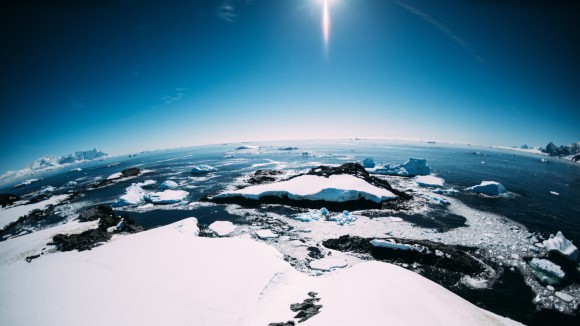
Understanding the atmospheric and oceanic linkages between the rapidly changing Arctic/Antarctica and the midlatitudes is vital for improving predictions of extreme weather and assessing climate risks in a warming world. Accelerated Arctic/Antarctica warming is increasingly recognized as a driver of disruptions in atmospheric and oceanic circulations, influencing midlatitude weather variability and extremes. It is critical to articulate the physical mechanisms underpinning, and consequences of, these polar–midlatitude interactions.
This Collection aims to advance our understanding of how Arctic/Antarctica processes—such as sea ice loss, stratospheric variability, and freshwater export—affect the stability of the midlatitude jet stream, polar vortex behavior, and the frequency and intensity of extreme weather events and prediction, including at sub-seasonal to decadal timescales. It addresses innovative approaches to causal attribution, including targeted model perturbation experiments and machine learning.
This Collection welcomes Original Research articles as well as Reviews and Perspectives that explore, but are not limited to, the following themes:
- Mechanisms of polar–midlatitude atmospheric coupling, including jet stream dynamics, blocking events, and storm-track shifts
- Impacts of stratospheric variability and polar vortex dynamics on midlatitude weather extremes
- Asymmetric sea ice loss and its regional influence on atmospheric circulation (e.g., Barents–Kara vs. Beaufort–Chukchi regions)
- Oceanic feedbacks, including Arctic/Antarctica freshwater export and air–sea interactions in subpolar regions
- Internal climate variability (e.g., Pacific Decadal Oscillation, Atlantic Multidecadal Variability) and seasonally dependent linkages
- Attribution of extreme events and compound extremes associated with Arctic/Antarctica forcing
- Innovations in modeling, including improved Arctic/Antarctica process representation and high-resolution simulations
- Applications of machine learning for prediction and causal diagnostics
- Use of emerging observational tools (e.g., ICESat-2, CryoSat) and diagnostic methods (e.g., Lagrangian trajectories, paleoclimate proxies)
Editors
-
Christine Shields, M.S.
National Center for Atmospheric Research (NSF NCAR), Boulder, USA


