Thank you for visiting nature.com. You are using a browser version with limited support for CSS. To obtain the best experience, we recommend you use a more up to date browser (or turn off compatibility mode in Internet Explorer). In the meantime, to ensure continued support, we are displaying the site without styles and JavaScript.

Volume 5 Issue 3, March 2026

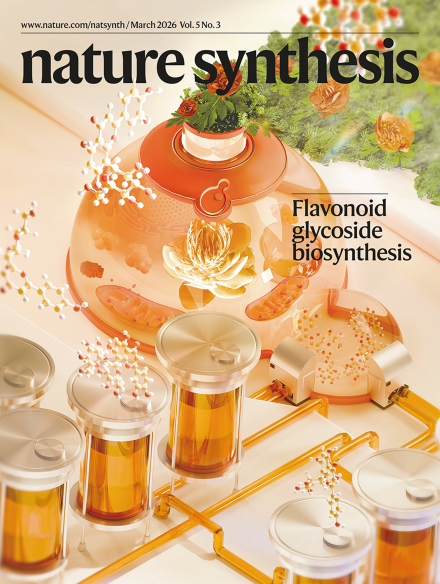
Flavonoid glycoside biosynthesis

Engineered Komagataella phaffii supports the full pathway synthesis of vitexin-derived flavonoid glycosides from simple carbon sources. Metabolic rewiring and cofactor optimization raise titers to over 26 g l⁻¹, enabling high-yield, scalable bioproduction.

See Qian et al.

Image: Coloring Zehao. Cover design: Thomas Phillips
Research Highlights

Top of page ⤴

News & Views

Top of page ⤴

Research Briefings

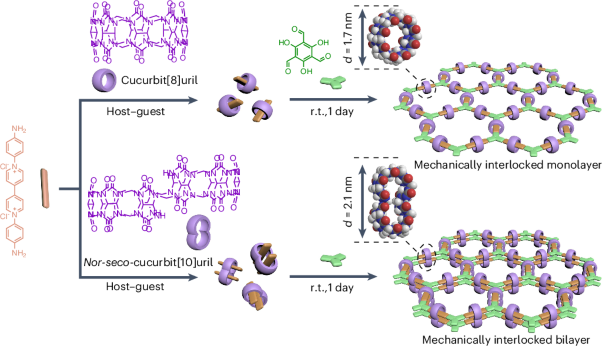
  • Precisely controlling the thickness of two-dimensional polymers (2DPs) is challenging. Now, crystalline monolayer and bilayer 2DPs are synthesized by embedding macrocyclic molecules in the polymer backbones to form mechanical bonds and provide control over the number of layers. This mechanical interlocking endows the synthetic bilayer with a high Young’s modulus.

    Research Briefing
Top of page ⤴

Reviews

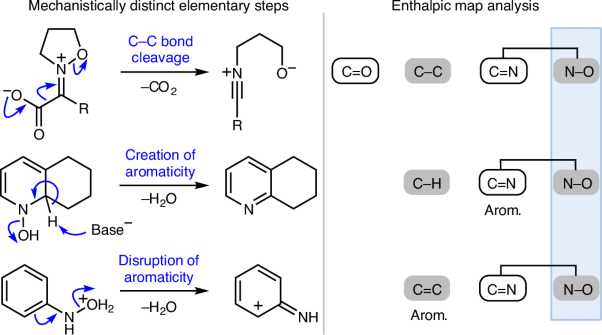
  • This Perspective analyses chemical reactivity through enthalpic coupling between bond making and bond breaking in elementary steps. Using enthalpic maps, mechanisms are compared, revealing shared energetic patterns and showing how targeted modifications of elementary steps can generate new reactivity. This framework offers a route towards systematic reaction discovery.

    • Chelsey Brien
    • Andrei K. Yudin
    Perspective
Top of page ⤴

Research

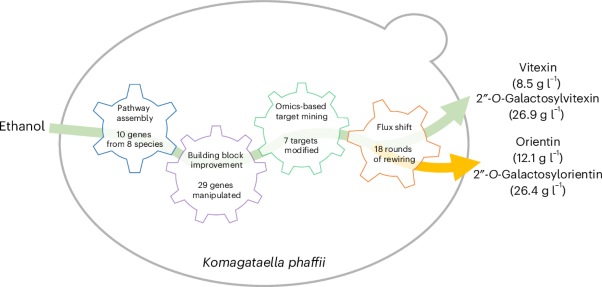
  • Microbial biosynthesis is a promising alternative to plant extraction to obtain post-modified flavonoids, but current de novo biosynthesis is limited to milligrams per litre. Now the production of plant-derived medicinal flavonoid monoglycosides and diglycosides is reported from simple carbon sources in an unconventional yeast at over 26 g l−1.

    • Zhilan Qian
    • Haishuang Yu
    • Menghao Cai
    Article
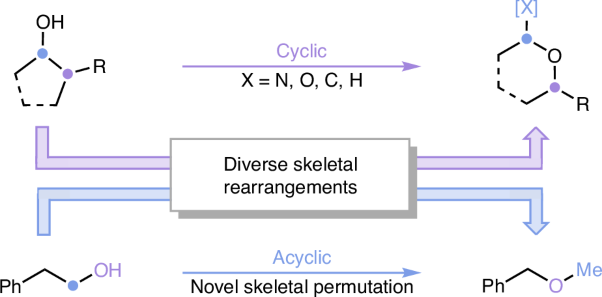
  • Heteroatom insertions into chemically inert carbon–carbon single bonds are rare compared to their unsaturated analogues. Now, ligand-to-metal charge transfer offers a promising entry point for oxygen atom insertion into saturated carbocyclic scaffolds.

    • Cade A. MacAllister
    • Caitlin R. Lacker
    • Tehshik P. Yoon
    Article Open Access
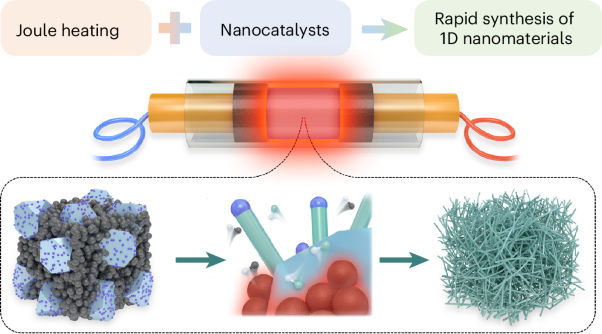
  • A catalytic Joule heating approach is developed for the growth of one-dimensional nanomaterials via a vapour–liquid–solid mechanism under far-from-equilibrium reaction conditions. It demonstrates broad applicability for the rapid and energy-efficient synthesis of diverse nanowires and nanotubes, including refractory and high-entropy systems.

    • Jian Sheng
    • Yifan Xu
    • Yan Li
    Article
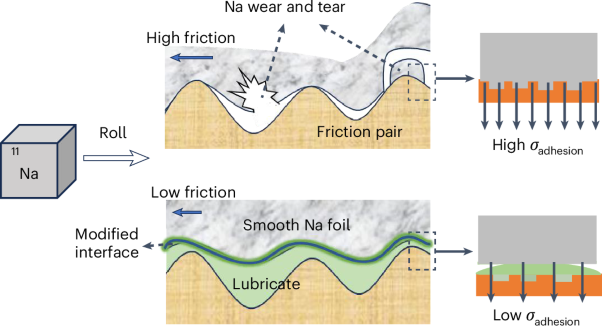
  • Sodium metal is of interest for high-energy-density batteries, but the lack of large-area ultrathin sodium metal foils hinders research. Here a metre-length, ultrathin (≤50 μm), mechanically strengthened sodium metal foil is fabricated by a roll-to-roll calendaring process with interfacial lubrication and functional modification.

    • Mengyao Tang
    • Shuai Dong
    • Hua Wang
    Article
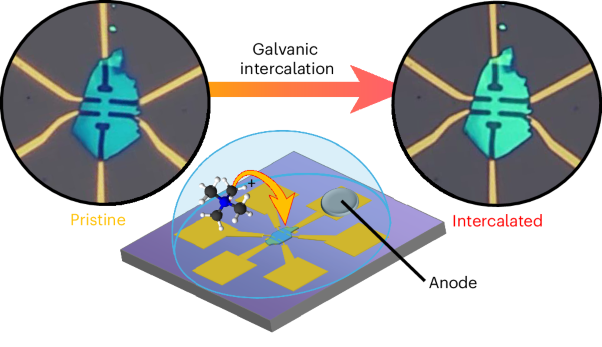
  • A galvanic strategy enables the intercalation of diverse molecular cations into bulk and few-layer van der Waals crystals under mild conditions, yielding 50 organic–inorganic superlattices. This method enables the definition of vertical and lateral intercalation heterostructures, opening avenues for the device integration of hybrid quantum materials.

    • Daniel Tezze
    • Covadonga Álvarez-García
    • Marco Gobbi
    Article
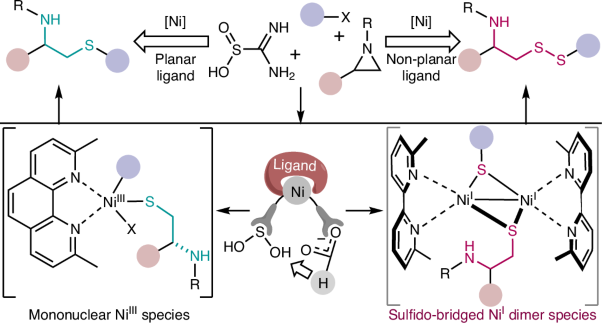
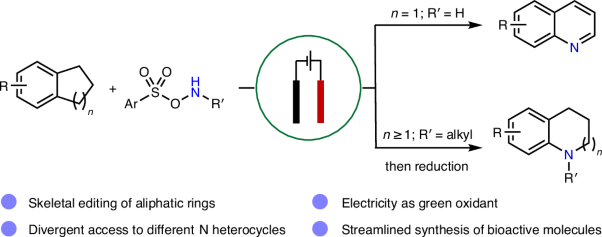
  • Ni-catalysed multicomponent reductive cross-coupling of aziridines, thiourea dioxide and alkyl halides enables the ligand-controlled synthesis of β-amino sulfides and disulfides. A planar ligand facilitates the oxidative addition of NiI–SR to NiIII for monosulfurating, whereas a non-planar ligand promotes NiI–SR dimerization into a sulfido-bridged species for disulfurating.

    • Su Huang
    • Daming Zeng
    • Xuefeng Jiang
    Article
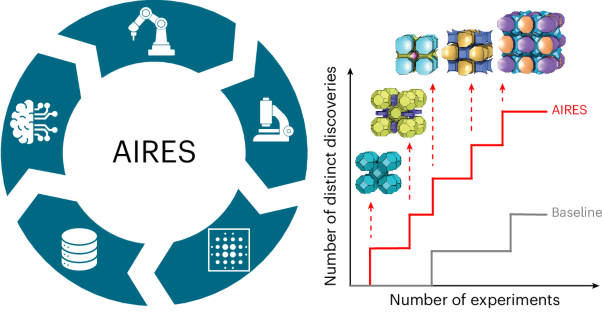
  • AIRES (algorithmic iterative reticular synthesis) is an integrated cycle combining automated synthesis, image recognition, single-crystal X-ray diffraction and algorithmic decision-making to maximize the discovery of distinct crystal structures. Demonstrated on zeolitic imidazolate frameworks, AIRES offers a systematic and efficient blueprint for reticular synthesis, with broad implications for accelerating materials discovery.

    • Zichao Rong
    • Zihao Chen
    • Omar M. Yaghi
    Article Open Access
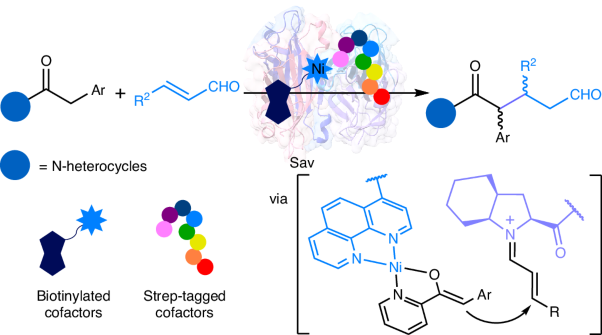
  • A dual-cofactor artificial metalloenzyme is developed, incorporating a biotinylated nickel complex and a Strep-tagged peptide catalyst in adjacent streptavidin-binding sites. This synergistic artificial metalloenzyme achieves enantiodivergent Michael addition reactions with tunable stereochemistry and high turnover numbers across diverse ketone and enal substrates.

    • Weijin Wang
    • Xinjian Ji
    • Xile Hu
    Article
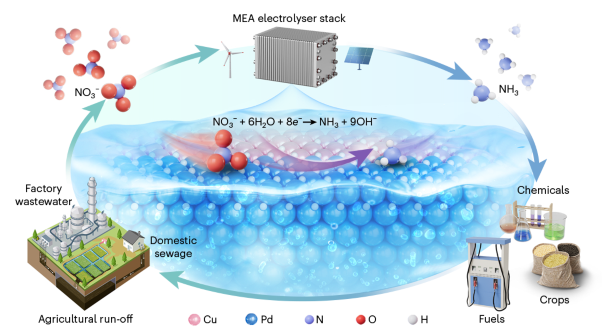
  • Electrochemical nitrate reduction is a promising method for greener ammonia synthesis. Here, a CuPd bimetallic catalyst with abundant Cu–PdHx interfaces is synthesized, enabling efficient electrocatalytic nitrate-to-ammonia conversion. The interface-enhanced intrinsic activity provides a high production rate and long-term stability, and demonstrated scalability in membrane electrode assembly electrolysers.

    • Yunfan Fu
    • Shuo Wang
    • Xinhe Bao
    Article
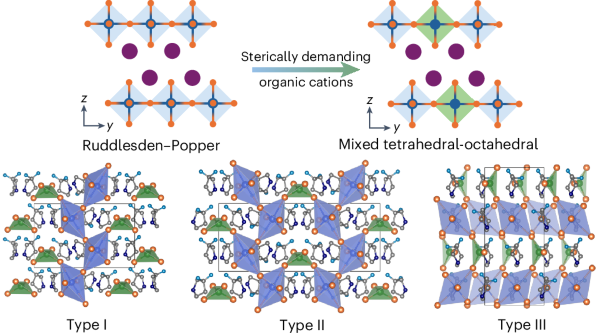
  • A family of 2D hybrid perovskites engineered with bulky organic ligands in a copper halide lattice is synthesized, demonstrating mixed tetrahedral–octahedral connectivity. These materials undergo strain-driven reversible transformation into Ruddlesden–Popper phases and exhibit structural asymmetry, leading to the coexistence of ferroelectricity and intralayer antiferromagnetism in one compound.

    • Ming Wang
    • Shurong Yuan
    • Kian Ping Loh
    Article
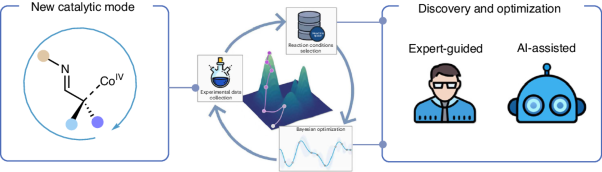
  • Discovering new chemical reactions is often a slow process. Now a data-driven strategy that integrates expert intuition with artificial intelligence-guided exploration enables the rapid identification of reaction conditions for cobalt(IV)–enamine catalysis, while uncovering unique reactivity patterns and demonstrating an effective approach for efficient and targeted development of catalytic transformations.

    • Liang Cheng
    • Zhenzhi Tan
    • Sanzhong Luo
    Article
Top of page ⤴

Amendments & Corrections

Top of page ⤴

Search

Quick links